Arthritis & Joint Pain in Menopause
Why it happens and how you can manage it
Many women in their 40s and 50s notice a change in their body that can feel frustrating and sometimes confusing…
Joints that used to feel fine suddenly become stiff, achy or painful.
You might notice:
your knees aching when going up and down stairs
hip pain when lying on your side
stiffness in your hands in the morning
shoulder pain that seems to come out of nowhere
And often, you’re told…
👉 “It’s just wear and tear.”
But in many cases, especially during perimenopause and menopause, there is more going on.
The link between menopause and joint pain
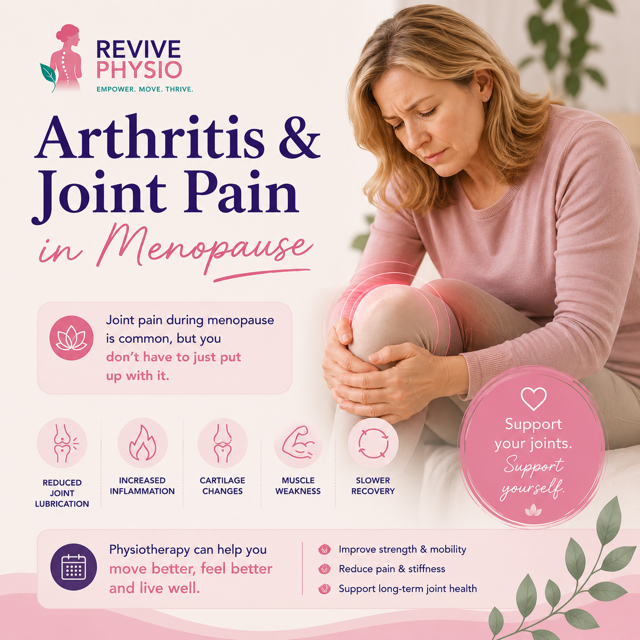
One of the key drivers is declining oestrogen levels.
Oestrogen plays an important role in maintaining:
joint lubrication
collagen production
tendon and ligament strength
inflammation control
As levels fluctuate and decline, this can lead to:
reduced joint resilience
increased stiffness
slower recovery from injury
increased pain sensitivity
This is why many women start to experience new joint pain or worsening symptoms during midlife.
Most common areas of arthritis in women
In clinic at Revive Physio, the most common areas I see are:
✔ Knees
✔ Hips
✔ Hands & fingers
✔ Shoulders
✔ Lower back
These areas are particularly affected because they are either:
load-bearing joints, or
highly mobile joints that rely on good muscle support
Common symptoms to look out for
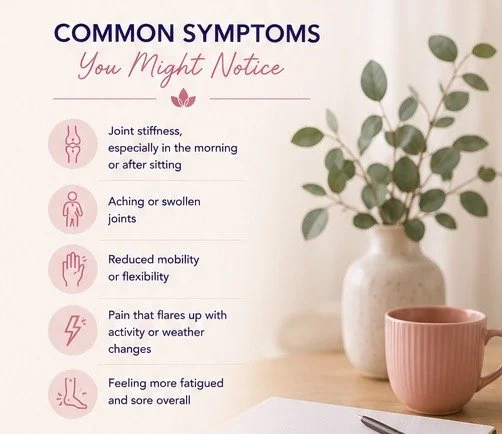
Arthritis doesn’t look the same for everyone, but typical symptoms include:
stiffness (especially in the morning or after rest)
aching or deep joint pain
reduced movement
discomfort with activity
joints feeling weaker or less stable
It’s not “just ageing”
This is really important.
Joint pain in menopause is not something you just have to put up with.
Your body is changing — but it also responds incredibly well to the right support.
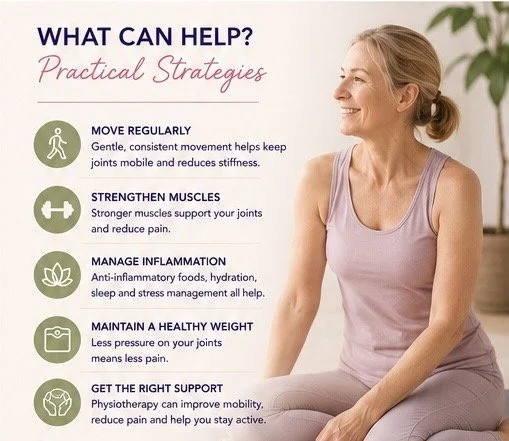
What actually helps?
At Revive Physio, I take a holistic but evidence-based approach to managing arthritis and joint pain.
💪 Targeted Physiotherapy
A full assessment to understand:
how your joints are moving
where strength is lacking
what’s driving your pain
🏋️ Strength & Stability Training
One of the most effective ways to reduce joint pain.
Stronger muscles =
👉 less load through the joint
👉 better control
👉 improved confidence in movement
🌿 Lifestyle & Inflammation Support
Looking at:
sleep
stress levels
activity levels
general load on your body
These all play a huge role in how pain presents.
🧠 Nervous System & Pain Support
Pain is not just structural — your nervous system becomes more sensitive during menopause.
Helping calm this can significantly reduce symptoms.
💉 Hyaluronic Acid Injections
For some people, this can be a really helpful addition.
Hyaluronic acid helps:
improve joint lubrication
reduce pain
support smoother movement
As a qualified injection therapist, I can offer this alongside your physiotherapy treatment where appropriate.
The key message
Arthritis does not mean:
❌ stopping exercise
❌ avoiding movement
❌ accepting pain as your “new normal”
With the right approach, you can:
✔ reduce pain
✔ improve strength
✔ move with confidence again
How Revive Physio can help
At Revive Physio in Walkden, I specialise in:
Women’s musculoskeletal physiotherapy
Menopause-related joint and tendon pain
Strength and rehabilitation programmes
Injection therapy and Hyaluronic Acid injections to reduce pain and increase mobility and function
Nervous system and holistic support
If you’re experiencing joint pain and feel like something isn’t quite right…
📍 Walkden | Worsley
📩 Book an Initial Assessment or send me a message