Could your low back pain be Sacroiliac joint dysfunction?
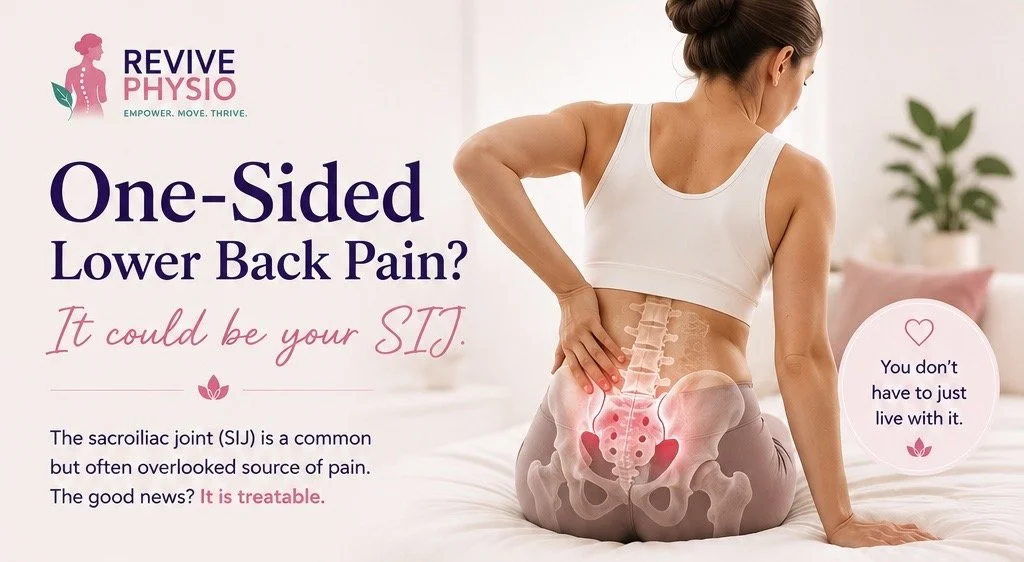
One-sided lower back pain is something I see incredibly often in clinic, particularly in women in their 40s and 50s. Many people assume the pain is coming directly from the lower back itself, but in a lot of cases the real source of the problem is actually the sacroiliac joint — often shortened to the SIJ.
The sacroiliac joints sit where the spine meets the pelvis and play an important role in stability, shock absorption and movement. We have one on each side of the pelvis, and when one becomes irritated, stiff, overloaded or unstable it can create pain that feels very similar to “normal back pain”.
How Common Is SIJ Dysfunction?
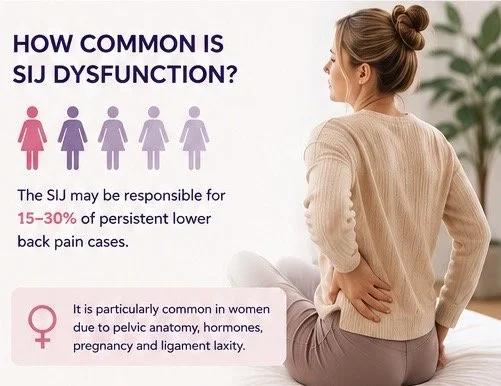
Research suggests the sacroiliac joint may be responsible for around 15–30% of persistent lower back pain cases, making it far more common than many people realise.
It is particularly common in women due to differences in pelvic anatomy, ligament laxity and hormonal influences. During perimenopause and menopause, hormonal changes can affect joint stability, muscle function and recovery, which may increase the likelihood of SIJ irritation and ongoing pain.
Pregnancy, previous injuries, hypermobility, weakness around the pelvis and glutes, and long periods of sitting can also contribute.
Common Symptoms of SIJ Dysfunction
SIJ dysfunction often causes pain on one side of the lower back or around the top of the buttock. Some people describe it as a deep ache, tightness or sharp pain during certain movements.
Common symptoms include:
Pain on one side of the lower back or pelvis
Pain into the buttock, hip or groin
Discomfort turning in bed
Pain getting in or out of the car
Pain walking or standing for long periods
Stiffness after sitting
Feeling uneven through the pelvis or hips
Pain when standing on one leg or climbing stairs
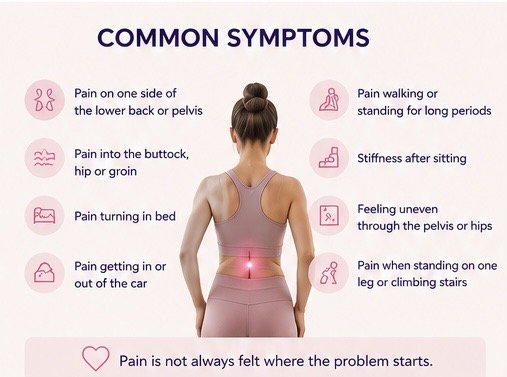
One of the most frustrating things about SIJ dysfunction is that the pain is often “referred”, meaning the pain you feel isn’t always exactly where the problem originates. This is why many people spend months stretching their lower back without long-term improvement.
What Causes SIJ Dysfunction?
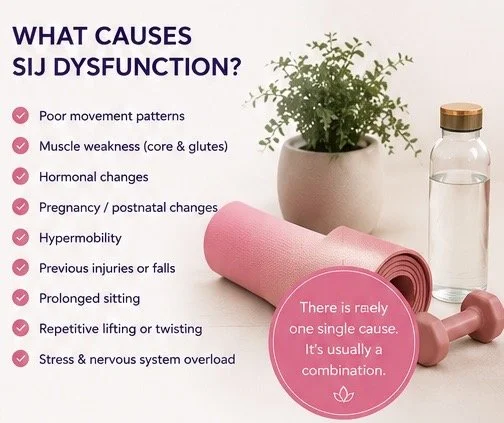
There is rarely one single cause. More commonly, it develops due to a combination of factors over time.
These may include:
Poor movement patterns
Muscle weakness around the core and glutes
Hormonal changes affecting stability
Pregnancy or postnatal changes
Hypermobility
Previous falls or injuries
Prolonged sitting
Repetitive lifting or twisting
Stress and tension within the nervous system
Often the body begins compensating around the area, which can then create ongoing irritation and stiffness.
How Can Physiotherapy Help?
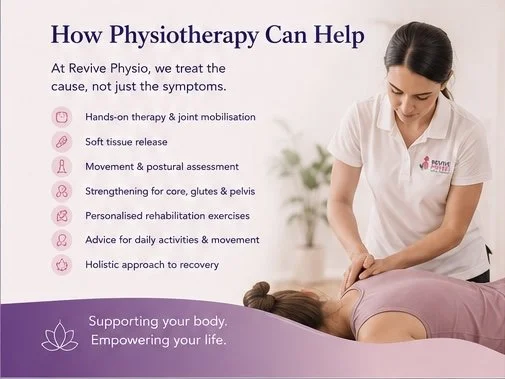
The good news is that SIJ dysfunction is usually very treatable once properly identified.
At Revive Physio, treatment begins with a detailed assessment to understand not just where the pain is, but why it is happening in the first place.
Treatment may include:
Hands-on physiotherapy and joint mobilisation
Soft tissue release
Movement and postural assessment
Strengthening work for the core, glutes and pelvis
Advice on movement patterns and daily activities
Rehabilitation exercises tailored to the individual
Support around hormonal and menopause-related factors where appropriate
I also take a more holistic approach to recovery, recognising that stress, nervous system overload and poor recovery can all influence pain levels and healing.
You Don’t Have To Just Live With It
Many women put up with back and pelvic pain for months — sometimes years — assuming it is “just age” or something they have to tolerate.
But ongoing pain is not something you should simply accept.
If you are struggling with one-sided lower back pain, pain turning in bed, or discomfort around the pelvis or buttock, it may be worth having the area properly assessed.
Understanding the true cause is often the first step towards lasting relief.