Outer Hip Pain (Gluteal Tendinopathy) – Causes, Symptoms and Best Treatment
What Is Gluteal Tendinopathy?
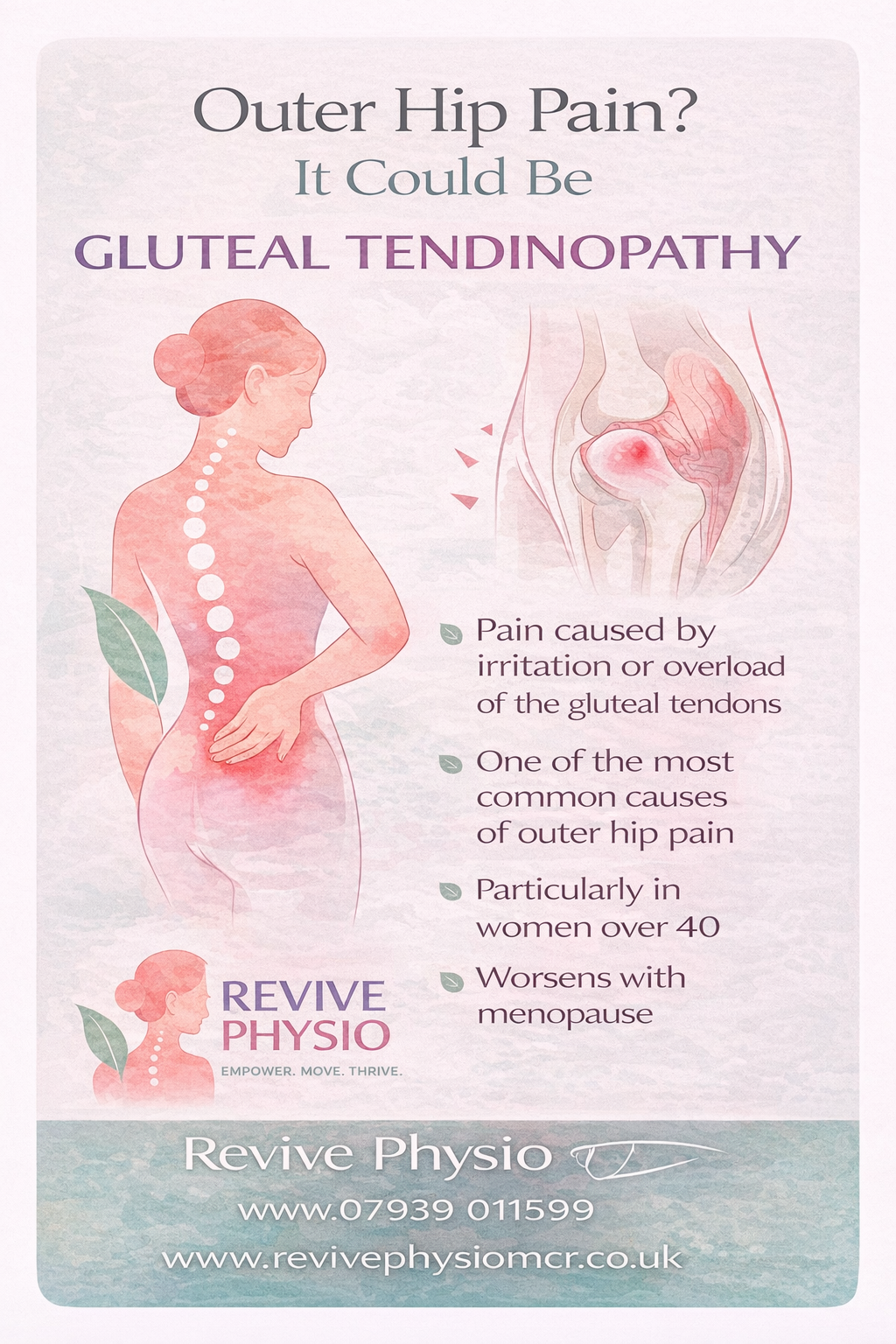
Gluteal Tendinopathy is one of the most common causes of outer hip pain, particularly in women over 40.
It involves irritation or overload of the gluteal tendons (mainly gluteus medius and minimus) where they attach to the outside of the hip.
This area is often referred to as the greater trochanter, and pain here is sometimes incorrectly labelled as hip bursitis.
Common Symptoms of Outer Hip Pain
You may notice:
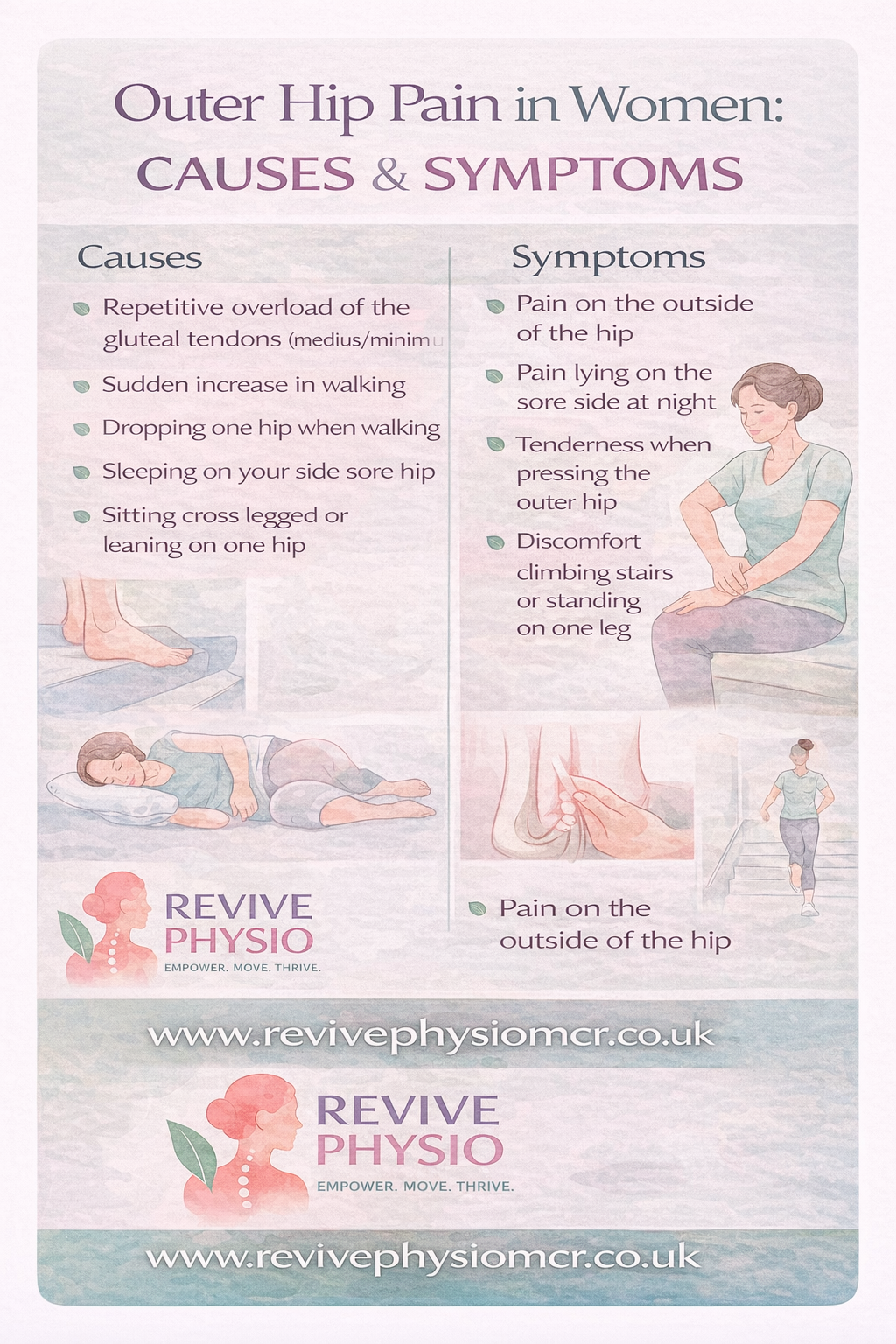
• Pain on the outside of the hip
• Pain when lying on your side (especially at night)
• Discomfort walking, climbing stairs or standing
• Pain when standing on one leg (e.g. getting dressed)
• Tenderness when pressing the outer hip
It can become very frustrating as it often affects sleep and daily activity.
Why Is It More Common in Women During Perimenopause and Menopause?
Outer hip pain is significantly more common in women, especially during perimenopause and menopause.
This is largely due to hormonal changes.
Reduced Oestrogen
Oestrogen plays a key role in maintaining tendon health and collagen structure.
As levels decline:
• Tendons become less resilient
• Load tolerance reduces
• Risk of irritation increases
Changes in Load and Biomechanics
You may also experience:
• Changes in body composition
• Reduced muscle strength
• Altered movement patterns
This increases strain on the gluteal tendons, particularly during walking or standing.
Common Causes of Gluteal Tendinopathy
Gluteal tendinopathy is usually caused by repetitive overload or compression.
Common triggers include:
Prolonged Standing or Walking
Especially sudden increases in activity.
Poor Movement Patterns
Such as:
• Dropping one hip when walking
• Weak glute muscles
• Poor pelvic control
Compression Positions
These place direct pressure on the tendon:
• Sitting cross-legged
• Standing leaning on one hip
• Sleeping on the affected side
Best Treatment for Outer Hip Pain
4
The key to recovery is reducing load on the tendon while gradually rebuilding strength.
Physiotherapy Assessment
A full assessment looks at:
• Hip strength
• Pelvic alignment
• Movement patterns
• Lumbar spine and SIJ function
Strengthening & Rehabilitation
This is the most important part of treatment.
Exercises focus on:
• Glute strength (especially glute med)
• Pelvic control
• Load tolerance
Rehabilitation must be progressive and specific.
Load Management
Reducing aggravating activities temporarily is essential.
This may include:
• Avoiding lying on the painful side
• Using a pillow between knees
• Modifying walking distances
Manual Therapy
Hands-on treatment can help:
• Reduce pain
• Improve movement
• Address tight surrounding tissues
Treatment may include:
• Soft tissue release
• Joint mobilisation
• SIJ and lumbar spine treatment
Shockwave Therapy
Useful for persistent cases, helping to stimulate healing in the tendon.
When Should You Seek Help?
If your hip pain:
• Has lasted more than a few weeks
• Is affecting sleep
• Is limiting activity
…it’s worth having it assessed early to prevent it becoming chronic.
Need Help With Hip Pain?
If you're struggling with outer hip pain or gluteal tendinopathy, physiotherapy can help you recover and move confidently again.
At Revive Physio, I offer:
• Physiotherapy assessment and treatment
• Strength and rehab programmes
• Shockwave therapy
• Sports massage & dry needling
• Menopause-focused joint health support
📍 Revive Physio is based in Walkden and supports patients across Worsley, Tyldesley, Atherton and Greater Manchester
📞 07939 011599
🌐 www.revivephysiomcr.co.uk