FROZEN Shoulder (adhesive capsulitis) : causes, symptoms & treatment & the affect of menopause
Frozen shoulder, medically known as adhesive capsulitis, is a painful condition that causes stiffness and reduced movement in the shoulder joint. It can develop gradually and often makes simple daily activities such as dressing, reaching overhead or sleeping on the affected side difficult.
Frozen shoulder is particularly common in women between the ages of 40 and 60, and many cases occur during perimenopause or menopause.
The good news is that with the right treatment and rehabilitation, most people recover well.
What is Frozen Shoulder?
Frozen shoulder occurs when the capsule surrounding the shoulder joint becomes inflamed and thickened.
This causes the capsule to tighten and restrict movement, leading to pain and stiffness.
The condition typically develops in three stages.
1. The Freezing Stage
This stage is usually the most painful.
Symptoms may include:
• Increasing shoulder pain
• Pain at night
• Difficulty reaching overhead or behind your back
• Gradual loss of shoulder movement
This stage can last 6–9 months.
2. The Frozen Stage
Pain may start to settle slightly, but stiffness becomes more noticeable.
You may experience:
• Significant restriction in shoulder movement
• Difficulty lifting your arm
• Problems with dressing, washing hair or reaching shelves
This stage can last 4–12 months.
3. The Thawing Stage
Movement gradually improves as the capsule begins to loosen.
This stage may last 6–12 months.
Although frozen shoulder can take time to resolve, treatment can help reduce pain and improve recovery.
Why Frozen Shoulder Is More Common in MENOPAUSE
Frozen shoulder occurs more frequently in women, particularly during midlife hormonal changes.
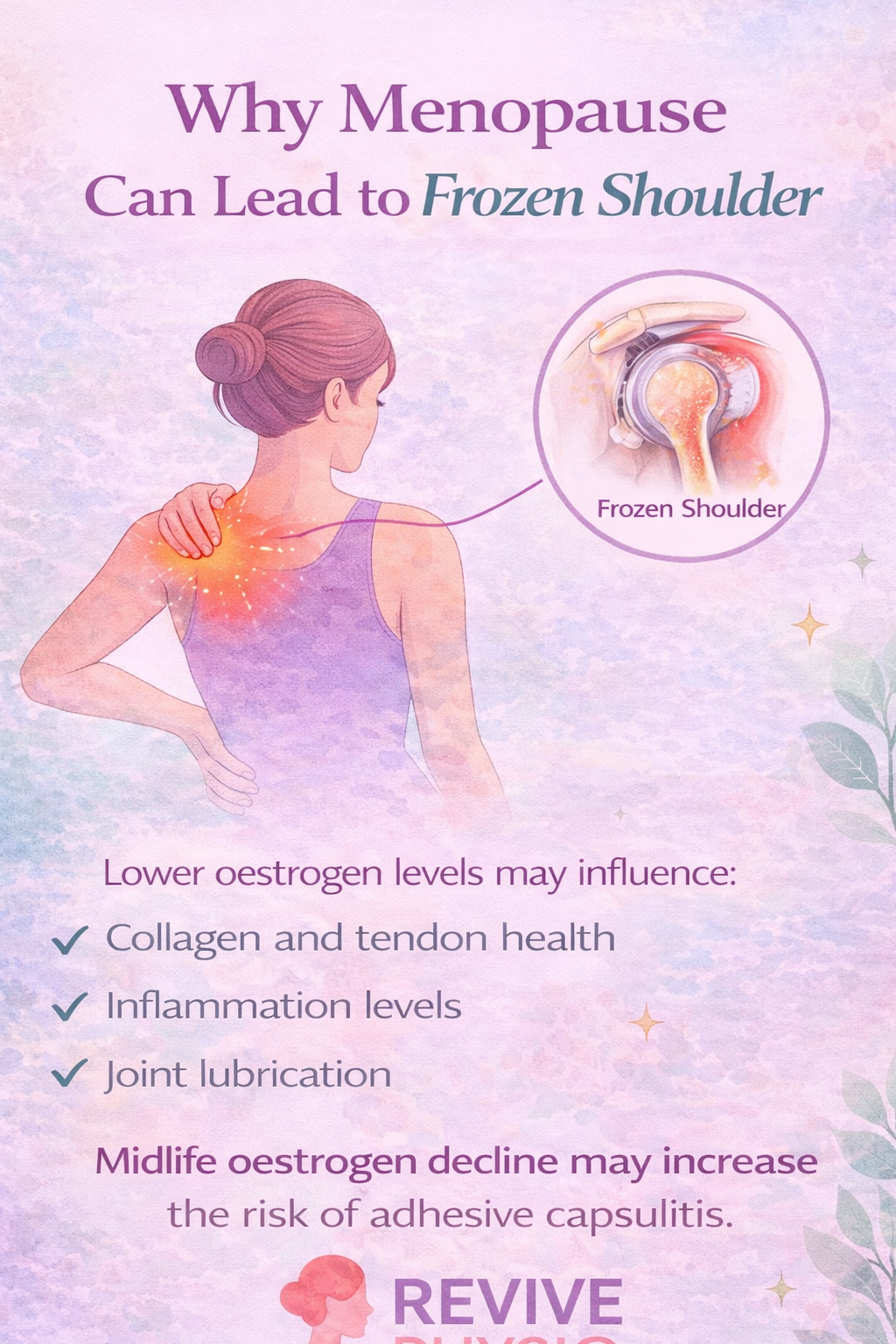
Lower oestrogen levels may influence:
• Collagen health
• Tendon and ligament elasticity
• Inflammation levels
• Joint lubrication
This may partly explain why frozen shoulder is more common during perimenopause and menopause.
Risk Factors for Frozen Shoulder
Several factors may increase the risk of developing adhesive capsulitis:
• Being female
• Age between 40–60
• Diabetes
• Thyroid conditions
• Previous shoulder injury
• Shoulder surgery
• Prolonged immobilisation
Treatment Options for Frozen Shoulder
Treatment focuses on reducing pain and gradually restoring movement.
At Revive Physio, treatment may include a combination of approaches depending on the stage of the condition.
Physiotherapy
Physiotherapy is one of the most effective ways to manage frozen shoulder.
Treatment may include:
✔ Hands-on manual therapy
✔ Joint mobilisation
✔ Targeted rehabilitation exercises
✔ Postural correction
✔ Advice on managing daily activities
These treatments help restore mobility and prevent long-term stiffness.
Exercise Rehabilitation
Specific exercises are important for improving shoulder movement.
These may include:
• Gentle mobility exercises
• Stretching the shoulder capsule
• Strengthening surrounding muscles
• Gradual movement progression
Exercises are introduced carefully depending on the stage of the condition.
Dry Needling
Dry needling can help reduce muscle tension around the shoulder and improve pain levels, particularly in the early stages.
Hyaluronic Acid Injections
Hyaluronic acid injections may help improve joint lubrication and reduce pain in some shoulder conditions, particularly when stiffness and joint irritation are present.
Self-Management Strategies
Several simple strategies can support recovery.
Heat Therapy
Warmth can help relax muscles and reduce stiffness.
Gentle Movement
Keeping the shoulder moving within a comfortable range helps prevent worsening stiffness.
Posture Awareness
Poor posture can increase strain on the shoulder and surrounding muscles.
When to Seek Physiotherapy
If shoulder pain or stiffness persists for several weeks, it is worth seeking an assessment.
Early physiotherapy can help:
• Improve shoulder mobility
• Reduce pain
• Prevent long-term restriction
• Support a faster recovery
Frozen shoulder can be frustrating, but with the right guidance and treatment plan, recovery is very achievable.
Physiotherapy for Frozen Shoulder in Mosley common
At Revive Physio in Mosley Common I regularly help patients with shoulder pain, frozen shoulder and mobility problems.
Treatment focuses on identifying the cause of symptoms and guiding recovery with a personalised treatment plan.
If you are experiencing shoulder pain, stiffness or restricted movement, a physiotherapy assessment can help determine the best approach for recovery.
📍 Revive Physio – Walkden, Greater Manchester
📧 info@revivephysiomcr.co.uk
🌐 www.revivephysiomcr.co.uk