Why Joint Pain is Common in Menopause – And What Can Help
Many women notice that during perimenopause and menopause, their body suddenly feels different.
Joints that were previously pain-free may become stiff, achy or inflamed. Many women describe waking up feeling stiff, experiencing new knee or shoulder pain, or noticing that old injuries flare up more often.
While this can feel frustrating, it is actually a very common symptom of hormonal change.
The good news is that there are several things that can help improve joint health and reduce discomfort.
Why Menopause Can Cause Joint Pain
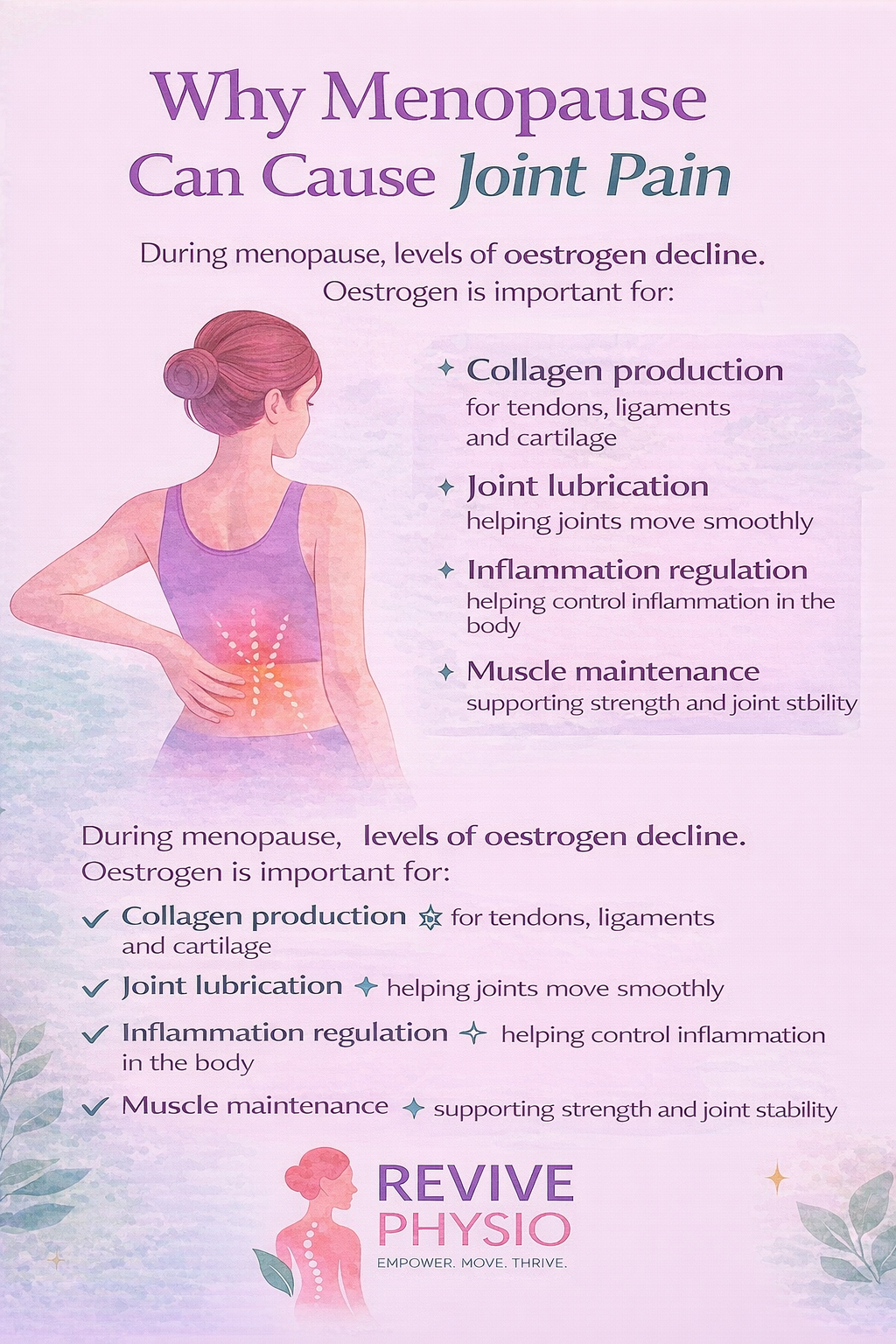
During perimenopause and menopause, levels of oestrogen decline.
Oestrogen plays an important role in several systems that affect joint health:
• Collagen production – important for tendons, ligaments and cartilage
• Joint lubrication – helping joints move smoothly
• Inflammation regulation – helping control inflammatory responses in the body
• Muscle maintenance – supporting strength and joint stability
As hormone levels change, some women experience:
• Stiff joints
• Aching muscles
• Reduced flexibility
• Increased risk of tendon irritation
• Flare-ups of old injuries
This is why many women start experiencing knee pain, hip pain, shoulder pain or back pain during their 40s and 50s.
Ways to Support Joint Health During Menopause
While hormonal change can contribute to joint discomfort, lifestyle factors can make a big difference.
A combination of movement, nutrition and recovery can help support the body through this stage of life.
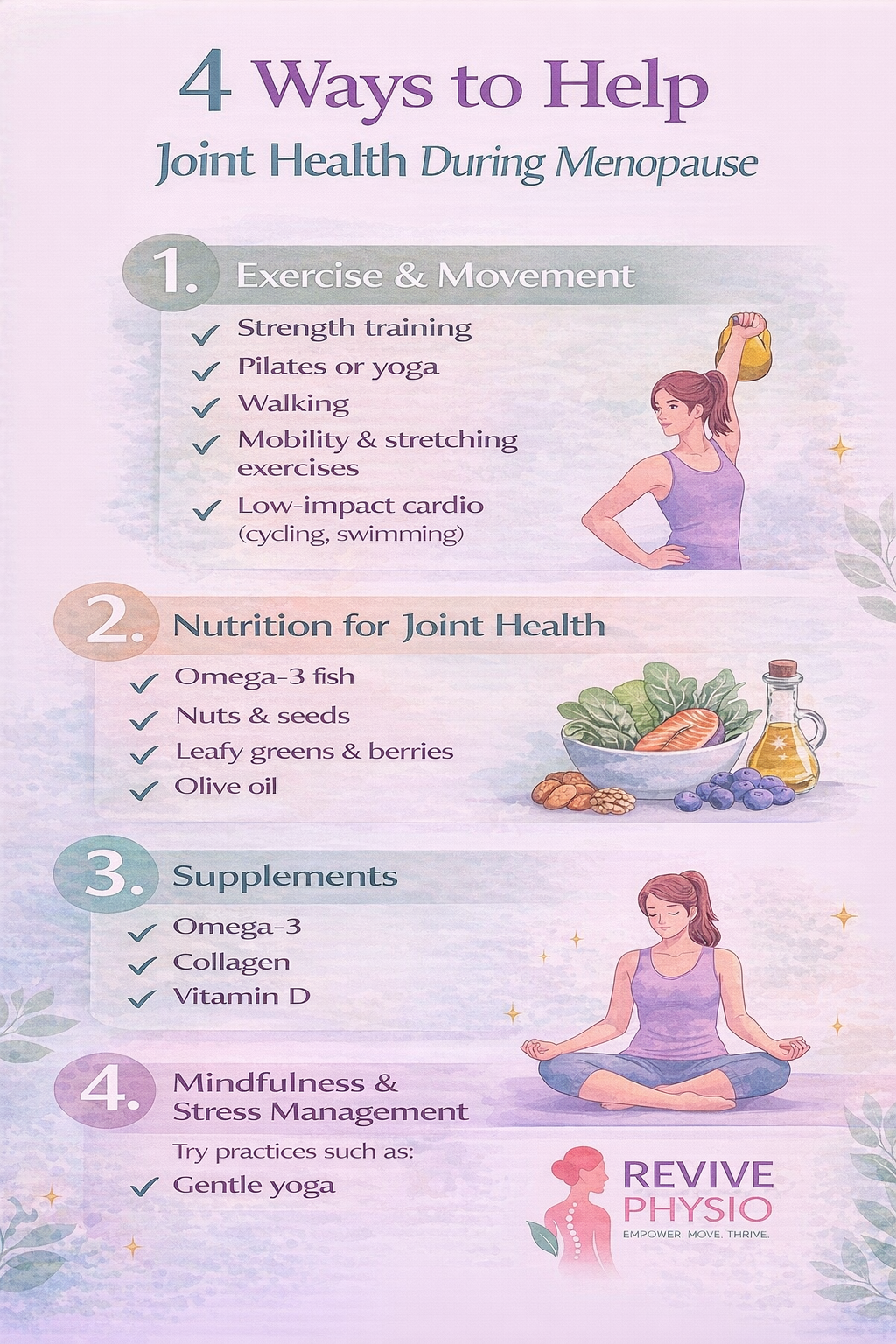
1. Exercise and Movement
Regular movement is one of the most effective ways to reduce joint pain.
Movement helps:
• Improve circulation to joints
• Maintain muscle strength
• Support joint stability
• Reduce stiffness
Helpful forms of exercise include:
✔ Strength training
✔ Pilates or yoga
✔ Walking
✔ Mobility and stretching exercises
✔ Low-impact cardio such as cycling or swimming
Strengthening the muscles around joints can significantly reduce pressure on the joints themselves.
2. Nutrition for Joint Health
Diet can also influence inflammation and joint health.
Foods that may support joint function include:
• Oily fish (omega-3 fatty acids)
• Nuts and seeds
• Leafy green vegetables
• Berries
• Olive oil
• Whole foods rich in antioxidants
Staying well hydrated is also important, as joint cartilage relies on water to maintain its cushioning effect.
3. Supplements That May Support Joints
Some women choose to include supplements to support joint health.
Common options include:
• Omega-3 fatty acids
• Collagen peptides
• Glucosamine and chondroitin
• Vitamin D
• Magnesium
However, supplements should be considered alongside a balanced diet and healthy lifestyle.
4. Mindfulness and Stress Management
Menopause can also be a time when stress levels increase due to life pressures, work, family or sleep disruption.
Chronic stress can increase inflammation and muscle tension, which may contribute to pain.
Practices such as:
• Mindfulness
• Meditation
• Breathing exercises
• Gentle yoga
• Reiki or relaxation therapies
can help support both physical and mental wellbeing.
When to Consider Physiotherapy
Although joint aches can be part of menopause, persistent pain should not simply be accepted as something you have to live with.
A physiotherapy assessment can help identify:
• Joint restrictions
• Muscle imbalances
• tendon irritation
• posture or movement patterns contributing to pain
Treatment may include:
✔ Hands-on physiotherapy
✔ Exercise rehabilitation
✔ Dry needling
✔ Sports massage
✔ Hyaluronic acid joint injections where appropriate
✔ Advice on posture, movement and strength
Early treatment can often prevent symptoms becoming long-term problems.
Supporting Women Through Menopause
At Revive Physio in Walkden, I regularly work with women experiencing pain and stiffness during perimenopause and menopause.
Treatment focuses on improving movement, reducing pain and helping women stay active and confident in their bodies.
If you are experiencing persistent joint pain, stiffness or reduced mobility, a physiotherapy assessment may help identify the cause and guide the best treatment approach.
📍 Revive Physio – Walkden, Greater Manchester
📧 info@revivephysiomcr.co.uk
🌐 www.revivephysiomcr.co.uk