
Plantar Fasciitis – Causes and Best Treatments
What Is Plantar Fasciitis?
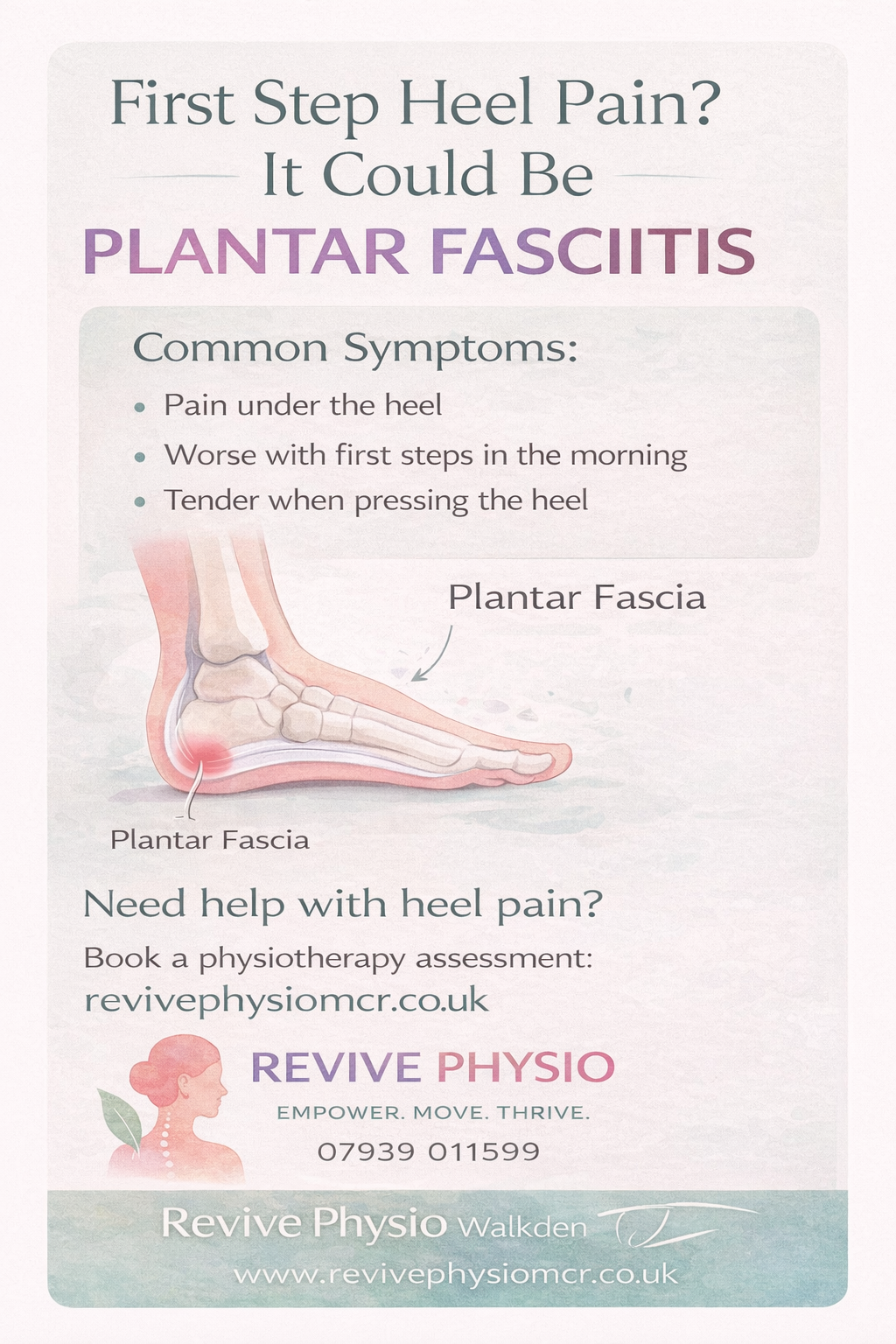
Plantar fasciitis is one of the most common causes of heel pain and occurs when the plantar fascia, a thick band of connective tissue running along the bottom of the foot, becomes irritated or overloaded.
The plantar fascia acts like a shock absorber, supporting the arch of the foot during walking and standing.
When this tissue is repeatedly overloaded, tiny micro-tears can occur, leading to:
• Pain under the heel
• Stiffness in the foot
• Difficulty walking first thing in the morning
Many people describe the pain as a sharp stabbing sensation when taking the first few steps after getting out of bed.
As the foot warms up, the pain may ease, but it often returns after long periods of standing or activity.
Common Causes of Plantar Fasciitis
Plantar fasciitis usually develops due to repetitive strain on the foot.
Common contributing factors include:
Prolonged standing
Jobs that require long hours on your feet, such as healthcare, retail or teaching.
Tight calf muscles
Limited ankle mobility increases strain through the plantar fascia.
Poor footwear
Unsupportive shoes or worn-out trainers can increase load through the heel.
Sudden increase in activity
Starting a new exercise routine or increasing walking or running too quickly.
Foot mechanics
Flat feet or very high arches can change how forces travel through the foot.
Referred pain
From Lumbar spine and Sacroiliac Joint Dysfunction
Hormonal changes
in Perimenopause/Menopause
Why Plantar Fasciitis Is More Common in Women During Perimenopause and Menopause
Many women notice new joint or tendon pain during perimenopause and menopause, including heel pain.
This is not a coincidence.
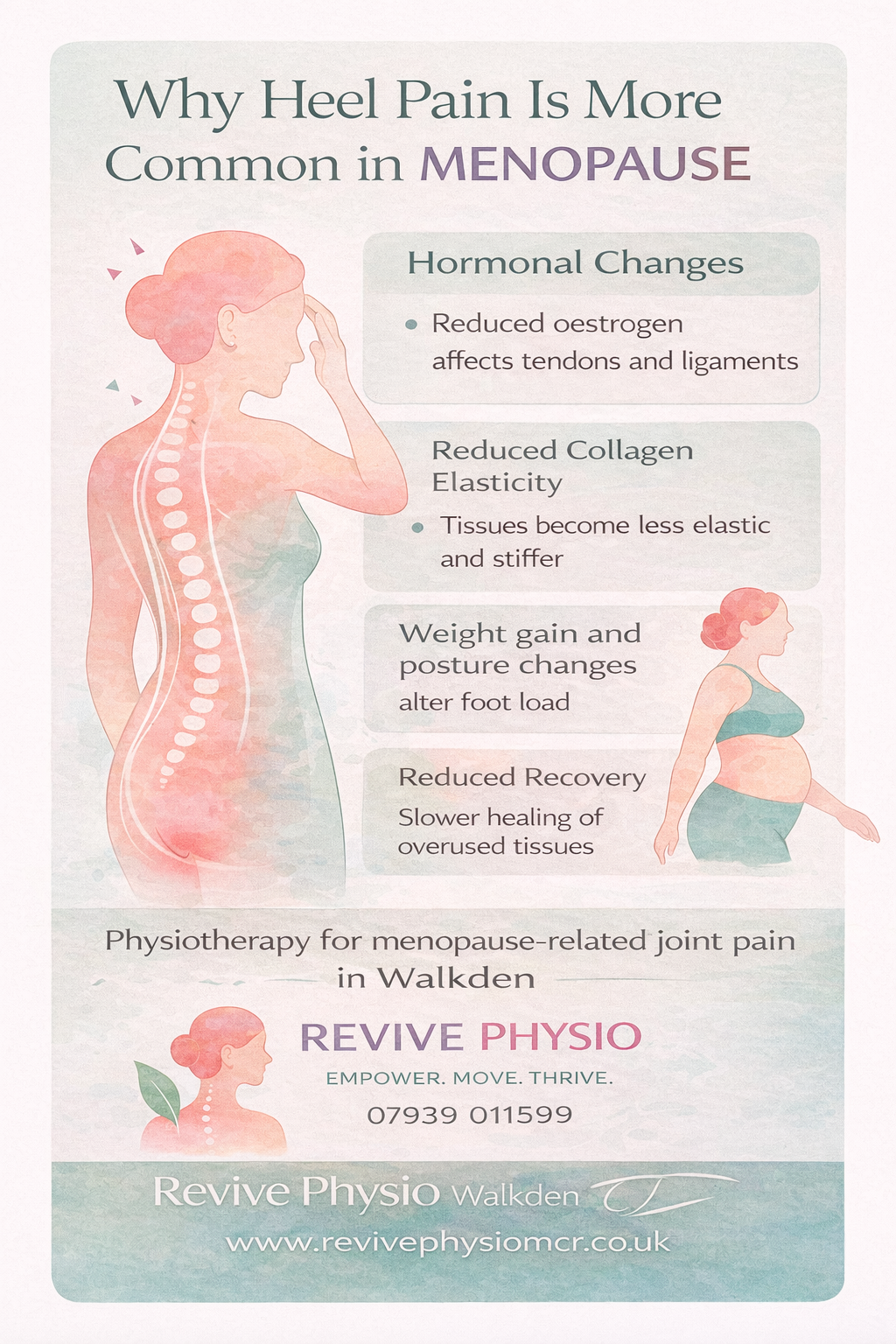
Hormonal changes, particularly a reduction in oestrogen, can affect the health of connective tissue, including ligaments, tendons and fascia.
Oestrogen plays an important role in:
• Maintaining collagen strength
• Supporting tissue elasticity
• Helping tissues recover after load
During perimenopause and menopause this change can lead to:
• Increased stiffness in connective tissues
• Reduced shock absorption
• Slower recovery after activity
This can make structures like the plantar fascia more vulnerable to overload, especially when combined with other factors such as weight changes, altered activity levels or long periods on your feet.
For many women, heel pain can be one of the first musculoskeletal symptoms noticed during this transition.
Physiotherapy Assessment
A detailed assessment looks at the entire kinetic chain, including:
• Foot mechanics
• Ankle mobility
• Calf muscle flexibility
• Hip strength
• Pelvic alignment
• Lumbar spine function
Often plantar fasciitis develops because of biomechanical overload elsewhere in the body, so addressing the root cause is essential.
Manual Therapy
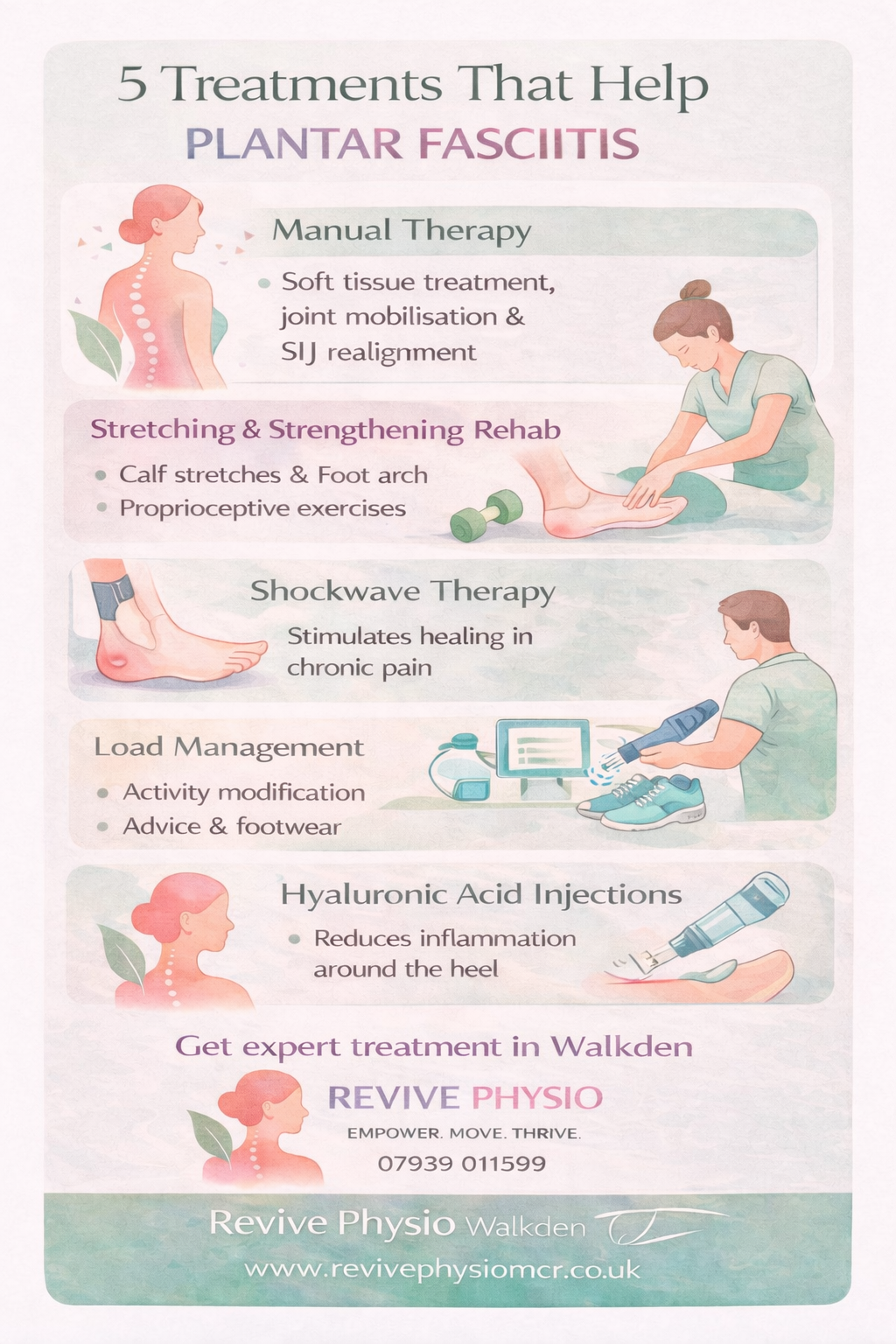
Hands-on treatment can help reduce pain and improve mobility in the affected tissues.
Manual therapy techniques may include:
• Soft tissue release of the plantar fascia
• Calf and Achilles tendon release
• Foot and ankle joint mobilisation
• Trigger point therapy in the calf muscles
These treatments help reduce tissue tension and improve movement through the foot.
Pelvic and Spinal Realignment
In some cases, plantar fasciitis is influenced by biomechanical imbalances higher up the body.
Dysfunction in the sacroiliac joint (SIJ) or lumbar spine can alter weight distribution and gait mechanics, increasing load through one foot.
Physiotherapy treatment may therefore include:
• SIJ mobilisation or realignment
• Lumbar spine mobilisation
• Postural correction
• Gait analysis
Correcting these imbalances can significantly reduce stress on the plantar fascia.
Strengthening and Rehabilitation
Research shows strengthening exercises are one of the most effective long-term treatments for plantar fasciitis.
Exercises may target:
• Calf muscles
• Foot arch stabilisers
• Tibialis posterior
• Hip and glute muscles
Improving strength helps support the arch of the foot and reduce strain on the plantar fascia.
Shockwave Therapy
Shockwave therapy is often used for persistent plantar fasciitis that has not responded to other treatments.
It works by:
• Stimulating healing within the tissue
• Increasing blood flow
• Reducing pain sensitivity
Many patients experience significant improvement after a course of treatment.
Footwear and Load Management
Supportive footwear is an important part of recovery.
Patients are often advised to:
• Avoid flat unsupportive shoes
• Use cushioned trainers or supportive footwear
• Gradually increase activity levels
Load management helps prevent ongoing irritation of the plantar fascia.
Hyaluronic Acid Injections
In some persistent cases, hyaluronic acid injections may be used to support tissue health and reduce inflammation.
Hyaluronic acid is a naturally occurring substance within the body that helps:
• Improve tissue lubrication
• Reduce friction between structures
• Support healing in irritated tissues
This treatment may be considered when conservative treatment alone has not resolved symptoms.
The Importance of Treating the Whole Body
Plantar fasciitis is rarely just a foot problem.
Effective treatment often requires addressing:
• Foot mechanics
• Calf muscle tension
• Pelvic alignment
• Spinal mobility
• Strength through the hips and lower limb
By treating the whole biomechanical chain, recovery is often faster and the risk of recurrence is reduced.
When Should You Seek Treatment?
If heel pain has lasted for more than a few weeks, it’s worth having it assessed.
Early treatment can prevent the condition from becoming chronic and harder to treat.
Need Help With Heel Pain?
If you're struggling with plantar fasciitis or persistent heel pain, physiotherapy can help you recover and move comfortably again.
At Revive Physio, I offer:
• Physiotherapy assessment and treatment
• Sports massage and dry needling
• Shockwave therapy
• Strength and rehabilitation programmes
📍 Revive Physio is based in Mosley Common and supports patients across Worsley, Walkden, Tyldesley, Astley, Atherton and Greater Manchester.