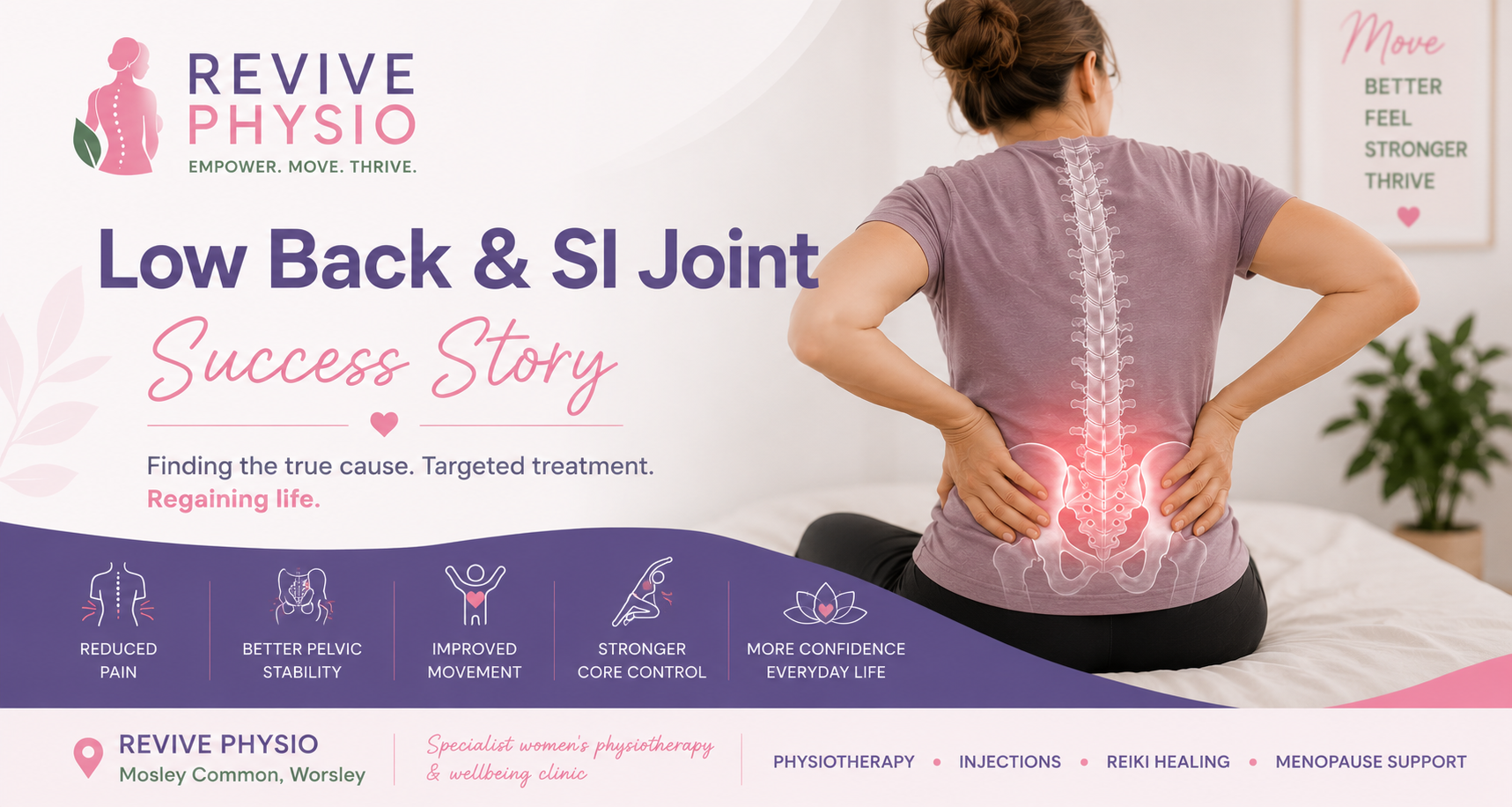
Low Back & Sacroiliac Joint Dysfunction Success Story
"After seeing so many specialists and physiotherapists, I had almost accepted I'd have to live with the pain for life. From my very first visit, I experienced relief. My pain has almost halved, and I'm slowly gaining my life back and enjoying it again." ⭐⭐⭐⭐⭐
The Problem
When this patient first came to Revive Physio, they had been living with persistent low back pain for over a year.
The pain had originally started with a sudden spasm in the lower back before becoming an ongoing problem that affected work, sleep and everyday life. Sitting for prolonged periods was particularly painful, while pain around the left side of the lower back radiated into the hip and groin.
Despite seeing several healthcare professionals, undergoing NHS physiotherapy and having an MRI scan that showed degenerative disc changes and a small disc bulge, they still felt no closer to understanding why the pain persisted. They had almost accepted that they would have to live with it.
What We Found
Following a comprehensive physiotherapy assessment, it became clear that the MRI findings were not the primary source of the patient's pain.
Instead, the assessment identified left sacroiliac joint dysfunction, together with reduced movement through the pelvis and lumbar spine, weakness in the muscles responsible for pelvic stability and significant tightness through the surrounding soft tissues.
By identifying the true source of the symptoms, we were able to develop a treatment plan that targeted the underlying cause rather than focusing on the MRI findings alone.
The Treatment
A personalised treatment programme was developed, including:
Education about the true source of the pain and advice on managing symptoms
Hands-on sacroiliac joint and lumbar spine mobilisations to restore movement
Soft tissue massage and myofascial release to the piriformis, gluteal muscles, hip flexors and lumbar muscles
Progressive core stability and pelvic control exercises
A tailored home rehabilitation programme focusing on long-term self-management and preventing future flare-ups
The Outcome
From the very first treatment, the patient experienced noticeable relief in their symptoms.
As treatment progressed, pain around the sacroiliac joint became significantly more manageable and the severe pain that had previously dominated everyday life reduced dramatically. The patient gained a much better understanding of their condition and the confidence to manage flare-ups independently using their rehabilitation programme.
While we continue to progress their core stability, pelvic control and self-management strategies, the degenerative disc changes seen on the MRI are no longer the main concern. The patient's symptoms have almost halved, pain now occurs only intermittently, and they are enjoying life again after feeling they had exhausted every option.
Take Home Message
MRI scans often show age-related changes such as disc degeneration or disc bulges, but these findings are not always the cause of persistent low back pain.
A thorough physiotherapy assessment is essential to identify the true source of your symptoms and create a treatment plan that targets the underlying problem.
At Revive Physio in Mosley Common, Worsley, we regularly help people with persistent low back pain, sacroiliac joint dysfunction, hip pain and sciatica-like symptoms through expert assessment, hands-on physiotherapy and personalised rehabilitation.
If you've been living with ongoing low back pain and feel you've tried everything, don't lose hope. With the right diagnosis and treatment approach, it may be possible to reduce your pain, regain your confidence and get back to enjoying life again.