SHOCKWAVE THERAPY
*
SHOCKWAVE THERAPY *
At Revive Physio – Specialist physiotherapy and wellbeing clinic, we offer Shockwave Therapy as part of our physiotherapy treatment for persistent tendon and musculoskeletal conditions.
Shockwave therapy is a non-invasive treatment that uses mechanical pressure waves delivered through the skin into the affected tissues.
It can be particularly useful for long-standing tendon and soft tissue problems that haven't fully responded to exercise, activity modification or other conservative treatments.
Persistent tendon and joint pain can occur at any age, but it is something many women begin to notice more during their 40s, 50s and around the perimenopause and menopause transition.
Changing hormone levels – particularly oestrogen – may influence collagen, tendon and wider musculoskeletal health. This doesn't mean that menopause is necessarily the cause of your pain, but it can be one of several factors influencing how your tissues respond to exercise, load and recovery.
At Revive Physio, we therefore don't simply treat the painful area.
Shockwave therapy is used alongside physiotherapy assessment, progressive strengthening and individual rehabilitation to help you move better, feel stronger and get back to the activities you enjoy
Helping persistent tendon and soft tissue pain get moving again
What is Shockwave Therapy?
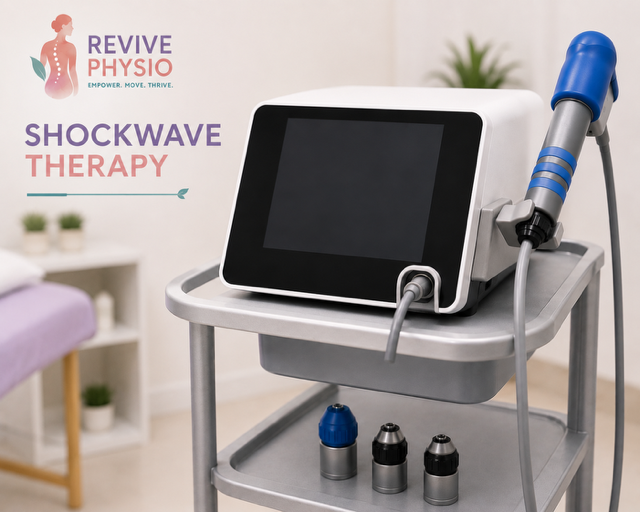
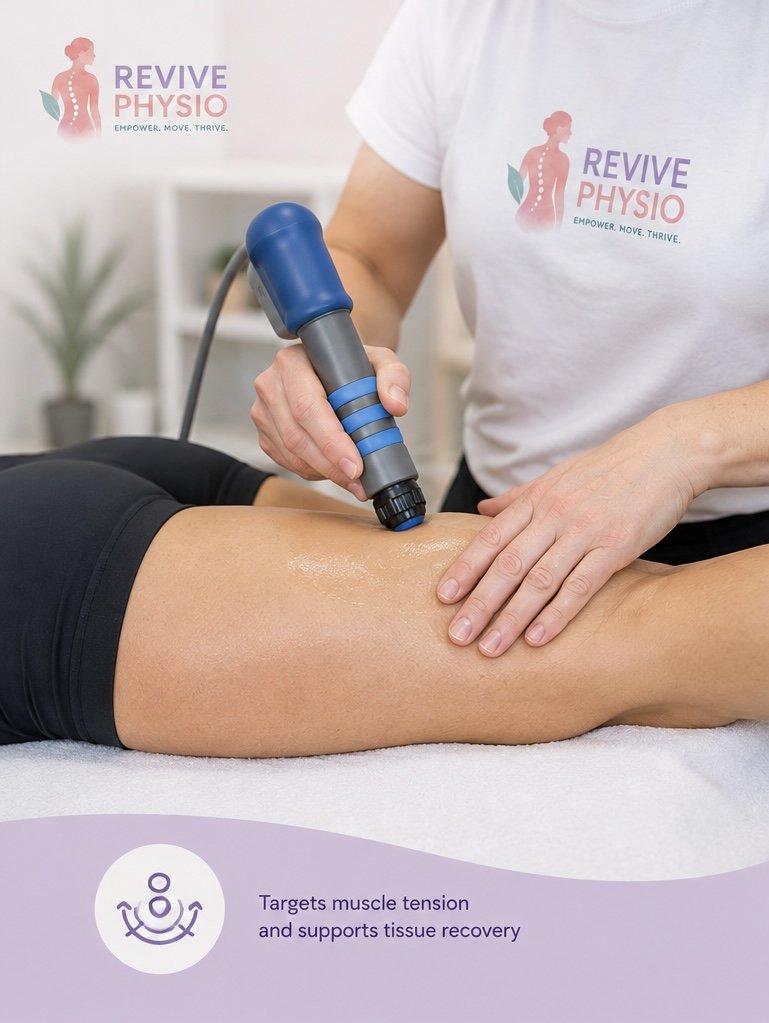
Shockwave Therapy, sometimes referred to as extracorporeal shockwave therapy, uses a handheld applicator to transmit repeated mechanical pressure waves through the skin into the area being treated.
Unlike injections or surgery, there are:
No needles
No incisions
Usually no anaesthetic required
Minimal downtime
The treatment provides controlled mechanical stimulation to an area that may have become persistently painful or is struggling to adapt to normal everyday or sporting loads.
How does Shockwave Therapy work?
Persistent tendon pain isn't simply caused by inflammation.
When a tendon has been painful for some time, there may be changes in the structure, sensitivity and capacity of the tendon to tolerate load.
Many factors can influence this, including:
Changes in activity or training
Reduced muscle strength
Previous injury
Repetitive loading
Poor recovery
Sleep and stress
Age-related changes
Hormonal changes during perimenopause and menopause
Oestrogen plays a role in collagen and musculoskeletal tissue health, which is one reason why some women begin experiencing new or recurrent tendon, muscle and joint problems during midlife.
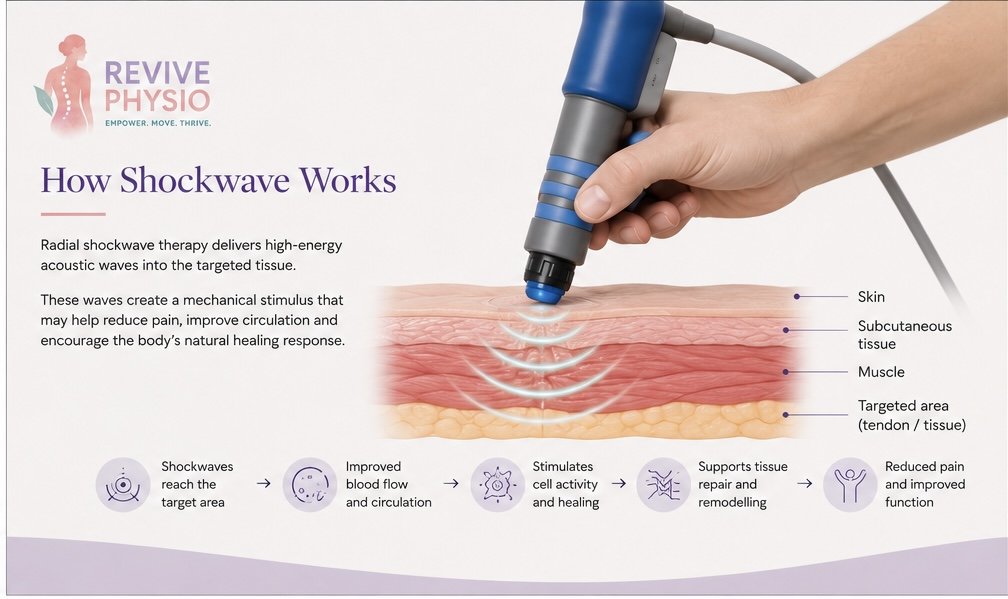
Shockwave therapy provides a controlled mechanical stimulus to the tissues.
Research suggests this may help to:
Reduce pain and sensitivity
Stimulate local circulation
Encourage cellular activity associated with tissue repair
Support tendon remodelling
Improve tolerance to loading and exercise
The exact biological mechanisms continue to be researched, but shockwave therapy is now widely used within physiotherapy, musculoskeletal and sports medicine.
Importantly, shockwave works best as part of a wider rehabilitation programme rather than simply treating the painful area in isolation.
What conditions can Shockwave Therapy help?
Plantar Fasciitis / Plantar Fasciopathy
Pain underneath the heel, often particularly noticeable when taking your first few steps in the morning or standing after sitting.
Shockwave is one of the most established uses of the treatment and can be considered when plantar heel pain has persisted despite exercises, footwear changes and other conservative treatments.
Achilles Tendinopathy
Pain, stiffness or thickening within the Achilles tendon, either around the middle of the tendon or closer to its attachment at the heel.
Shockwave can be combined with a progressive calf and Achilles strengthening programme to gradually improve the tendon’s ability to tolerate load.
Gluteal Tendinopathy / Greater Trochanteric Pain Syndrome
Pain around the outside of the hip, sometimes referred to as trochanteric bursitis, is particularly common in women during midlife.
Symptoms can include pain when:
Lying on your side
Walking longer distances
Climbing stairs
Getting up from sitting
Standing on one leg
Exercising
Hormonal changes, tendon health, muscle strength and the way the hip is being loaded can all potentially contribute.
Treatment therefore isn't simply about applying shockwave to the painful area.
Where appropriate, shockwave is combined with progressive hip and gluteal strengthening and advice around activity and loading to address the wider problem.
Tennis Elbow
Persistent pain affecting the tendons on the outside of the elbow.
Despite the name, you don't have to play tennis to develop it.
It commonly occurs following repetitive gripping, lifting, manual work, gym training and everyday activities.
Shockwave may be considered when symptoms have persisted despite appropriate rehabilitation and activity modification.
Golfer's Elbow
Pain affecting the tendon attachment on the inside of the elbow.
Shockwave may be incorporated into treatment alongside progressive strengthening of the forearm and upper limb.
Patellar Tendinopathy
Pain affecting the tendon below the kneecap, particularly during jumping, running, squatting and sporting activities.
Shockwave may form part of treatment for persistent symptoms, although progressive tendon loading and strengthening remain particularly important.
Proximal Hamstring Tendinopathy
Persistent pain around the sitting bone and upper hamstring, which may be aggravated by:
Running
Sitting
Lunging
Bending forwards
Higher-load exercise
Shockwave can be used alongside progressive hamstring, gluteal and lower-limb rehabilitation where appropriate.
Rotator Cuff Tendinopathy
Persistent shoulder pain associated with the rotator cuff tendons may sometimes be suitable for shockwave therapy.
Shockwave has also been extensively investigated for calcific rotator cuff tendinopathy, where calcium deposits develop within the tendon.
Benefits Of shocKWAve
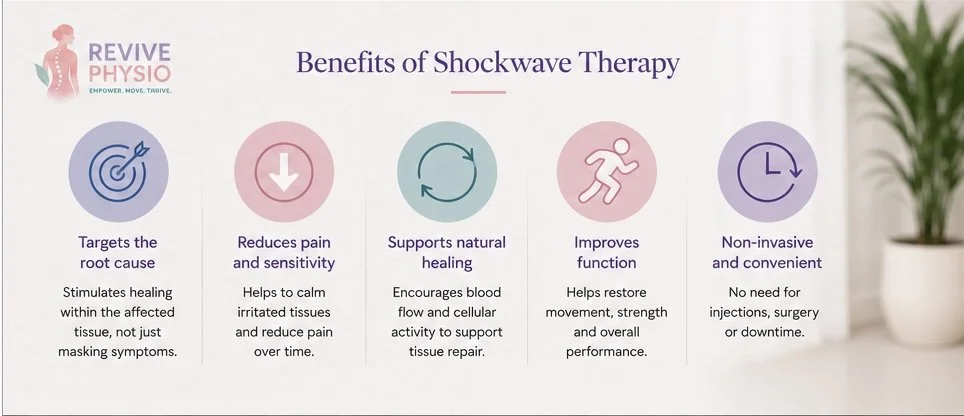
Reduced pain and sensitivity
Shockwave may help reduce pain within persistent and sensitised tissues.
Supports the body's healing response
Mechanical stimulation may encourage biological processes involved in tissue repair and remodelling.
Helps you progress rehabilitation
Reducing pain can sometimes make it easier to begin or progress the strengthening exercises needed for long-term recovery.
Improved movement and function
The overall aim is to help you return to everyday activity, exercise and sport.
Non-invasive
There are no needles, injections or surgical procedures involved.
Minimal downtime
Most people are able to continue with normal everyday activities following treatment.
Shockwave Therapy + Physiotherapy + Strengthening + Rehabilitation
*
Shockwave Therapy + Physiotherapy + Strengthening + Rehabilitation *
Shockwave Therapy at Revive Physio
Revive Physio is a specialist women's physiotherapy and wellbeing clinic in Mosley Common, serving Worsley, Walkden, Boothstown, Astley, Tyldesley and surrounding areas.
We take a whole-person approach to musculoskeletal health, with a particular understanding of the changes women may experience through midlife, perimenopause and menopause.
We don't simply apply shockwave to wherever it hurts.
We look at why the problem developed, what may be preventing it from settling and what needs to change to help you recover.
Struggling with persistent tendon pain?
Whether you're experiencing persistent heel, Achilles, hip, elbow, knee, hamstring or shoulder pain, we can assess what's going on and discuss your treatment options.
Revive Physio provides shockwave therapy from a private clinic in Mosley Common, close to Worsley and Walkden. Treatment is available for selected persistent tendon problems, including plantar fasciitis, Achilles tendinopathy, tennis elbow and gluteal tendinopathy. Every treatment plan begins with an individual physiotherapy assessment and includes appropriate rehabilitation.
Book a physiotherapy assessment at Revive Physio to find out whether Shockwave Therapy could be suitable for you.
Frequently Asked Questions
Do I still need exercises if I'm having Shockwave?
Yes – this is really important.
Shockwave therapy isn't a replacement for rehabilitation.
For most tendon problems, gradually strengthening the tendon and surrounding muscles is one of the most important parts of long-term recovery.
Depending upon your individual assessment, treatment may therefore include:
Shockwave Therapy + Strengthening + Tendon Loading + Mobility + Physiotherapy + Activity Advice
For women in midlife, maintaining and building muscle strength also becomes increasingly important for wider musculoskeletal and bone health.
The aim isn't simply to temporarily reduce your pain.
It is to help the affected tissues become stronger, more resilient and better able to tolerate the activities you want to do.
What happens during a Shockwave treatment?
Before treatment begins, you will have a physiotherapy assessment to establish your diagnosis and ensure shockwave is appropriate for you.
The area being treated is identified and a small amount of gel is applied to the skin.
The shockwave applicator is placed against the area and delivers repeated radial pressure waves into the tissues.
The intensity can be gradually adjusted depending upon the condition being treated and your tolerance.
Treatment itself usually takes only a few minutes.
Your rehabilitation programme will also be reviewed and progressed where appropriate.
Does Shockwave Therapy hurt?
You will usually feel a repetitive tapping or pulsing sensation during treatment.
Certain areas can feel uncomfortable, particularly when treating a sensitive tendon, but the intensity can be adjusted throughout the session.
Most people tolerate treatment well.
You may experience some temporary tenderness or aching afterwards, which usually settles.
How many Shockwave sessions will I need?
This depends upon your condition, how long you have had the problem and how you respond to treatment.
A typical programme is often around:
3–6 treatments, usually approximately one week apart.
Improvement doesn't necessarily happen immediately.
The biological response initiated by treatment may continue over the following weeks, meaning improvements in pain and function can develop gradually.
Is there scientific evidence for Shockwave Therapy?
Yes.
Extracorporeal shockwave therapy has been investigated in numerous clinical trials and systematic reviews for musculoskeletal conditions.
Evidence is particularly established for persistent plantar heel pain, while research also supports its use within the management of several tendinopathies.
Both focused shockwave and radial pressure wave therapy are used clinically.
Research suggests radial shockwave can improve pain and function in a number of musculoskeletal conditions, although results vary depending upon the condition, treatment parameters and rehabilitation undertaken alongside treatment.
For this reason, shockwave shouldn't be viewed as a stand-alone cure.
At Revive Physio, shockwave is incorporated into an individual physiotherapy and rehabilitation programme based upon your assessment and what is contributing to your symptoms.
Can shockwave therapy help tennis elbow?
Shockwave therapy may be considered for selected cases of persistent tennis elbow. It is not suitable for every painful elbow and does not replace progressive strengthening or activity management. A physiotherapy assessment is needed to confirm the likely diagnosis and decide whether shockwave is appropriate.
Where can I access shockwave therapy near Worsley or Walkden?
Revive Physio provides physiotherapy and shockwave therapy from a private clinic in Mosley Common, conveniently located for Worsley, Walkden, Boothstown, Astley and Tyldesley.
Ready To Start Feeling Better?
Whether you're struggling with pain, recovering from injury or looking for a more holistic approach to wellbeing, Shockwave therapy may help.
Book your appointment today and discover how shockwave therapy can support your recovery and overall health.