DSE Assessment and Workplace Physiotherapy
more comfortable, sustainable working day
If your neck, shoulders or back become increasingly uncomfortable while you work, the answer is not always simply to “sit up straight”.
Your chair, screen, laptop, keyboard, mouse, work demands and the amount of time spent in one position may all influence how you feel.
Previous injuries, strength, sleep, stress and your general health may also contribute.
At Revive Physio, your workstation and your symptoms can be considered together, helping you make practical changes that support a more comfortable and sustainable working day.
Michelle is a Chartered Physiotherapist and trained DSE assessor with more than 22 years of clinical experience, including occupational health and the management of work-related musculoskeletal problems.
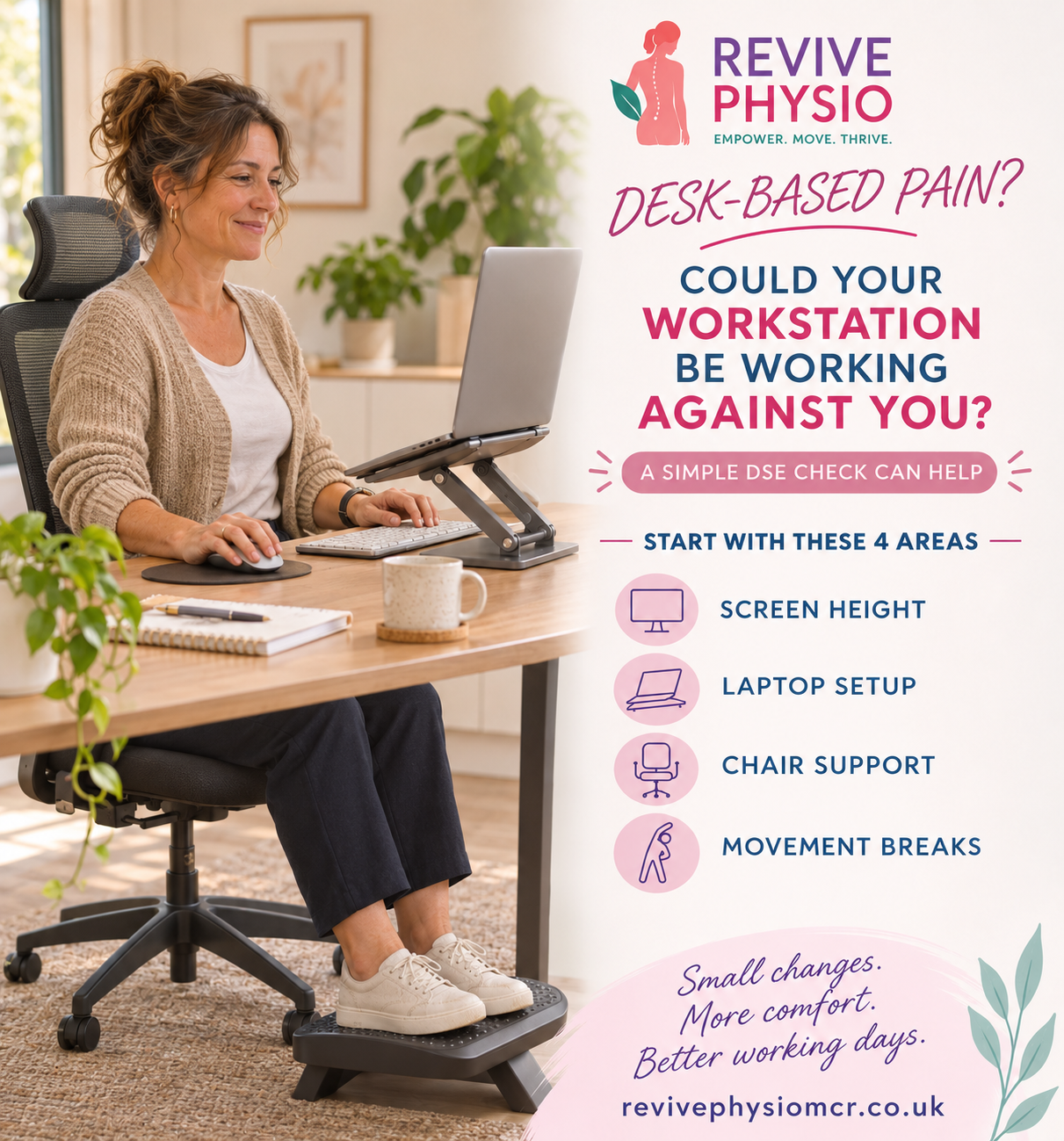
What is a DSE assessment?
A Display Screen Equipment assessment looks at how you use computers, laptops, monitors, keyboards, mice and other equipment during your working day.
It considers:
Your chair and desk
Monitor height and distance
Laptop setup
Keyboard and mouse position
Frequently used equipment
Lighting and screen glare
Your usual working tasks
Movement and pause breaks
Any individual health requirements
Symptoms that may be aggravated by work
The aim is not to place you in one rigid position or suggest that there is a single “perfect posture”.
It is to identify changes that could reduce unnecessary reaching, twisting or sustained loading, while helping you vary your position and move more regularly throughout the day.
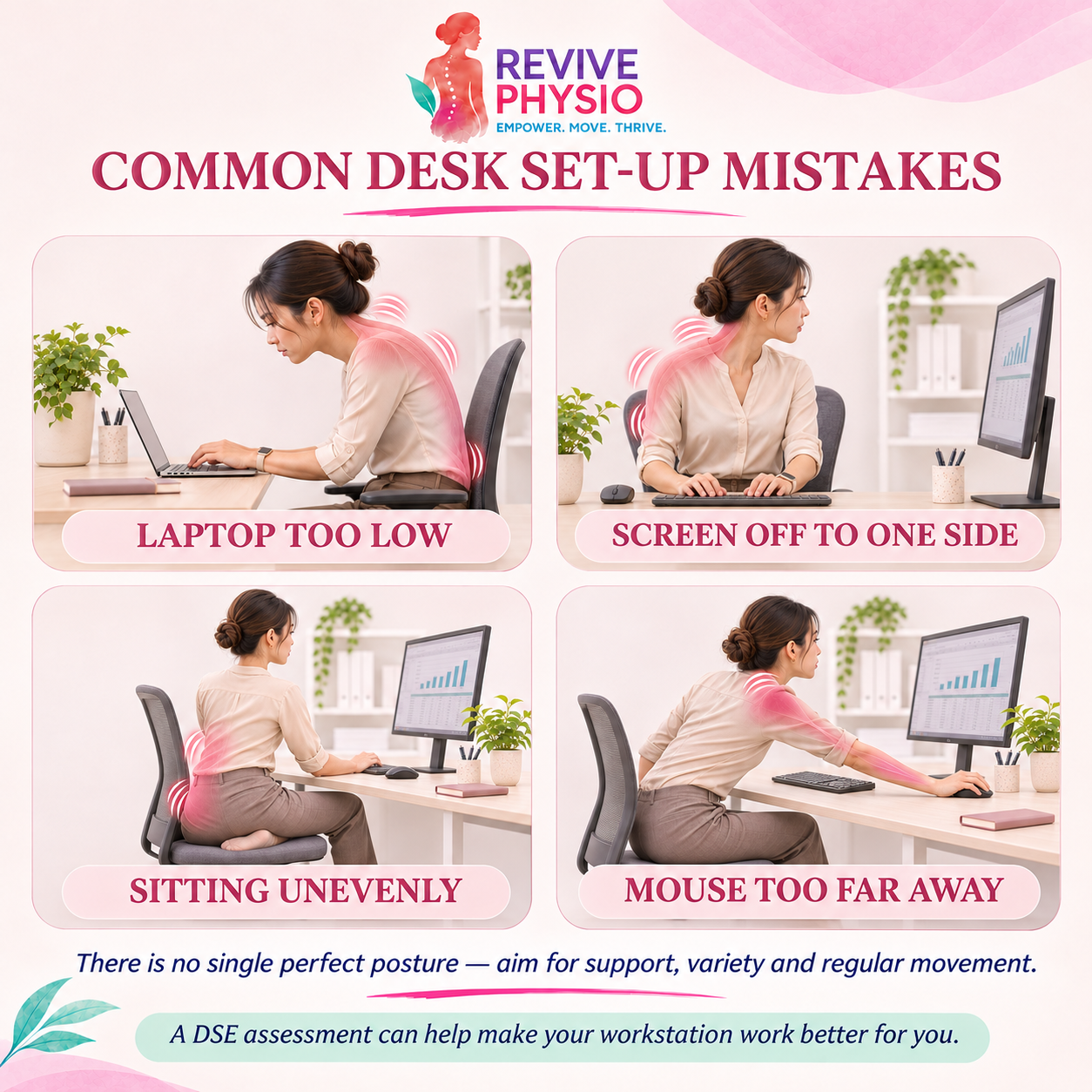
Could your workstation be aggravating your symptoms?
A DSE assessment may be useful if:
Neck or shoulder discomfort builds during the working day
Lower-back or hip pain is aggravated by sitting
You regularly develop headaches or eye fatigue
Your forearm, wrist or hand becomes uncomfortable when typing or using a mouse
You work mainly from a laptop without a riser, separate keyboard or mouse
You repeatedly lean towards your screen to read
Your screen is positioned to one side
You often sit on one leg, cross-legged or shifted towards one side
You struggle to get comfortable in your chair
You rarely take movement or task breaks
Your symptoms return whenever your workload increases
You have changed your equipment, role or working location
You work between home and an office
You have made basic changes but remain uncomfortable
These factors do not necessarily mean that your workstation has caused your pain.
Pain is usually influenced by several things. However, your setup and working habits are modifiable factors that may be worth addressing.

What happens during a DSE assessment?
Your DSE assessment is carried out at your usual workstation, whether you work in an office or from home. This allows your equipment, working environment and everyday tasks to be reviewed properly.
The assessment will be completed by Michelle, a Chartered Physiotherapist and qualified DSE Assessor with experience in occupational health.
Your assessment begins with a discussion about:
Your job and usual tasks
Where and how you work
How long you spend using display-screen equipment
Your current equipment
Any pain, symptoms or health concerns
Previous injuries or medical conditions
Adjustments that have already been tried
Michelle will then review your workstation, equipment and usual working position. This may include your:
Chair and lower-back support
Desk
Monitor or laptop
Keyboard and mouse
Foot support
Lighting
Frequently used equipment
Working pattern
Movement and pause breaks
Individual task demands
Where appropriate, practical adjustments can be made during the assessment. You’ll receive clear advice explaining what to change, why it may help and which recommendations should be prioritised.
Recommendations may include:
Adjusting your chair height or support
Changing the height or distance of your monitor
Centring your screen and keyboard
Using a laptop riser with a separate keyboard and mouse
Bringing frequently used equipment closer
Supporting your feet
Reducing repeated reaching or twisting
Varying your working position more regularly
Reviewing the pattern of screen-based work
Considering additional equipment
Seeking physiotherapy or medical advice where appropriate
Because Michelle is both a Chartered Physiotherapist and qualified DSE Assessor, she can consider the connection between your symptoms, physical health, work demands and workstation—not simply the position of your equipment.
Choose a DSE assessment when:
Your main concern is the way your workstation is arranged.
You may want help adjusting your chair, screen, laptop or other equipment, or identifying working habits that may be contributing to discomfort.
A DSE assessment may also be appropriate following a change of workstation, role, equipment or working location.
Choose Physio when:
Your pain is persistent, worsening or not limited to desk-based work.
Physiotherapy may be the better starting point if your symptoms:
Affect your sleep
Limit normal daily activities
Follow an injury
Continue when you are away from work
Include restricted movement
Are associated with persistent pins and needles, numbness or weakness
Have not improved despite changing your setup
A physiotherapy assessment considers your symptoms, movement, strength, relevant joints, muscles and nerves, as well as any work-related factors. Treatment may include hands-on physiotherapy, exercise rehabilitation, acupuncture, advice and progressive strengthening where appropriate.
DSE assessment or physiotherapy?
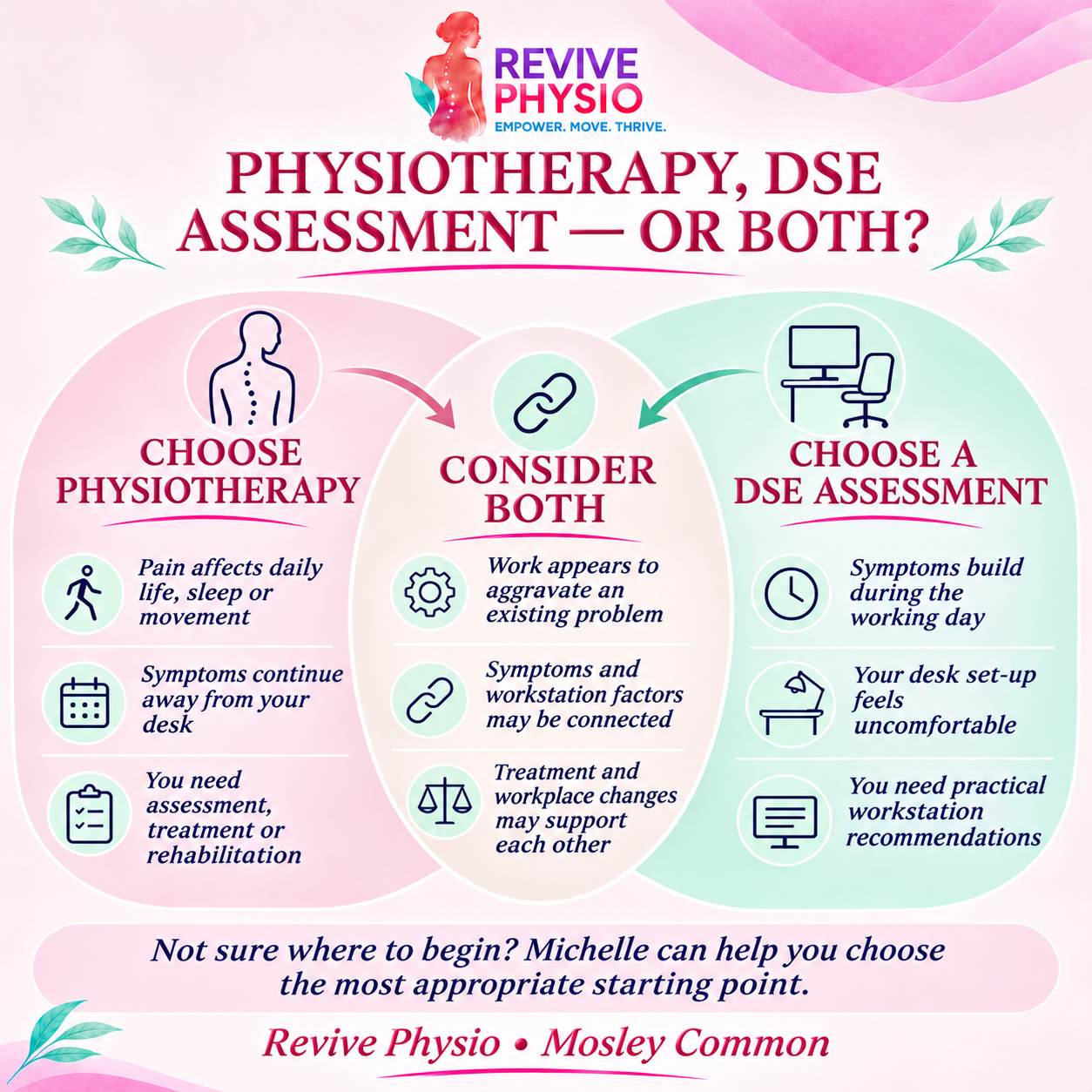
Sometimes both are helpful
Changing a workstation can reduce an aggravating factor, but it may not address an established musculoskeletal problem by itself.
Similarly, physiotherapy may help manage pain and improve physical capacity, but symptoms may keep returning if the equipment or working routine continues to place unnecessary demands on the body.
Where appropriate, your DSE and physiotherapy needs can be considered together.
Not sure which appointment you need? Contact Michelle and she will help you choose.
Why choose Revive Physio?
Your assessment is completed by an experienced clinician who understands both workstation setup and musculoskeletal pain.
Michelle is:
A Chartered Physiotherapist
HCPC registered
A trained DSE assessor
Experienced in occupational health
Qualified DSE Assessor
Experienced in assessing neck, shoulder, back, arm and wrist conditions
Able to identify when physiotherapy or rehabilitation may also be appropriate
Focused on practical, individual advice rather than one-size-fits-all posture rules
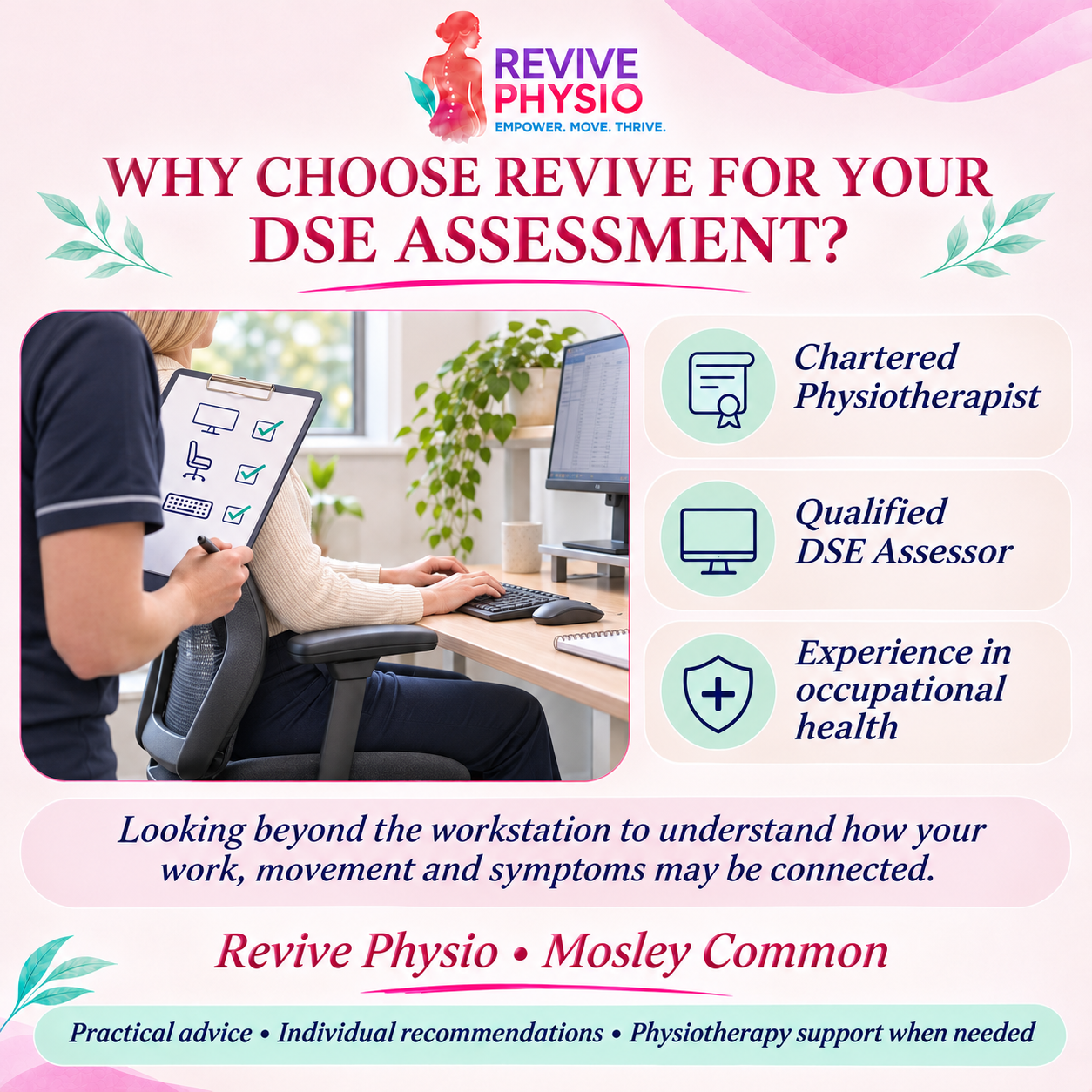
Revive Physio is a physiotherapy and wellbeing clinic in Mosley Common, conveniently located for Worsley, Walkden, Boothstown, Astley and Tyldesley.
Your 10-Minute Desk and DSE Self-Assessment
Use this practical guide at the desk where you normally work.
It will help you review your:
Chair
Screen
Laptop
Keyboard
Mouse
Working habits
Movement breaks
Symptoms
You will also learn when simple changes may be enough and when it may be appropriate to request a professional DSE assessment, physiotherapy assessment or medical advice.
Frequently asked questions
What does DSE mean?
DSE means Display Screen Equipment. It includes equipment such as desktop computers, laptops, tablets, monitors, keyboards and mice used for work.
Is there one correct posture for desk work?
No. There is no single posture that everybody should hold throughout the day.
A supportive starting position can reduce unnecessary effort, but changing position and moving regularly are also important.
The best setup is one that is suitable for your body, equipment and working tasks and allows you to vary your position comfortably.
Can poor posture cause back or neck pain?
Posture alone does not explain every episode of pain.
However, staying in one position for long periods, repeatedly reaching, twisting towards a screen or working with unsuitable equipment may aggravate symptoms in some people.
Sleep, stress, strength, previous injuries, workload and general health may also influence pain.
Can I complete my own DSE assessment?
A self-assessment is a helpful starting point and can identify straightforward adjustments.
However, it may not identify every risk or meet all of an employer’s responsibilities. Where concerns are raised, the results should be reviewed and appropriate action taken.
When should a workstation be reassessed?
A review may be appropriate when:
A new workstation is introduced
A new employee begins using the workstation
Equipment or working practices change
Someone moves between home and office working
The user reports pain or discomfort
Existing adjustments no longer meet the user’s needs
Can a DSE assessment help home or hybrid workers?
Home and hybrid workstations may also need to be considered when display-screen equipment is used regularly.
Temporary setups at kitchen tables, sofas or low laptop screens can become difficult to sustain when used for prolonged periods.
Do I need a separate keyboard and mouse with a laptop?
For short periods, a laptop may be convenient.
For prolonged work, a riser or separate screen usually needs to be combined with a separate keyboard and mouse so the screen and hands can be positioned independently.
What if I am already experiencing pain?
If discomfort is mild and linked to longer periods at your desk, begin with simple changes and more regular movement.
If pain persists, worsens, affects sleep or daily activities, follows an injury or is accompanied by weakness, numbness or persistent pins and needles, arrange an appropriate clinical assessment.
Ready to feel more comfortable at work?
If desk-based work is aggravating neck, shoulder, back, arm or wrist symptoms, you do not have to keep experimenting with your setup alone.
A professional assessment can help identify practical changes and determine whether physiotherapy or rehabilitation may also be useful.
Revive Physio is a physiotherapy and wellbeing clinic in Mosley Common, welcoming both women and men from Worsley, Walkden and surrounding areas.
Not sure whether you need a DSE assessment or physiotherapy?
Contact Michelle and she will help you choose the most appropriate place to begin.