Bursitis: Causes, Symptoms and Physiotherapy Treatment
What is Bursitis?
Bursitis is a common condition that occurs when a bursa becomes irritated or inflamed.
A bursa is a small fluid-filled sac that acts as a cushion between bones, tendons, muscles and ligaments. Its job is to reduce friction and allow smooth movement around a joint.
When a bursa becomes inflamed, movement can become painful and everyday activities may become difficult.
Although bursitis can affect anyone, it is particularly common in people who perform repetitive movements, have muscle weakness or altered movement patterns, or have underlying conditions such as osteoarthritis.
Where Can Bursitis Occur?
Bursitis can develop in several areas of the body, including:
Hip Bursitis
Often affecting the outer side of the hip (Greater Trochanteric Pain Syndrome), symptoms may include:
Pain lying on the affected side
Pain walking
Pain climbing stairs
Tenderness over the outside of the hip
Shoulder Bursitis
Shoulder bursitis commonly causes:
Pain reaching overhead
Pain lifting the arm
Night pain
Weakness around the shoulder
Elbow Bursitis
Sometimes called Olecranon Bursitis, symptoms include:
Swelling over the tip of the elbow
Pain when leaning on the elbow
Warmth or tenderness
Knee Bursitis
Knee bursitis may cause:
Pain kneeling
Swelling around the kneecap
Tenderness
Difficulty walking
Heel Bursitis
Inflammation can occur around the back of the heel, causing pain during walking, running or wearing certain footwear.
What Causes Bursitis?
There are many possible causes, including:
Repetitive movements
Overuse
Prolonged kneeling or leaning
Poor posture
Muscle weakness
Reduced joint mobility
Sports injuries
Osteoarthritis
Sudden increases in activity
Often, bursitis develops because another problem has altered the way a joint moves and functions.
Common Symptoms of Bursitis
Symptoms vary depending on the area affected but commonly include:
✔ Localised pain
✔ Swelling
✔ Tenderness
✔ Reduced movement
✔ Pain during everyday activities
✔ Difficulty sleeping (particularly with hip or shoulder bursitis)
Can Physiotherapy Help Bursitis?
Yes.
Physiotherapy is often one of the most effective treatments for bursitis because it focuses on treating the underlying cause, not simply the inflamed bursa.
Following a comprehensive assessment, treatment may include:
Education and activity modification
Hands-on manual therapy
Joint mobilisation
Soft tissue massage
Exercise rehabilitation
Strengthening programmes
Postural advice
Movement retraining
The aim is to reduce irritation, improve movement and prevent symptoms from returning.
Shockwave Therapy for Bursitis
For some long-standing cases, Shockwave Therapy may be considered.
Shockwave therapy uses acoustic waves to stimulate healing within damaged tissues and may be beneficial for certain tendon-related conditions that are contributing to bursitis.
A full assessment is required to determine whether shockwave therapy is appropriate, as it is not suitable for every type of bursitis.
Injection Therapy for Bursitis
For patients whose symptoms are persistent or significantly affecting daily life, Injection Therapy may also be considered.
Depending on the location and clinical findings, this may include:
Corticosteroid injections to help reduce inflammation and pain
Hyaluronic Acid Injections where appropriate if underlying osteoarthritis is contributing to symptoms
Injection therapy is most effective when combined with physiotherapy and rehabilitation rather than being used as a standalone treatment.
When Should You See a Physiotherapist?
You should consider booking an assessment if:
Pain has persisted for more than a few weeks
Walking or everyday activities are becoming difficult
Symptoms are affecting your sleep
The pain keeps returning
Rest has not improved your symptoms
You're unsure whether the pain is coming from a bursa, tendon or joint
Early assessment can often prevent symptoms becoming more persistent and help you return to normal activities sooner.
Bursitis Treatment in Mosley Common, Worsley
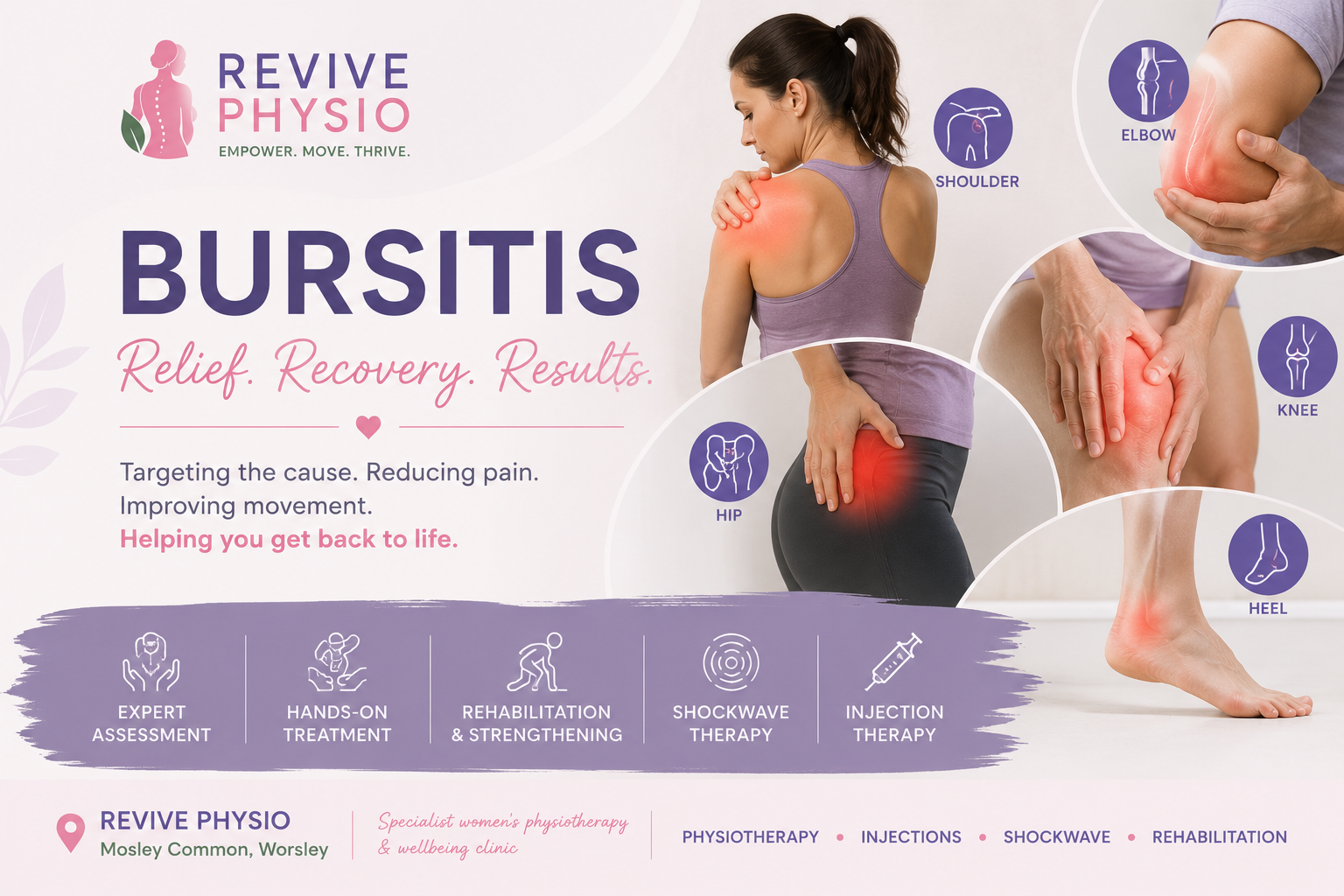
At Revive Physio, we provide expert assessment and treatment for bursitis affecting the hip, shoulder, elbow, knee and heel.
Every treatment plan is tailored to the individual and may include physiotherapy, rehabilitation, manual therapy, shockwave therapy or injection therapy where clinically appropriate.
Whether you're experiencing hip bursitis, shoulder bursitis, knee bursitis or heel pain, we're here to help you move better, feel stronger and thrive.
Book Your Assessment
If bursitis is affecting your mobility, work, sleep or quality of life, we'd love to help.
Book your physiotherapy assessment today and take the first step towards lasting relief.