Why Do I Wake Up Stiff Every Morning? Understanding Midlife Joint Pain and Stiffness
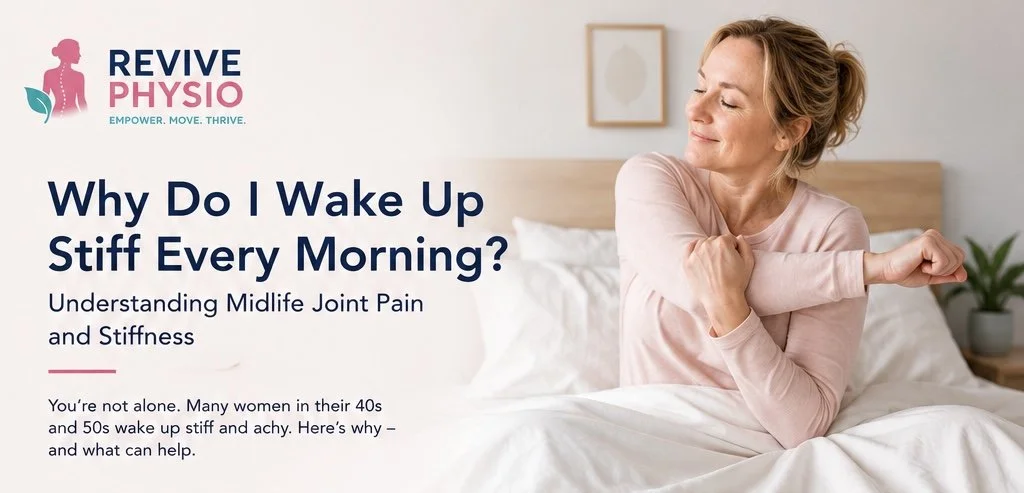
Do you wake up feeling stiff, achy and much older than you actually are?
You're not alone.
One of the most common things women tell me in clinic is:
"I feel awful when I first get up, but once I get moving I'm much better."
For many women in their 40s and 50s, morning stiffness can become an unwelcome part of everyday life. The good news is that it isn't always a sign that something is seriously wrong, and there are often things we can do to help.
Why Am I So Stiff In The Morning?
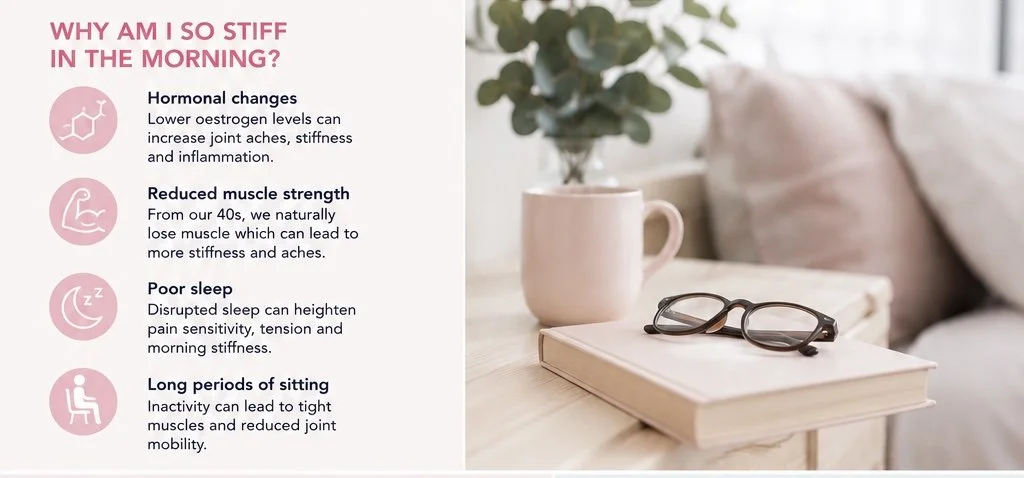
During sleep, our joints and muscles naturally become less active. This can lead to temporary stiffness when we first wake up.
However, several factors can make morning stiffness worse, particularly during perimenopause and menopause.
The Menopause Connection: Why Are My Joints Suddenly Aching?
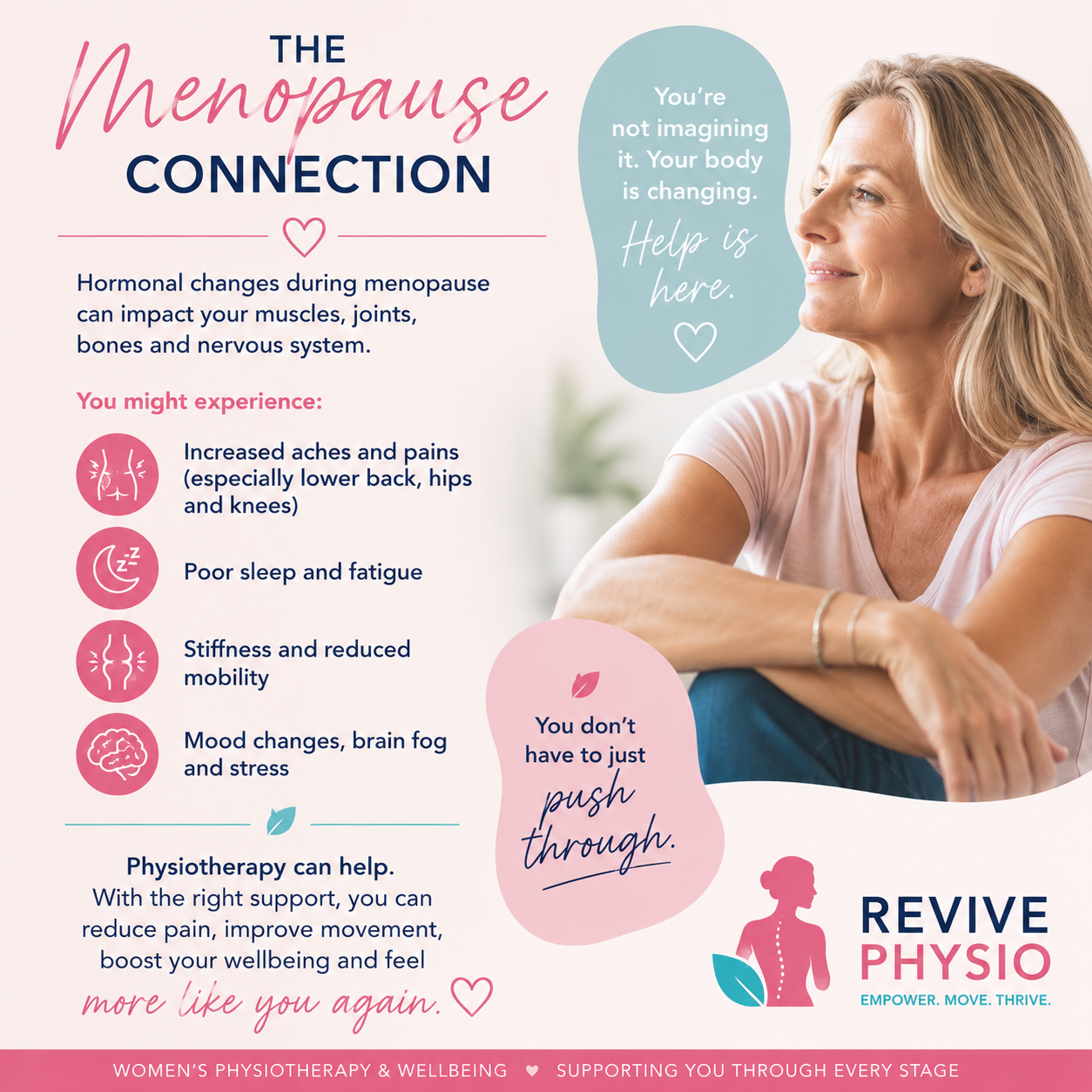
Many women are surprised when joint pain and stiffness become one of their most noticeable menopause symptoms.
In fact, more than half of women experience increased joint aches and stiffness during perimenopause and menopause.
As oestrogen levels begin to fluctuate and decline, several changes can occur within the body.
Reduced Joint Lubrication
Oestrogen helps support healthy joint tissues and natural lubrication. As levels fall, joints may feel stiffer, less mobile and more uncomfortable, particularly first thing in the morning.
Increased Inflammation
Hormonal changes can contribute to increased inflammation within the body. Many women describe feeling as though they have "aged overnight" as aches and pains suddenly appear in joints that previously caused no problems.
Changes In Tendon Health
Tendons contain oestrogen receptors and can become more sensitive during menopause. This may contribute to conditions such as:
• Gluteal tendinopathy (outer hip pain)
• Tennis elbow
• Achilles tendon pain
• Rotator cuff problems
• Plantar fasciitis
Reduced Muscle Mass
Women naturally lose muscle mass and strength during midlife unless actively maintained through exercise. Reduced muscle support around the joints can lead to increased pain, stiffness and reduced confidence in movement.
Poor Sleep & Recovery
Many women experience disrupted sleep during perimenopause. Poor sleep can increase pain sensitivity, slow recovery and make stiffness feel significantly worse.
This is one reason many women notice symptoms are often at their worst first thing in the morning.
Could It Be Arthritis?
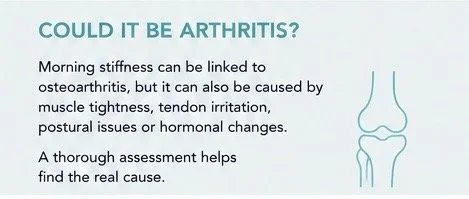
Sometimes morning stiffness can be linked to osteoarthritis.
Common signs include:
• Stiffness after rest
• Joint pain with activity
• Reduced movement
• Swelling around the joint
However, not all morning stiffness is arthritis.
Many women experiencing stiffness actually have a combination of hormonal changes, muscle tightness, tendon irritation, postural issues, reduced strength or movement dysfunction contributing to their symptoms.
This is why a thorough assessment is so important.
Other Factors That Can Increase Stiffness
Long Periods Of Sitting
Whether it's desk work, driving or evenings spent on the sofa, long periods of inactivity can contribute to stiffness and reduced mobility.
Stress
Stress can increase muscle tension and nervous system sensitivity, making aches and pains feel worse.
Lack Of Exercise
Whilst rest is important, too much inactivity can often make stiffness worse. The body thrives on movement.
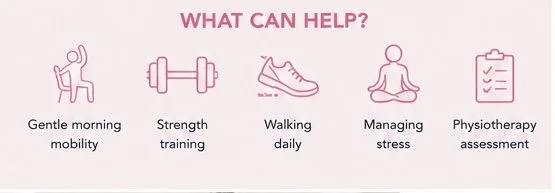
What Can Help?
The encouraging news is that there are many ways to improve stiffness and support your body through midlife.
Gentle Morning Mobility
Simple stretching and mobility exercises can help loosen stiff joints and improve circulation.
Strength Training
Building strength supports joints, improves confidence and helps reduce pain over time.
Walking
Even a short walk can help reduce stiffness and get the body moving.
Improving Sleep
Better sleep often leads to better recovery, less inflammation and reduced pain.
Physiotherapy Assessment
A physiotherapy assessment can help identify whether symptoms are coming from:
• joints
• muscles
• tendons
• posture
• movement patterns
• menopause-related changes
Understanding the cause allows treatment to be tailored specifically to you.
How Revive Physio Can Help
At Revive Physio, I take a whole-person approach.
As both a Physiotherapist and Menopause Coach, I understand that pain during midlife isn't always simply a joint problem.
Hormones, sleep, stress, recovery, strength and lifestyle can all play a role.
When I assess someone, I don't just look at where the pain is.
I look at:
• how you move
• your strength and mobility
• your lifestyle
• your stress levels
• your sleep
• where you are in your menopause journey
• what may be contributing to the problem in the first place
This allows me to create a personalised treatment plan that is tailored specifically to you rather than simply treating a symptom.
You Don't Have To Just Put Up With It
Many women assume aches and stiffness are simply something they must accept as they get older.
They aren't.
With the right support, many women experience significant improvements in mobility, strength, confidence and overall wellbeing.
If morning stiffness is affecting your daily life, help is available.
Revive Physio – Women's Physiotherapy & Wellbeing
📍 Mosley Common, Walkden & Worsley
Empower • Move • Thrive 🤍