Desk Job Causing Back Pain? 5 Simple Ways to Prevent Back, Neck Pain and Headaches
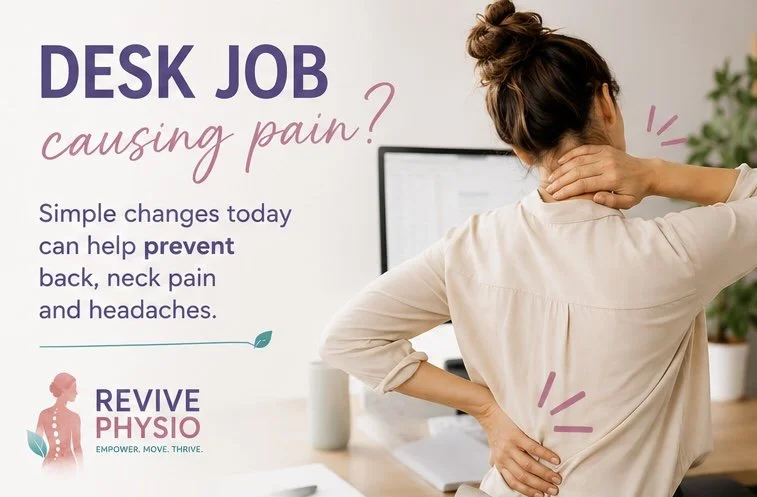
Do you suddenly realise it's lunchtime and you've barely moved since starting work?
Do you finish the day with an aching back, stiff neck, tight shoulders or even a headache?
If so, you're certainly not alone.
Whether you work from home or in an office, spending long periods sitting at a desk can place increased strain on your muscles and joints. Over time this can lead to persistent aches, reduced movement and recurring pain.
The good news is that small changes can make a big difference.
Why does sitting all day cause pain?
It's often not sitting itself that's the problem.
The biggest issue is staying in one position for too long.
When we sit for prolonged periods:
Neck muscles become overloaded.
Shoulder muscles tighten.
The lower back becomes stiff.
Hip muscles shorten.
Core muscles become less active.
Blood circulation reduces.
Eventually your body starts telling you it's time to move.
For many people, that's when the aches begin.
Common symptoms
You may notice:
✔ Upper back pain
✔ Tight shoulders
✔ Headaches
✔ Stiffness when standing up
✔ Pain between the shoulder blades
✔ Reduced movement
These symptoms often improve once movement returns, but if they keep coming back they shouldn't simply be ignored.
5 Simple Ways to Prevent Back, Neck Pain and Headaches
1. Move every 30–45 minutes
One of the easiest things you can do.
Stand up.
Walk to the printer.
Make a drink.
Stretch.
Even two minutes of movement can help reduce stiffness.
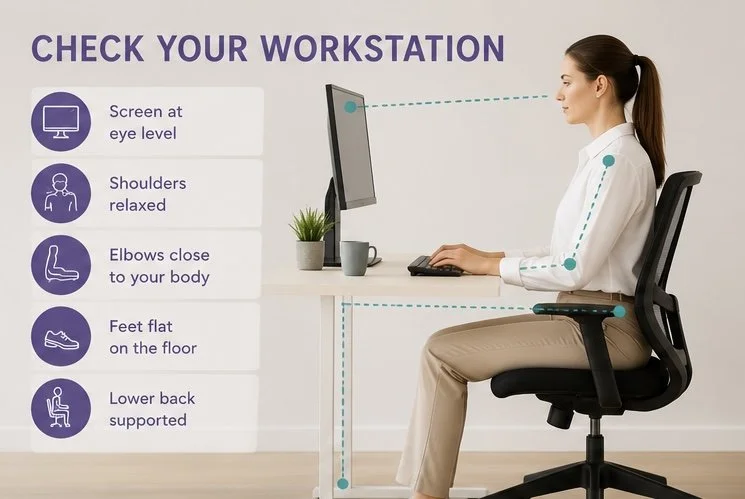
2. Check your workstation
A few simple adjustments can reduce unnecessary strain.
Aim for:
✔ Screen at eye level
✔ Feet flat on the floor
✔ Elbows relaxed by your sides
✔ Keyboard close to your body
✔ Chair supporting your lower back
You don't need a perfect ergonomic setup—just a comfortable one.
3. Build more movement into your day
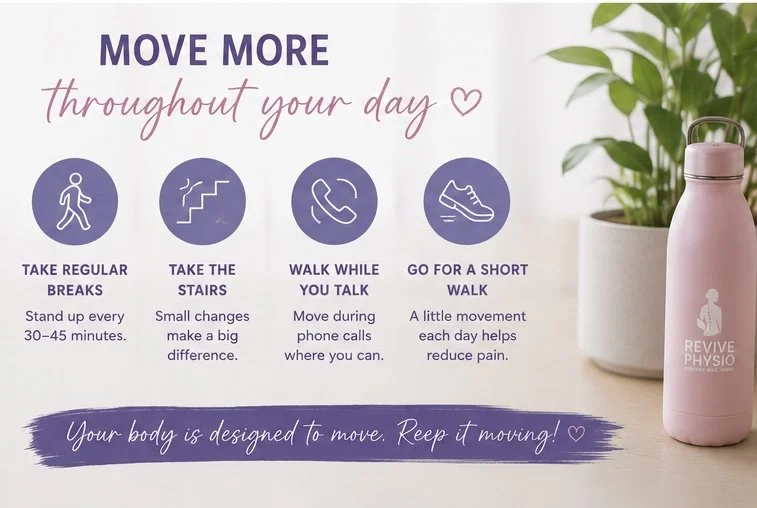
Look for opportunities to move.
Take the stairs.
Walk while making phone calls.
Park further away.
Go for a short walk at lunchtime.
These small activities (known as NEAT – Non-Exercise Activity Thermogenesis) all help keep your joints and muscles healthier.
4. Strength matters
Your posture isn't just about sitting up straight.
Strong muscles help support your body throughout the day.
Simple strengthening exercises for your core, hips and upper back can make a significant difference.
5. Don't ignore persistent pain
Many people simply accept pain as "part of the job."
It isn't.
If your symptoms:
Last longer than two to three weeks
Keep returning
Wake you at night
Stop you exercising
Affect your work
Cause headaches
it's worth getting them assessed.
The earlier the cause is identified, the easier it often is to treat.
How can physiotherapy help?
At Revive Women's Physio & Wellbeing Clinic, every assessment begins by understanding why you're experiencing pain.
Treatment may include:
💜 Hands-on physiotherapy
💜 Soft tissue massage
💜 Joint mobilisation
💜 Strengthening exercises
💜 Postural advice
💜 Ergonomic advice
💜 Personalised rehabilitation
Rather than simply easing the symptoms, the aim is to address the underlying cause and reduce the likelihood of the problem returning.
Why choose Revive physio?
Whether you're working from home, office-based or hybrid working, desk-related aches and pains are one of the most common reasons people visit the clinic.
With over 20 years' experience as a Chartered Physiotherapist, I provide personalised assessment and treatment to help you move better, feel stronger and get back to enjoying life without persistent pain.
The Take-Home Message
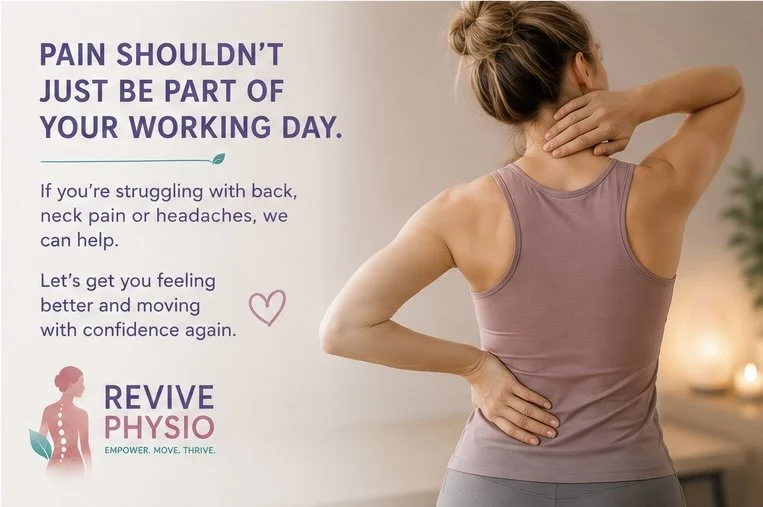
Pain shouldn't be accepted as part of your working day.
Simple changes to how you move, work and exercise can make a huge difference.
If your back, neck or headaches are becoming a regular feature of your day, don't just put up with it.
Understanding why they're happening is often the first step towards feeling better.
📍 Revive Women's Physio & Wellbeing Clinic
Mosley Common, Worsley
Helping women across Walkden, Boothstown, Astley, Tyldesley, Atherton and surrounding areas move better, feel stronger and thrive.