Low Back Pain: Common Causes, When to Seek Help and How Physiotherapy Can Help
Back pain is one of the most common reasons people seek physiotherapy and, at some point in our lives, around 8 out of 10 people will experience low back pain.
For some, it's a mild ache that settles within a few days. For others, it can become persistent, affecting work, sleep, exercise and everyday life.
At Revive Women's Physio & Wellbeing Clinic in Mosley Common, low back pain is one of the most common conditions I assess and treat.
The good news?
Most episodes of low back pain improve with the right advice, movement and rehabilitation.

What is low back pain?
Low back pain refers to pain felt between the bottom of the ribs and the top of the buttocks.
Symptoms vary from person to person and may include:
✔ A dull ache
✔ Sharp pain
✔ Stiffness
✔ Muscle spasm
✔ Pain when bending or lifting
✔ Difficulty standing upright
✔ Pain spreading into the buttock or leg
Some people also experience pins and needles, numbness or weakness if a nerve becomes irritated.
What causes low back pain?
One of the biggest myths I hear is:
"I must have slipped a disc."
The reality is there are many different causes of back pain.
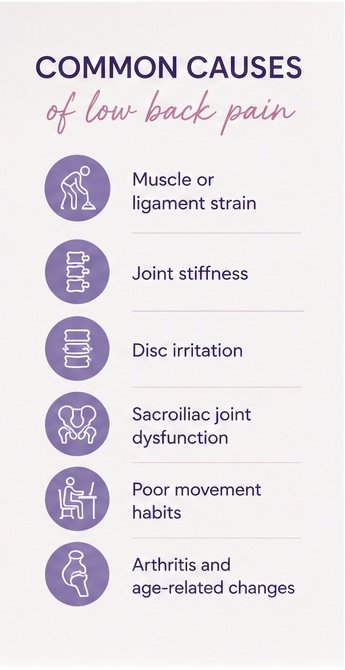
Common causes include:
Muscle or ligament strain
Often following lifting, gardening, DIY or an increase in activity.
Joint stiffness
The small joints of the spine can become stiff or irritated.
Disc irritation
Sometimes a spinal disc becomes irritated, causing local back pain or pain travelling into the leg.
Sciatica
Sciatica occurs when the sciatic nerve becomes irritated or compressed.
Sacroiliac Joint (SIJ) Dysfunction
Pain can sometimes originate from the joints linking the spine and pelvis.
Arthritis
Age-related changes can contribute to stiffness and discomfort.
Poor movement habits
Long periods of sitting, repetitive lifting or reduced physical activity may all contribute.
Often, back pain isn't caused by one single thing but a combination of factors.
Should I rest?
This is probably one of the biggest misconceptions.
Years ago people were advised to stay in bed.
We now know that keeping gently active is usually one of the best things you can do.
Gentle walking.
Changing positions regularly.
Avoiding prolonged sitting.
Gradually returning to normal activities.
These are often far more helpful than complete rest.
When should you see a physiotherapist?
Consider seeking advice if:
✔ Pain has lasted more than two weeks.
✔ Symptoms keep returning.
✔ Pain is affecting work or sleep.
✔ You're avoiding activities because of pain.
✔ Pain is spreading into your leg.
✔ You're unsure what's causing your symptoms.
Early assessment often means earlier recovery.
How can physiotherapy help?
Every episode of back pain is different.
That's why treatment should never be "one size fits all."
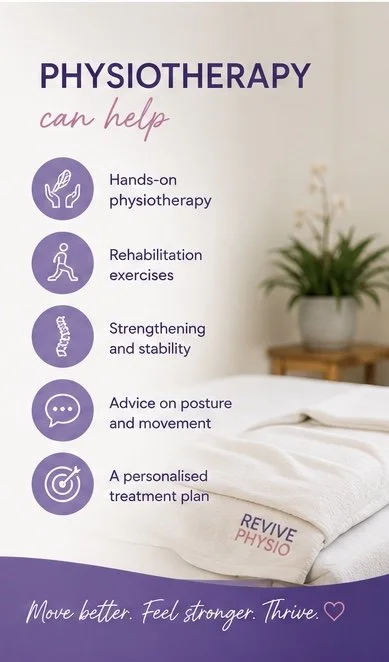
Following a detailed assessment, treatment may include:
💜 Hands-on physiotherapy
💜 Joint mobilisation
💜 Soft tissue massage
💜 Rehabilitation exercises
💜 Core and hip strengthening
💜 Advice on posture and movement
💜 Return-to-work and return-to-sport planning
The aim isn't simply to reduce pain.
It's to understand why the problem developed and help prevent it returning.
When should I seek urgent medical advice?
Although most back pain is not serious, you should seek urgent medical attention if you develop:
Loss of bladder or bowel control.
Numbness around your saddle area.
Progressive weakness in your legs.
Severe pain following significant trauma.
Fever, unexplained weight loss or feeling generally unwell alongside your back pain.
Fortunately, these situations are uncommon but should always be assessed urgently.
Why choose Revive?
At Revive Women's Physio & Wellbeing Clinic, I believe successful treatment starts with listening.
Rather than simply treating where it hurts, I take the time to understand your story, identify the root cause of your symptoms and create a treatment plan tailored specifically to you.
Whether your back pain started yesterday or you've been struggling for months, my aim is to help you move better, feel stronger and get back to doing the things you enjoy.
The Take-Home Message
Low back pain is incredibly common, but it doesn't have to become your normal.
The earlier you understand what's causing your symptoms, the sooner you can start the right treatment and begin moving with confidence again.
If you're struggling with back pain, don't just put up with it.
A detailed physiotherapy assessment can help identify the cause and guide the best treatment for you.
📍 Revive Women's Physio & Wellbeing Clinic
Helping women across Mosley Common, Worsley, Walkden, Boothstown, Tyldesley, Astley and Atherton move better, feel stronger and thrive.