Why are the first steps so painful?
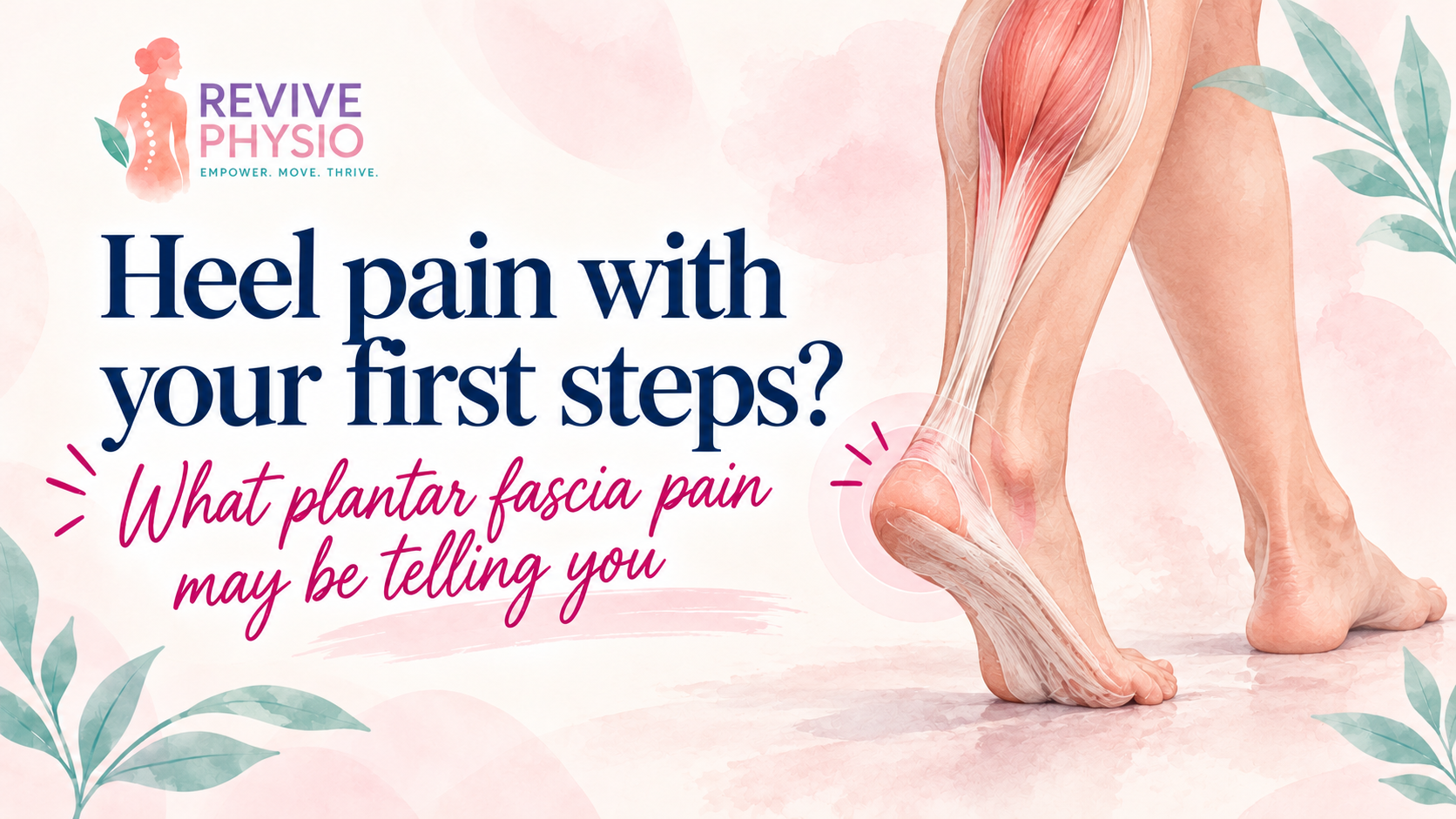
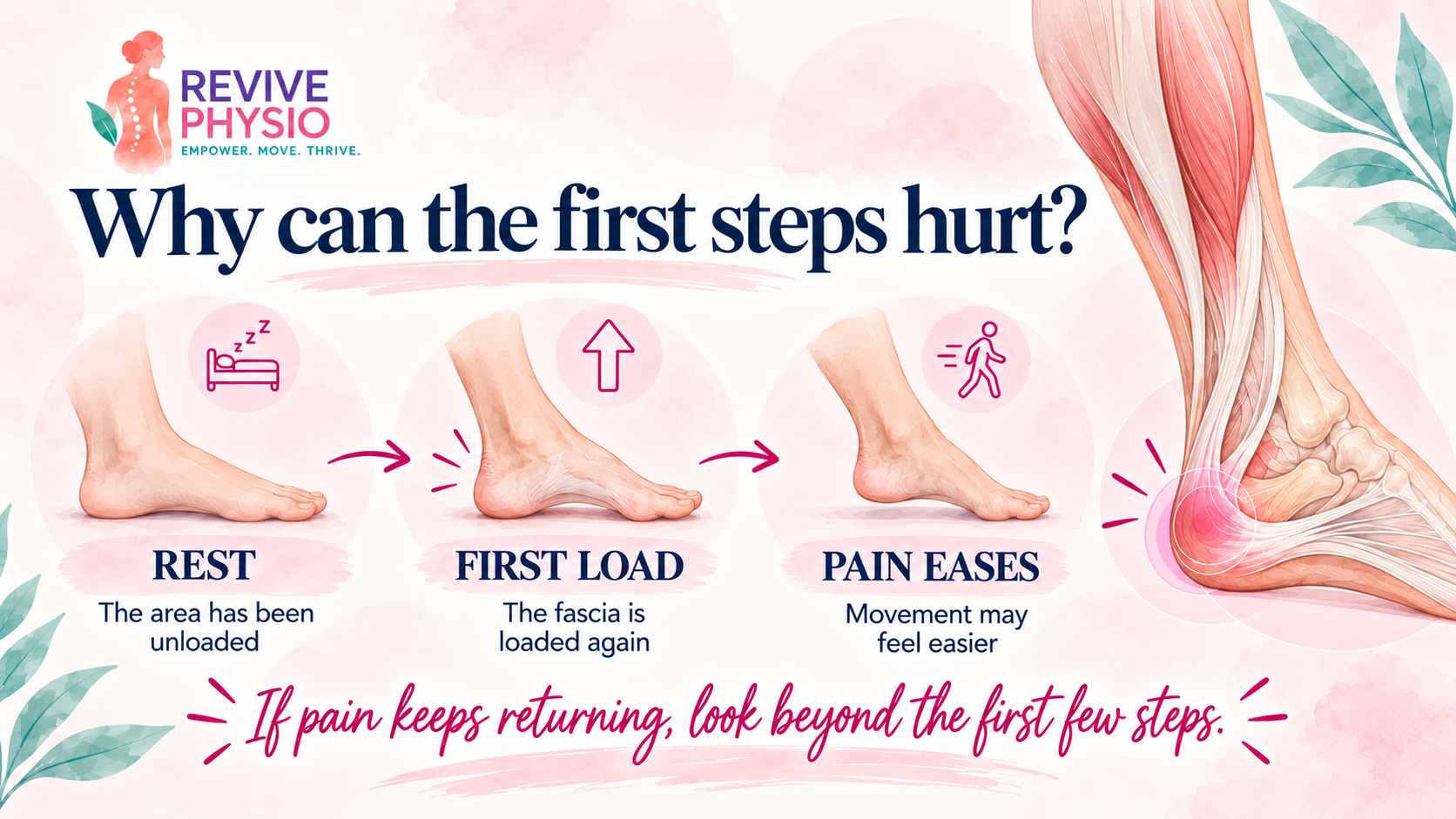
Pain underneath the heel that feels worse during the first few steps after sleeping or sitting is commonly associated with plantar fascia pain.
The plantar fascia is a strong band of connective tissue running from the heel towards the toes. It helps support the foot and manage load during standing, walking and running.
After resting, the first return to load can feel particularly uncomfortable. Symptoms may ease as you move, then return after longer periods of walking or standing.
The NHS describes plantar fasciitis as pain around the heel and arch that may be worse when beginning to walk after sleeping or resting. NHS
Why has it developed?
There is not always one cause.
Possible contributing factors include:
A sudden increase in walking, running or standing
Returning to exercise after a break
Reduced calf and foot strength
Calf tightness
Different footwear
Working on hard surfaces
Changes in body weight
Reduced recovery
Changes in the way the leg accepts load
Lower-back, pelvic or SIJ dysfunction may also influence the way weight is distributed through the leg and foot. It should not automatically be assumed to be the cause, but it is relevant when symptoms occur alongside back, buttock or pelvic pain.
Is stretching enough?
Gentle calf or plantar-fascia stretching can help some people, but repeatedly stretching the sore area is not a complete rehabilitation plan.
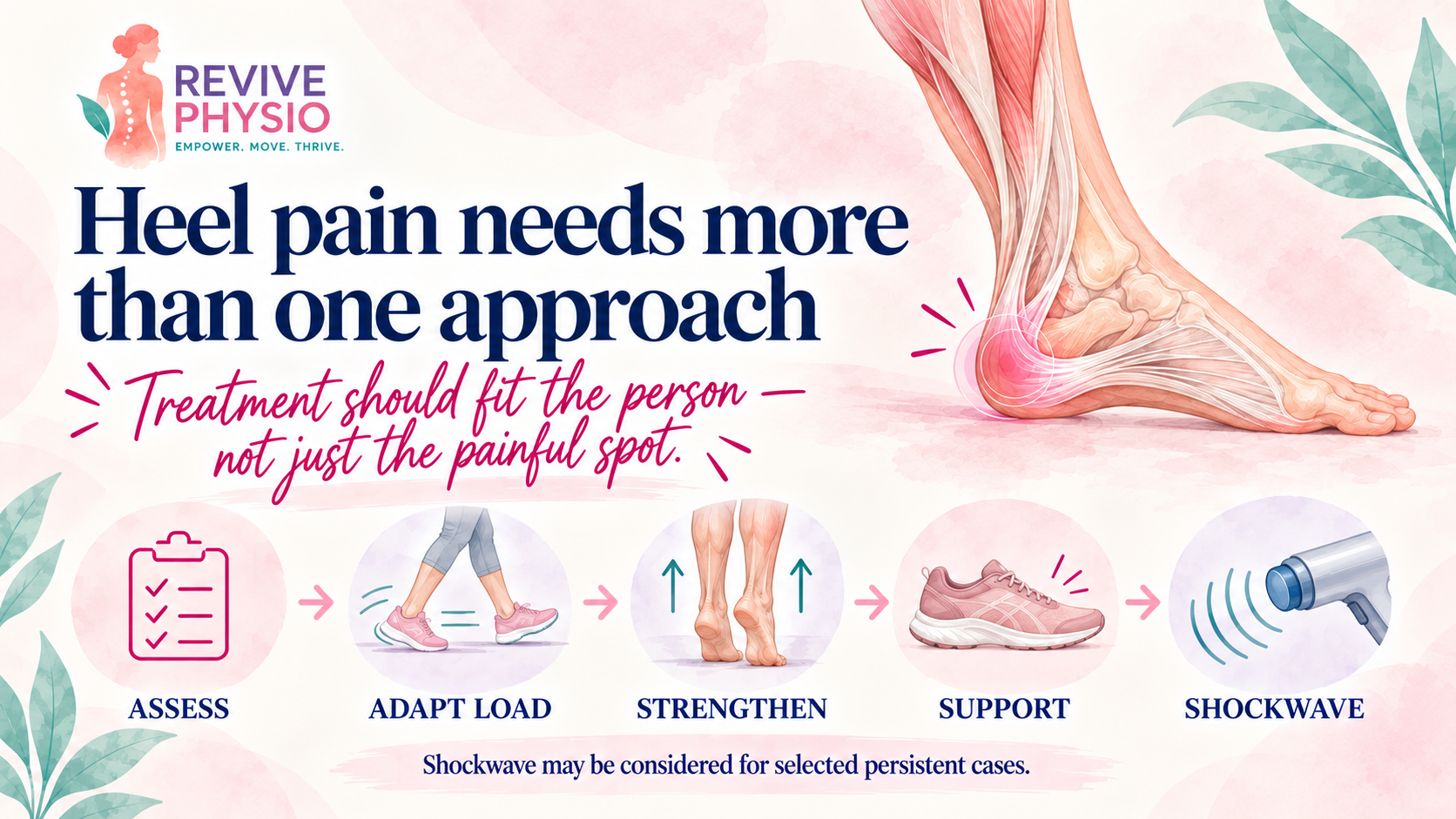
The foot and calf also need sufficient strength to tolerate normal load. Depending on the assessment, rehabilitation may involve:
Calf raises
Foot-strengthening exercises
Balance work
Gradual walking progression
Adjusting aggravating activity
Footwear advice
Work on hip and lower-limb strength
Exercises should be progressed according to your response rather than copied from a generic online programme.
Should I stop walking?
Not necessarily.
Complete rest may settle symptoms temporarily without improving your ability to tolerate walking. It is often more useful to adjust distance, speed, hills or frequency while gradually rebuilding capacity.
A helpful rule is to monitor how the foot feels later that day and during the first steps the following morning. A marked increase may suggest that the previous load was too high.
Can shockwave therapy help?
Radial shockwave therapy uses acoustic pressure waves applied to the treatment area.
It may be considered for persistent plantar fascia pain that has not responded sufficiently to appropriate advice and rehabilitation.
Shockwave should not be used simply because a heel hurts. Assessment is needed to consider:
Whether symptoms fit a plantar-fascia presentation
How long the pain has been present
Previous treatment
Relevant medical history
Contraindications and precautions
What strengthening is needed alongside it
It should be explained as one possible component of care rather than a guaranteed cure.
Could heel pain be something else?
Yes. Heel pain may also arise from:
Achilles tendon problems
Nerve irritation
A heel-pad problem
A stress injury
Inflammatory conditions
Referred pain from elsewhere
Seek earlier medical advice if pain followed trauma, you cannot bear weight, the foot is hot and swollen, you have fever, or there is persistent numbness or tingling.
Plantar-fasciitis treatment near Worsley and Walkden
Revive Physio provides physiotherapy assessment, rehabilitation and shockwave therapy from Mosley Common.
If heel pain is changing the way you walk or preventing you from exercising, book an initial physiotherapy and shockwave assessment to discuss the most appropriate plan.