
Why Am I So Stiff in the Morning? 7 Common Causes of Morning Stiffness?
Do you wake up feeling stiff, achy and uncomfortable every morning?
Many people assume it's simply part of getting older, but persistent morning stiffness can often be a sign that something else is going on.
At Revive Physio, morning stiffness is one of the most common complaints I hear from patients, particularly women in their 40s, 50s and beyond.
The good news? Understanding why it happens is often the first step towards feeling better.
What Causes Morning Stiffness?
During sleep, our bodies remain relatively still for several hours.
Joints receive less movement, muscles cool down and circulation slows.
For some people this creates mild stiffness that quickly improves once they get moving.
For others, the stiffness can be more significant and may indicate an underlying issue.
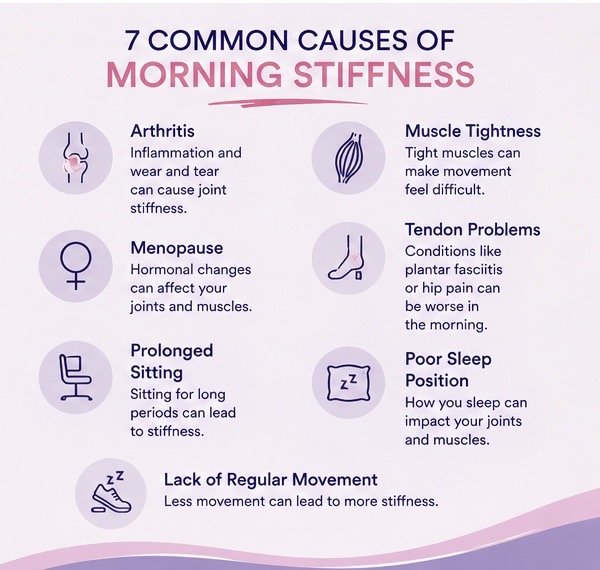
1. Arthritis
Arthritis is one of the most common causes of morning stiffness.
Symptoms may include:
✔ Joint pain
✔ Stiffness after rest
✔ Reduced mobility
✔ Swelling around joints
Many people notice symptoms in their knees, hips, hands or feet first thing in the morning.
2. Menopause
Many women are surprised to learn that changing hormone levels can contribute to joint pain and stiffness.
During perimenopause and menopause, reduced oestrogen levels can affect joints, tendons and muscles.
Common symptoms include:
✔ Aching joints
✔ Morning stiffness
✔ Reduced flexibility
✔ Generalised body aches
3. Prolonged Sitting
If you spend most of your day sitting at a desk, stiffness can often carry over into the following morning.
Poor posture, reduced movement and muscle weakness can all contribute to discomfort.
4. Muscle Tightness
Tight muscles around the hips, back, neck and shoulders can make movement feel difficult after periods of rest.
This is particularly common in people who are less active or recovering from injury.
5. Tendon Problems
Conditions such as:
Greater Trochanteric Pain Syndrome (hip pain)
Rotator Cuff Tendinopathy
often feel worse after periods of inactivity and may cause significant morning discomfort.
6. Poor Sleep Position
The way you sleep can place additional stress on certain joints and muscles.
Using appropriate pillows and finding comfortable sleeping positions can sometimes help reduce symptoms.
7. Lack of Regular Movement
Our bodies are designed to move.
When activity levels decrease, stiffness often increases.
Even simple daily walking and strengthening exercises can make a significant difference.
What Can You Do About Morning Stiffness?
Try:
✔ Gentle stretching before getting out of bed
✔ A short morning walk
✔ Regular movement throughout the day
✔ Strengthening exercises
✔ Improving your workstation setup
✔ Staying active where possible
When Should You Seek Help?
If stiffness:
Lasts longer than 30 minutes
Is becoming progressively worse
Is affecting daily activities
Is associated with pain or swelling
it may be worth seeking professional advice.
How Physiotherapy Can Help
Physiotherapy aims to identify the cause of your symptoms and create a personalised treatment plan.
At Revive Physio, treatment may include:
✔ Hands-on physiotherapy
✔ Exercise prescription
✔ Strengthening programmes
✔ Mobility work
✔ Advice on activity and movement
Don't Accept Stiffness As Your New Normal
While morning stiffness is common, it isn't something you simply have to live with.
Understanding the cause is often the first step towards improving your movement, reducing pain and feeling more like yourself again.

Book Your Physiotherapy Assessment
📍 Revive Physio – Mosley Common
Helping women move better, feel stronger and thrive.