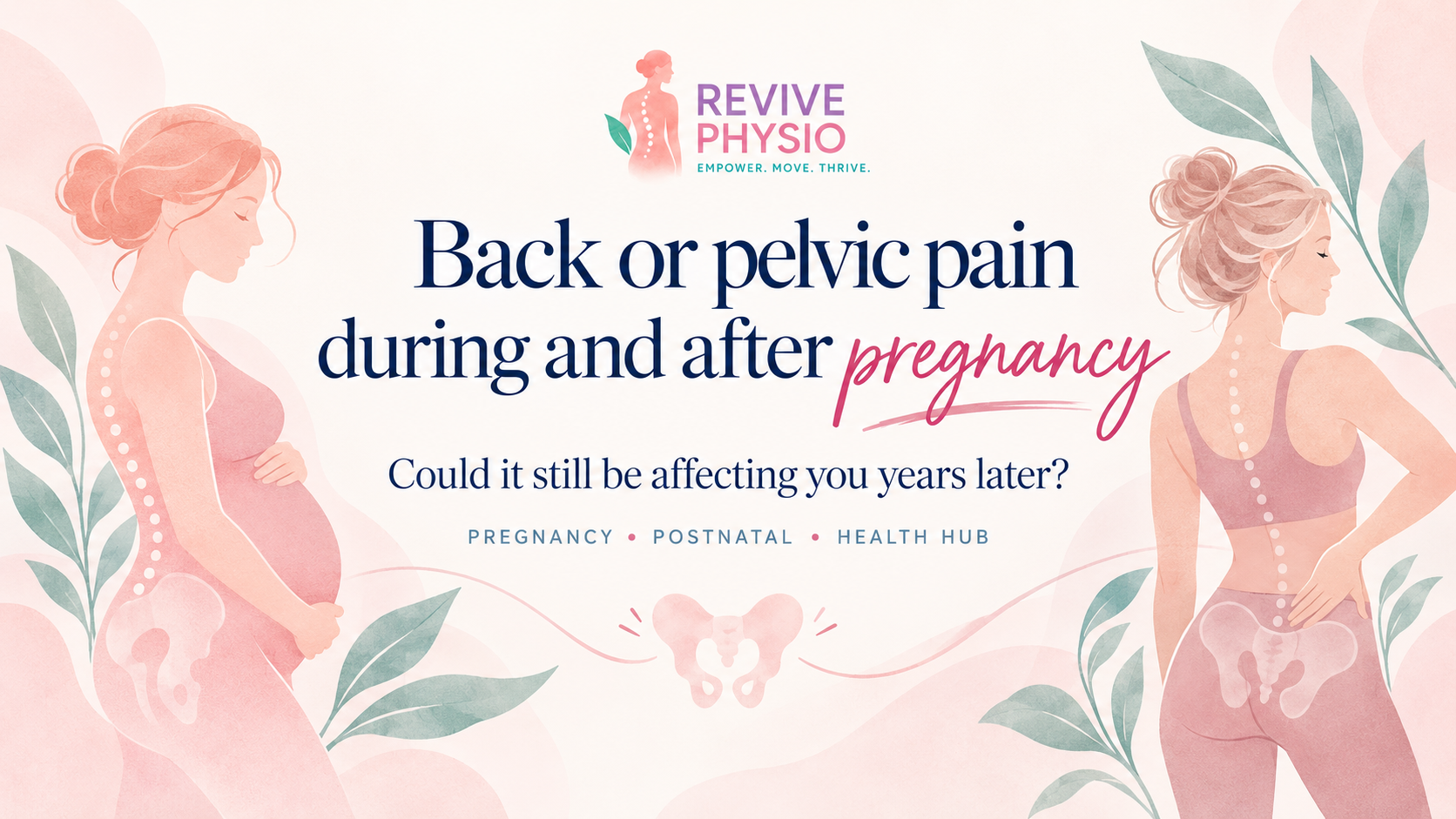
Pregnancy-related back and pelvic pain is common, but it should not automatically be dismissed as a normal part of having a baby.
For some women, the pain improves after giving birth. For others, it continues, returns intermittently or gradually changes into recurring lower-back, buttock, hip or pelvic pain.
Years later, the connection with pregnancy may no longer seem obvious.
You might simply notice that your back “goes” occasionally, one side of your pelvis feels uncomfortable after walking, or certain activities repeatedly trigger symptoms. Because the pain comes and goes, it may never have been properly assessed.
A previous pregnancy may be a relevant part of the story, but long-term back or pelvic pain can have several possible causes. A thorough assessment is therefore important rather than assuming pregnancy is responsible for everything.
What is pregnancy-related pelvic girdle pain?
The pelvic girdle is the ring of bones and joints at the base of the spine.
Pregnancy-related pelvic girdle pain, often shortened to PGP, can involve:
The sacroiliac joints at the back of the pelvis
The pubic symphysis at the front
The lower back
The hips and buttocks
The groin or inner thighs
It was previously commonly called symphysis pubis dysfunction or SPD, although pelvic girdle pain is now the preferred term because symptoms may involve several areas rather than only the joint at the front of the pelvis.
Pregnancy changes the demands placed on the body. As your baby grows, your posture, movement, weight distribution and the way your muscles manage everyday activities all adapt.
This does not mean that your pelvis has become permanently unstable, damaged or “out of place.” Pain is usually more complicated than that and may involve sensitivity, strength, movement, previous injuries, sleep, stress and physical load.
What does pelvic girdle pain feel like?
Symptoms vary between women and may affect the front, back or both sides of the pelvis.
You may notice pain when:
Walking or climbing stairs
Standing on one leg
Getting dressed
Turning over in bed
Getting in and out of the car
Moving your legs apart
Carrying a baby or toddler
Lifting, bending or twisting
Returning to running or exercise
Walking longer distances
Some women experience clicking or grinding around the pelvis. Others describe a deep ache in the lower back or buttock, pain around the pubic bone or discomfort that spreads towards the hips, groin or thighs.
Can pregnancy-related pelvic pain continue after birth?
For many women, symptoms settle following delivery. However, this does not happen immediately for everyone.
Pain may continue because the muscles around the hips, pelvis, abdomen and lower back have not yet rebuilt their capacity to manage everyday demands.
The postnatal period can involve:
Repeated lifting and carrying
Feeding in sustained positions
Broken sleep and reduced recovery
Pushing a pram
Carrying a baby on one hip
Returning to work or exercise
Having very little time for rehabilitation
These demands can make it difficult for an existing problem to settle fully.
Some women receive support during pregnancy but no follow-up afterwards. Others are reassured that their symptoms will disappear after the birth and do not realise that treatment remains available during the postnatal period.
Could it contribute to back pain years later?
It is possible for pain that began during pregnancy to persist or recur long afterwards.
For example, you may have experienced significant pelvic pain during pregnancy that improved after giving birth but never completely disappeared. Your body may then have adapted by moving differently or relying more heavily on certain muscles.
Symptoms might only become noticeable again when your physical demands increase—for example, after returning to exercise, starting a new job, gaining or losing strength, experiencing hormonal changes or becoming less active.
However, pregnancy is not the only possible explanation for back or pelvic pain years later.
Symptoms could also involve:
The lumbar spine
Hip joints or surrounding tendons
Sacroiliac joint sensitivity
Reduced abdominal, hip or leg strength
Pelvic-floor dysfunction
Nerve irritation
Previous injuries
Changes in activity, sleep or general health
The fact that your symptoms began during or after pregnancy is an important clue, but it is not a diagnosis on its own.
Why can the problem remain undiagnosed?
Pregnancy-related pain is sometimes normalised.
Women may be told that pain is simply part of pregnancy, that it will disappear after birth or that they need to strengthen their core without first having a full assessment.
After giving birth, attention naturally moves towards caring for the baby. Many women place their own recovery at the bottom of the list.
If the pain is intermittent, it may not seem serious enough to seek help. You may experience several good weeks or months before another episode occurs.
Over time, recurring symptoms can become accepted as “my bad back,” even though nobody has assessed whether the lower back, hips, pelvis, muscles or nerves are contributing.
What happens during a physiotherapy assessment?
A physiotherapy assessment should consider your current symptoms as well as how and when the problem first began.
This may include assessing:
Your lower-back movement
Your hips and pelvic girdle
Sacroiliac joint sensitivity
Muscle strength and control
Abdominal and hip function
Walking and functional movements
Activities that aggravate your symptoms
Possible nerve involvement
Your previous pregnancies, injuries and treatment
Your current exercise and everyday demands
There is no single test or exercise that is appropriate for every woman.
The aim is to understand your individual presentation and identify the factors that may be keeping the symptoms sensitive or causing them to return.
How may physiotherapy help?
Treatment depends on your assessment and stage of pregnancy or postnatal recovery.
It may include:
Advice about comfortable movement and managing aggravating activities
Individual exercises for the hips, legs, abdomen and lower back
Gradual strengthening
Hands-on physiotherapy where appropriate
Support with returning to walking, running or exercise
Advice about lifting and carrying
Strategies for managing flare-ups
Referral for specialist pelvic-health assessment when indicated
Treatment should not be based on repeatedly “putting the pelvis back into place.”
The goal is to help you move more comfortably, gradually rebuild strength and improve your confidence in what your body can do.
When should you seek medical advice?
Back and pelvic pain are often musculoskeletal, but not every symptom should be assumed to come from the muscles or joints.
Seek urgent medical advice if pain is severe, begins suddenly, is worsening quickly, follows significant trauma or is accompanied by fever or feeling generally unwell.
Attend A&E urgently if back pain is accompanied by:
New difficulty controlling your bladder or bowels
Numbness around the genitals, anus or saddle area
Pain, tingling, numbness or weakness affecting both legs
Rapidly worsening leg weakness
During pregnancy, contact your midwife or maternity unit if you are concerned about pelvic pain or develop symptoms such as bleeding, unusual discharge, abdominal pain or feeling unwell.
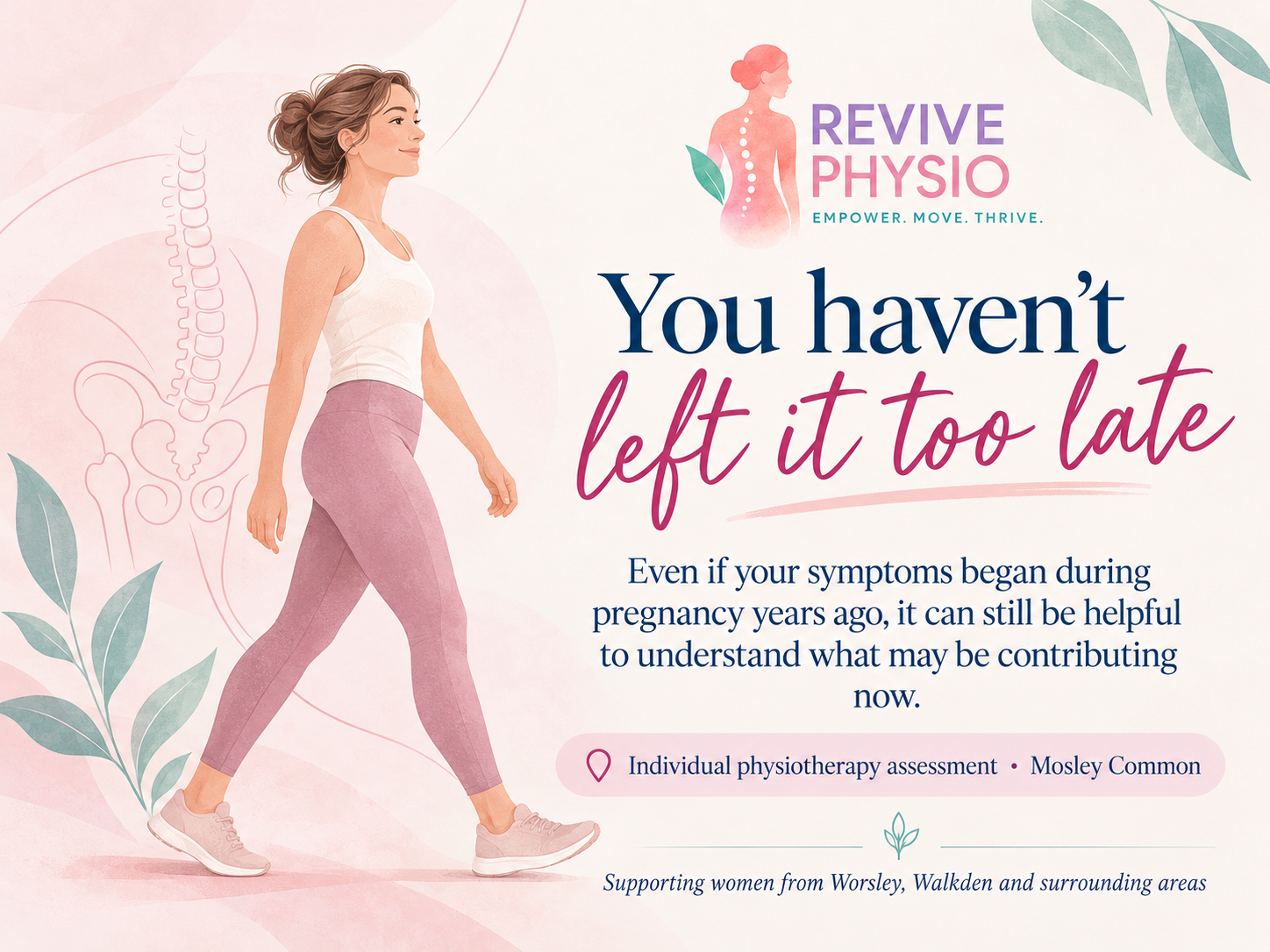
You have not left it too late
Even if your youngest child is now at school—or has grown into an adult—it can still be helpful to explain that your back or pelvic symptoms originally began during pregnancy.
That history may help your physiotherapist understand how the problem developed and what needs to be assessed now.
You do not have to accept recurring pain simply because you have experienced it for years.
Revive Physio is a specialist women’s physiotherapy and wellbeing clinic in Mosley Common, supporting women from Worsley, Walkden, Boothstown, Astley and surrounding areas.
If back or pelvic pain began during pregnancy, continued afterwards or still returns intermittently, you are welcome to book an initial physiotherapy assessment with Michelle.
Together, we can look at what may be contributing now and create a treatment and rehabilitation plan based on your body, symptoms and goals.