Pain is real—even when stress affects it
People are sometimes reluctant to mention stress, anxiety or poor sleep during a physiotherapy appointment because they worry their pain will be dismissed as psychological.
Pain is a real physical experience.
However, pain is influenced by more than one tissue or joint. Sleep, stress, hormones, general health, activity levels, previous experiences and how safe or threatened the body feels may all affect its sensitivity.
Considering these factors doesn’t mean ignoring the painful area. It helps create a more complete and useful treatment plan.
Why does poor sleep affect pain?
Pain can make it difficult to get comfortable, fall asleep or stay asleep.
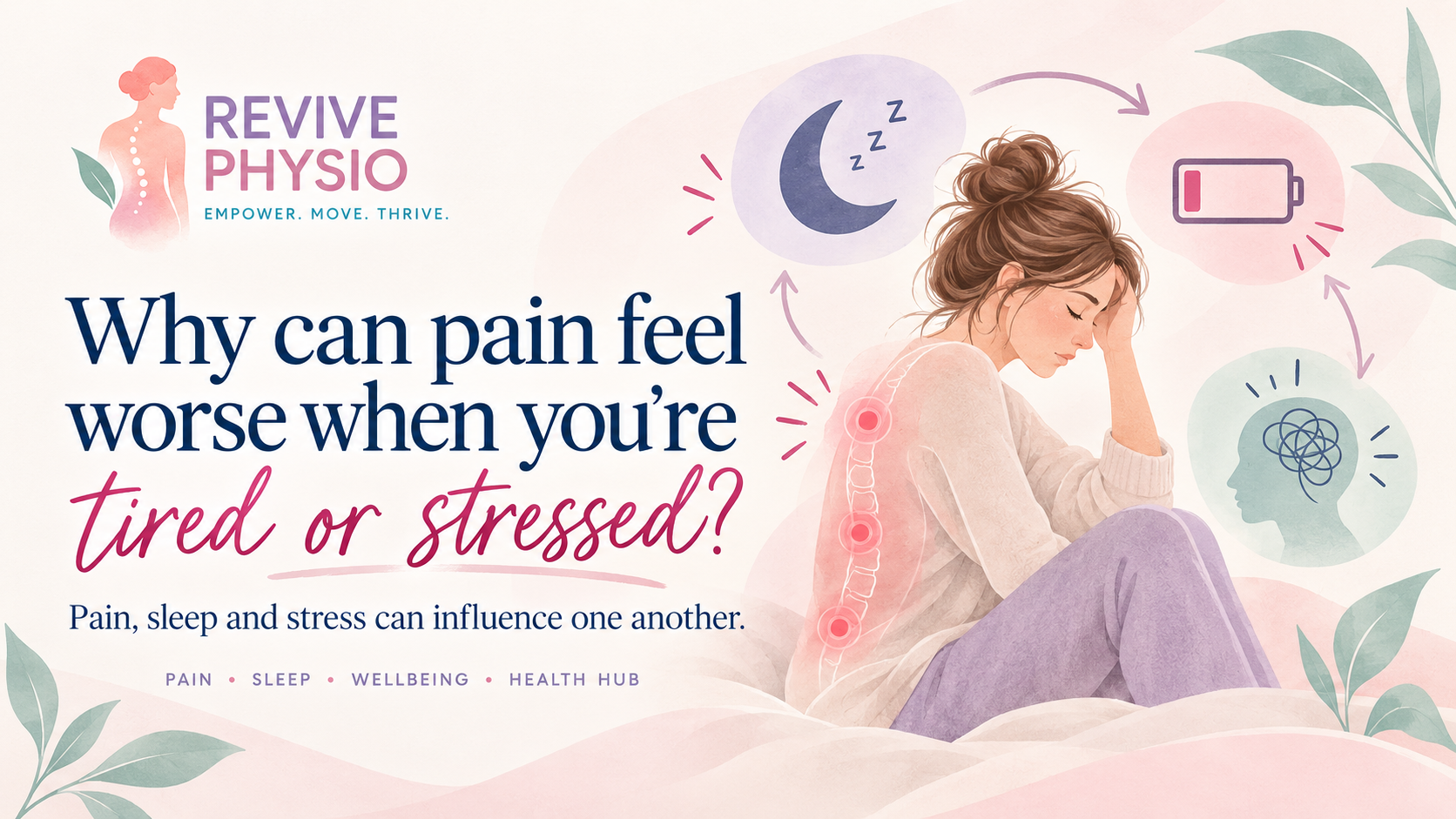
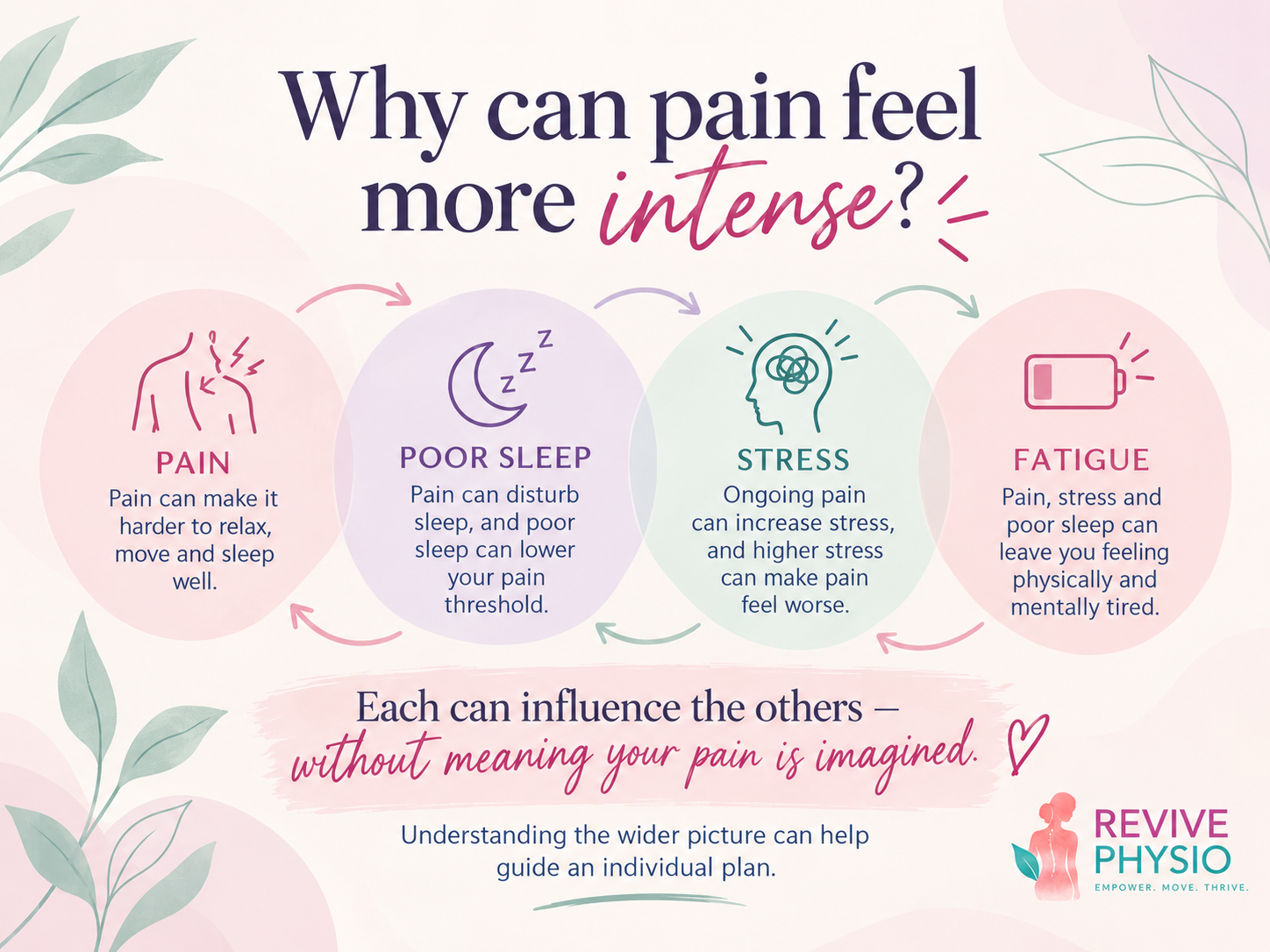
Poor sleep may then reduce energy, affect mood and make pain feel more intense or difficult to manage. This can create a cycle:
Pain interrupts sleep.
Tiredness lowers your ability to cope.
Movement and exercise feel harder.
The body becomes more sensitive.
Increased pain further disrupts sleep.
The NHS recognises that sleep deprivation can make long-term pain worse. NHS
Improving sleep won’t automatically remove every source of pain, but it can be an important part of recovery.
How can stress influence physical symptoms?
When you feel under pressure, the body prepares to respond.
Breathing may become shallower, muscles may remain tense and you may spend less time recovering. Stress can also change activity levels: some people stop moving, while others remain constantly busy and ignore signs that their body needs rest.
Persistent tension doesn’t necessarily mean the muscle simply needs to be repeatedly massaged. It is worth asking why the area is working so hard.
Possible contributors include:
Prolonged sitting or repetitive work
Reduced strength
Poor sleep
Headaches
Jaw clenching
Anxiety
Caring responsibilities
Menopause-related symptoms
Insufficient recovery between exercise sessions
Pain isn’t “all in your head”
The nervous system processes information from the whole body and environment.
When pain has persisted, the system may become more protective. Movements or activities can begin to feel threatening even after tissue healing has progressed.
This doesn’t mean the symptoms are invented. It means recovery may need to address physical capacity, confidence and the wider factors keeping the system on alert.
What can physiotherapy do?
Physiotherapy should still assess the painful area properly.
Depending on your symptoms, this may include examining:
Joint movement
Muscle strength
Nerve function
Posture and repeated positions
Work or exercise demands
Previous injuries
Activities that trigger or ease symptoms
Treatment may involve:
Hands-on physiotherapy
Progressive strengthening
Movement or activity changes
Graded return to exercise
Acupuncture where appropriate
Pacing and flare-up advice
Strategies for reducing unnecessary guarding
Where symptoms suggest another medical condition, further assessment should be recommended.
Practical steps that may help
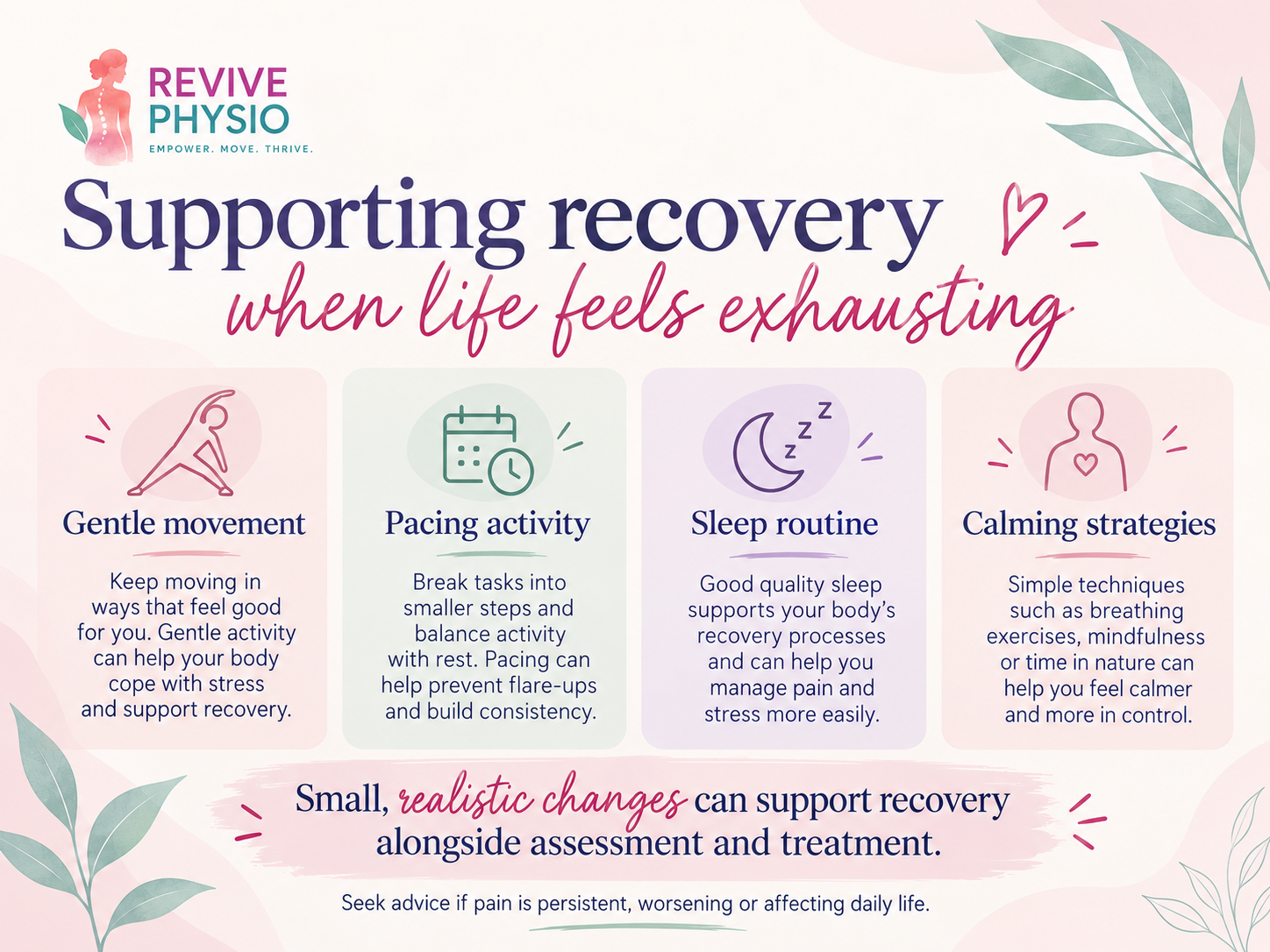
Keep a regular sleep routine
Try to go to bed and wake at broadly consistent times. If sleep remains persistently poor, speak to your GP.
Move regularly
Short, comfortable periods of movement may be more manageable than alternating between complete rest and doing too much.
Build strength gradually
Strength can improve physical capacity and confidence, but progression needs to allow enough recovery.
Notice patterns
Consider whether symptoms change after poor sleep, stressful days, increased activity or long periods of sitting.
Create genuine recovery time
Recovery doesn’t have to mean doing nothing. A walk, breathing practice, quiet time, Reiki or another calming activity may help you step away from constant demand.
Reiki is a complementary wellbeing service and isn’t a substitute for medical or psychological treatment.
When should you seek further help?
Contact a healthcare professional if pain is worsening, unexplained, associated with neurological changes, repeatedly waking you regardless of position or accompanied by fever, weight loss or feeling unwell.
If stress, anxiety or low mood are significantly affecting daily life, contact your GP or an appropriate mental-health service. Seek urgent help if you feel unable to keep yourself safe.
Whole-person physiotherapy in Mosley Common
Revive Physio is a physiotherapy and wellbeing clinic in Mosley Common, supporting people from Worsley, Walkden and surrounding areas.
Your physical symptoms will be assessed properly, while factors such as sleep, stress, menopause and recovery can also be considered where relevant.
If persistent pain is affecting your movement, confidence or quality of life, you can book an initial physiotherapy assessment online.