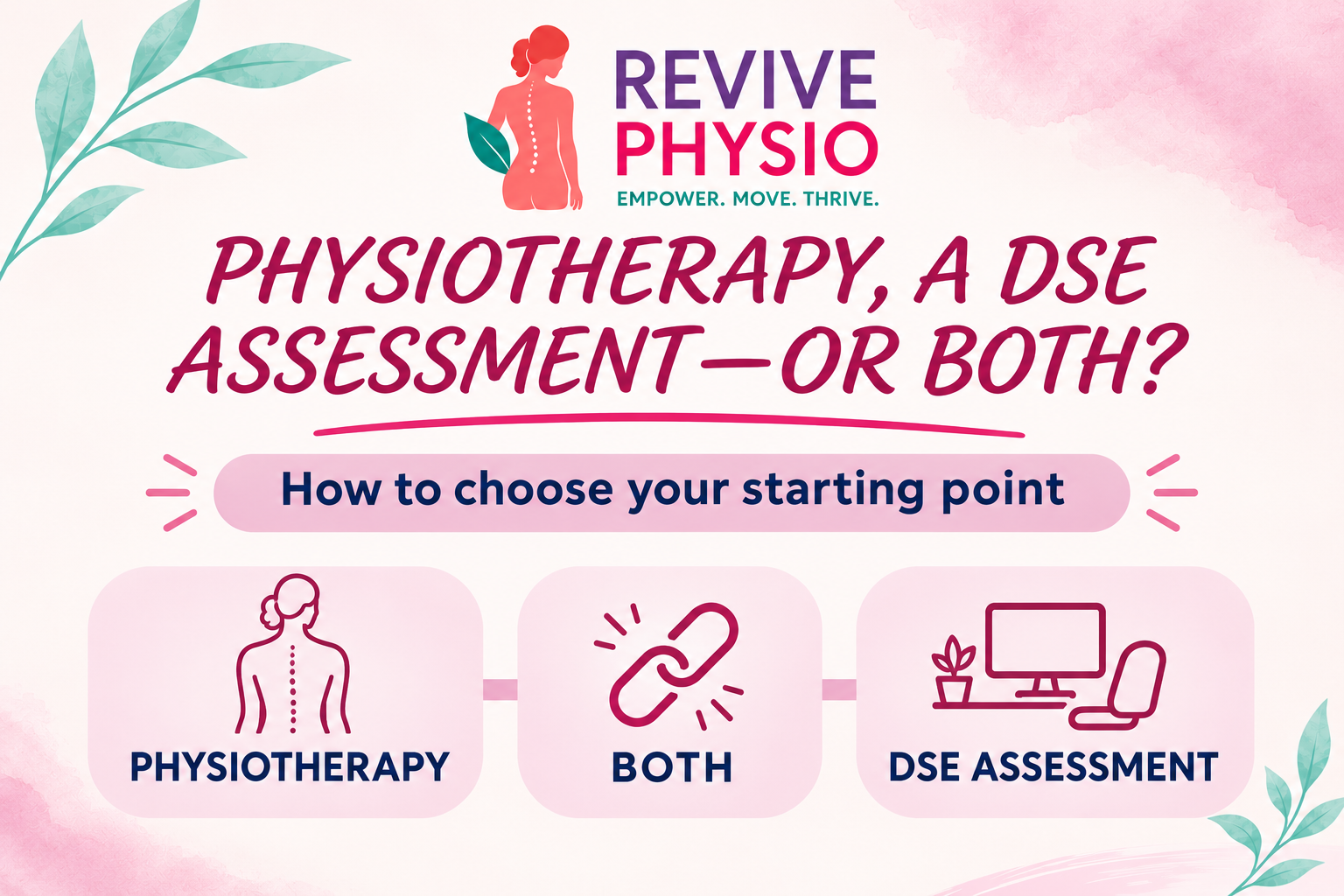
If pain develops while you work at a computer, it can be difficult to know where to begin.
Do you need your workstation reviewed? Do you need physiotherapy? Or are the two issues connected?
The answer depends on your symptoms, working environment and how the problem behaves away from work.
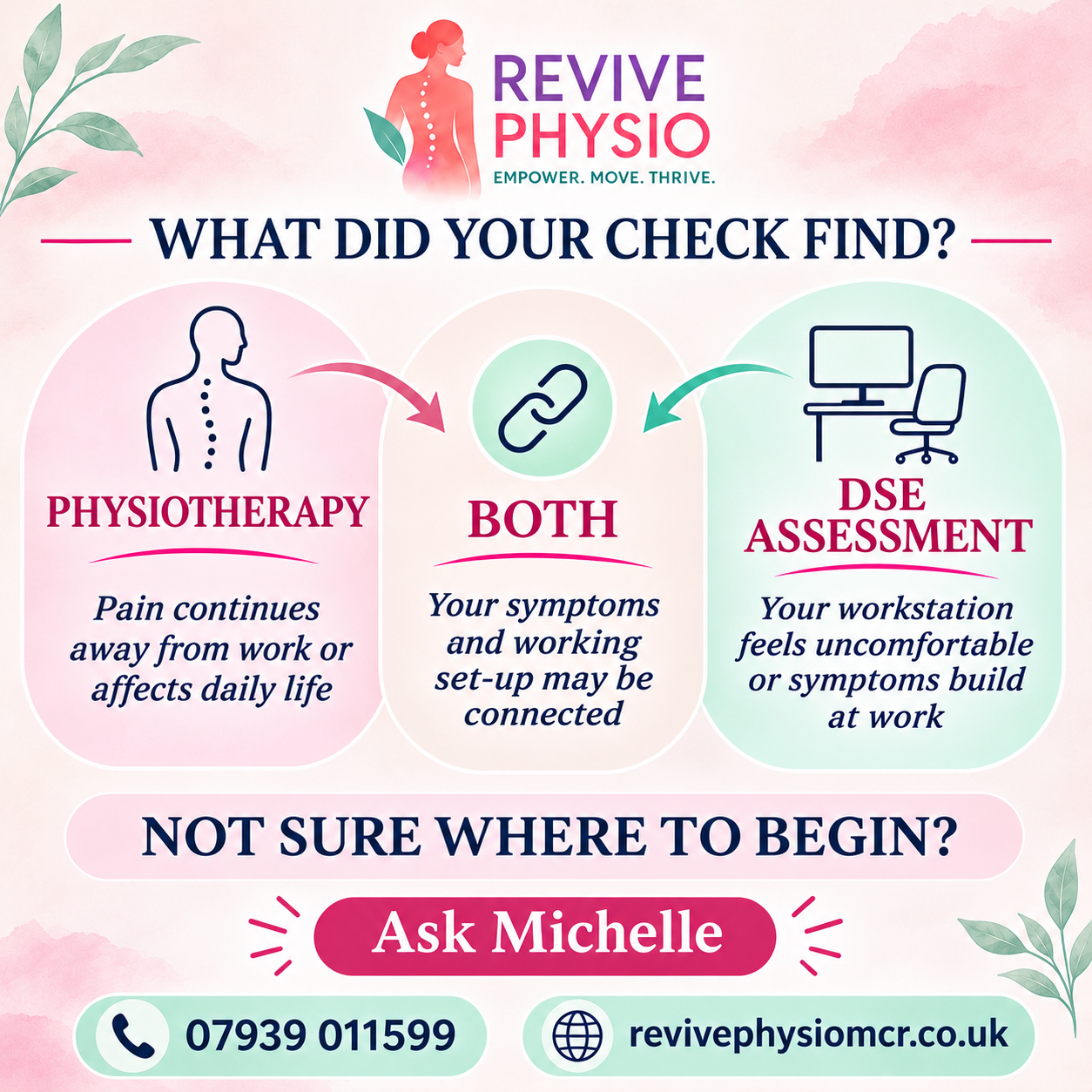
Choose a DSE assessment when the workstation is the main concern
A DSE assessment may be the most appropriate starting point when:
Your chair or desk feels uncomfortable
The screen is difficult to position
You work from a laptop for prolonged periods
Symptoms consistently build while working
You hot-desk or work across different locations
You are unsure what equipment you need
You have returned to work following injury or illness
Your working pattern offers few opportunities to move
A DSE assessment reviews:
Chair and lower-back support
Desk height and available space
Screen height, distance and position
Keyboard and mouse arrangement
Foot support
Lighting and glare
Frequently used equipment
Work routines and task demands
Opportunities to change position
HSE states that employers must carry out DSE assessments for qualifying users and reassess when a new workstation is introduced, a new user starts, equipment or working arrangements change, or somebody reports pain or discomfort. HSE
Choose physiotherapy when pain extends beyond the workstation
Physiotherapy may be the best starting point when:
Pain continues after work
Symptoms disturb sleep
Normal movement is restricted
Pain affects walking, driving, exercise or household tasks
You experience recurring headaches
Symptoms began after an injury
There is weakness, pins and needles or altered sensation
The problem persists despite workstation changes
A physiotherapy assessment considers the painful area and the wider factors that may be contributing.
Treatment may include education, hands-on treatment, movement work, gradual strengthening, acupuncture or other clinically appropriate options.
Choose both when symptoms and work appear connected
Sometimes changing the workstation alone is not enough.
For example, somebody may have a well-established neck or shoulder problem that is aggravated by prolonged computer use. Treating the physical symptoms without improving the work setup may lead to repeated aggravation.
Equally, buying new equipment without addressing reduced strength, movement sensitivity or an underlying injury may not resolve the problem.
Combining physiotherapy with DSE assessment allows both sides to be considered:
What is happening physically?
Which work tasks aggravate it?
Does the workstation increase unnecessary load?
What adjustments are realistic?
What treatment or rehabilitation is required?
How can work be progressed comfortably?
You do not need a perfect posture
A DSE assessment should not involve forcing you into one rigid position.
People vary in height, body proportions, health, work requirements and personal preference.
The aim is to create a setup that:
Supports the tasks you need to perform
Allows you to work comfortably
Reduces unnecessary reaching or twisting
Makes changing position easier
Accommodates relevant health needs
Start with a free self-check
Before booking, complete Revive’s free ten-minute workstation self-assessment.
Check:
Screen height and distance
Laptop setup
Chair support
Keyboard and mouse position
Foot support
Movement opportunities
When symptoms appear and settle
This can help you identify simple adjustments and decide whether further assessment is needed.
When pain needs urgent attention
Most desk-related discomfort is not an emergency.
However, seek urgent medical advice for severe or rapidly worsening symptoms, significant weakness, feeling unwell or symptoms following major trauma.
For back pain accompanied by altered bladder or bowel control, numbness around the genitals or anus, or pain, weakness or numbness in both legs, emergency assessment is required.
For neck pain, seek medical advice when symptoms persist or are accompanied by pins and needles or a cold arm. NHS
Physiotherapy and DSE assessment near Worsley and Walkden
Revive Physio is a physiotherapy and wellbeing clinic in Mosley Common, providing physiotherapy and DSE assessments for people from Worsley, Walkden, Boothstown, Astley and Tyldesley.