Sciatica Explained: Why It Happens and What You Can Do About It

If you’ve ever experienced sharp pain shooting down your leg, tingling in your foot, or pain that makes it difficult to sit, walk or sleep comfortably, you may be dealing with sciatica.
At Revive Physio in Mosley Common, sciatica is something I see regularly , and one of the biggest misconceptions is that it’s “just back pain.”
Sciatica can feel frightening, especially when symptoms suddenly flare up, but understanding what’s happening is often the first step towards recovery.
What Is Sciatica?
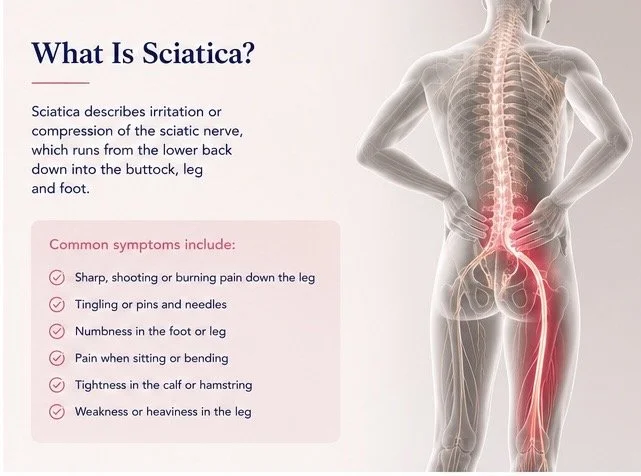
Sciatica describes irritation or compression of the sciatic nerve, which runs from the lower back down into the buttock, leg and foot.
Symptoms can include:
Sharp, burning or shooting pain down the leg
Tingling or pins and needles
Numbness in the foot or leg
Pain when sitting or bending
Tightness in the calf or hamstring
Difficulty straightening the leg
Weakness or heaviness in the leg
Some people experience mild symptoms, while others struggle to walk, sleep or even find a comfortable position.
What Causes Sciatica?
Sciatica is often linked to irritation coming from the lower back, but the pain itself is usually felt more in the leg or buttock.
Common causes include:
Disc irritation or disc protrusion
Joint stiffness in the lower back
Muscle spasm and protective tension
Poor movement patterns or posture
Prolonged sitting
Pregnancy-related pelvic or back changes
Previous injuries
Reduced core or glute strength

Sometimes symptoms begin suddenly after bending, lifting, twisting or even something as simple as picking up shopping or grandchildren.
Why Does It Feel So Severe?
Nerve pain behaves differently to muscular pain.
When a nerve becomes irritated, symptoms can spread, move around or become very sensitive. Many people say:
“My leg feels tight but stretching makes it worse.”
“I can’t stand up straight.”
“The pain moves from my back into my foot.”
“Every small movement aggravates it.”
This is because the nervous system can become highly reactive and protective.
Should You Rest or Keep Moving?
Complete bed rest is rarely helpful for sciatica.
Gentle movement is usually important, but the right movement matters. Pushing through severe pain or doing aggressive stretches can sometimes worsen symptoms.
That’s why assessment is key.
Everyone’s sciatica behaves differently, and treatment should be tailored to the individual rather than following generic online exercises.
How Can Physiotherapy Help?
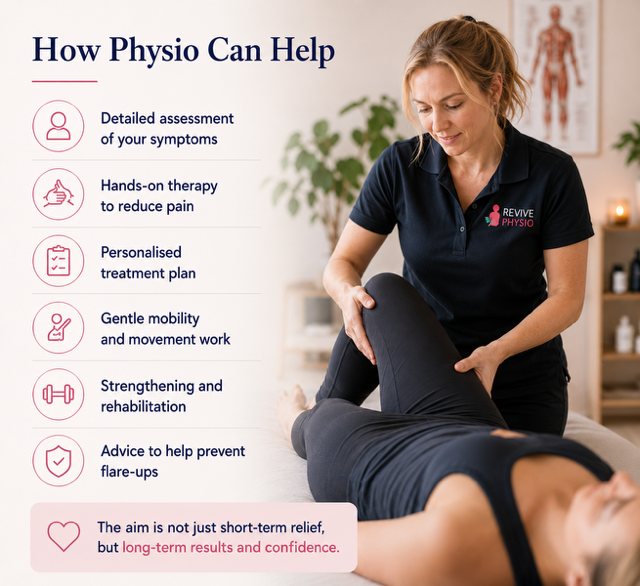
At Revive Physio, treatment focuses on understanding what’s driving your symptoms and helping calm the irritation while restoring movement and confidence.
Treatment may include:
Detailed assessment of movement and nerve symptoms
Hands-on therapy
Gentle mobility work
Postural advice
Movement rehabilitation
Pain relief strategies
Gradual strengthening exercises
Advice on pacing and activity modification
The aim isn’t just short-term relief, but helping prevent recurring flare-ups.
When Should You Seek Further Advice?
While most cases improve with the right management, it’s important to seek urgent medical advice if you experience:
Loss of bladder or bowel control
Numbness around the saddle area
Significant leg weakness
Rapidly worsening symptoms

You Don’t Have to “Just Put Up With It”
Sciatica can feel exhausting physically and mentally, especially when pain affects sleep, work or daily life.
The good news is that with the right approach, most people improve significantly.
If you’re struggling with ongoing back, buttock or leg pain, physiotherapy may help you understand what’s happening and support your recovery.
📍 Revive Physio – Mosley Common, M28 area
🌐 www.revivephysiomcr.co.uk
📩 DM or message to book an assessment
Empower • Move • Thrive