Sciatica vs SIJ Dysfunction – How To Tell The Difference
Many people who experience pain into the buttock or leg automatically assume they have sciatica — but this isn’t always the case.
One condition that is often mistaken for sciatica is SIJ dysfunction.
At Revive Physio, I regularly assess patients who have been struggling with “sciatica” for months, only to discover that the sacroiliac joint (SIJ), pelvic alignment or surrounding muscles are actually contributing to the problem.
Understanding the difference is important because treatment can vary significantly depending on the true cause.

What Is Sciatica?
Sciatica occurs when the sciatic nerve becomes irritated or compressed.
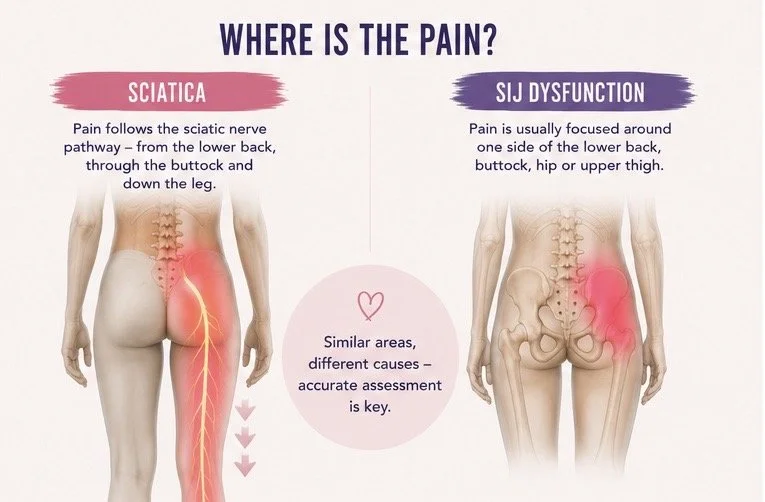
The sciatic nerve runs from the lower back, through the buttock and down the leg.
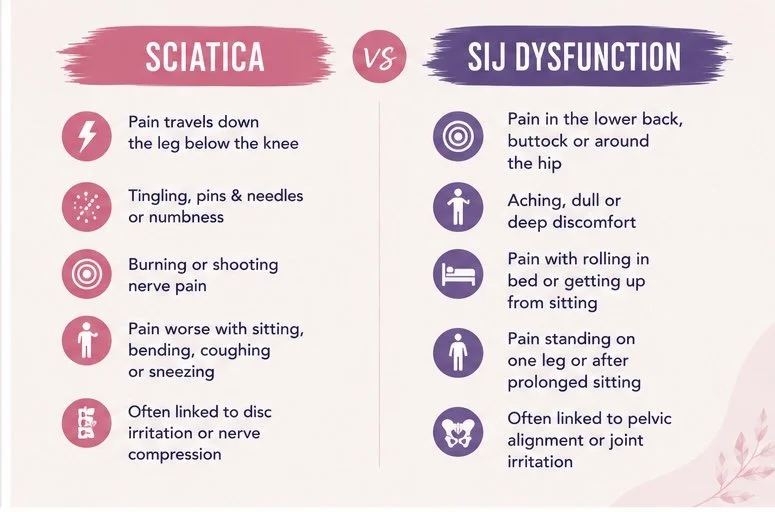
True sciatic symptoms often include:
pain travelling down the leg
tingling or pins & needles
numbness
burning or shooting pain
weakness
pain worse sitting or bending
symptoms travelling below the knee
Sciatica is commonly linked to:
disc irritation or disc bulges
nerve root compression
spinal inflammation
spinal stiffness
What Is SIJ Dysfunction?
The sacroiliac joints sit at the base of the spine where the pelvis joins the sacrum.
These joints help transfer load through the body during walking, standing and movement.
If the SIJ becomes stiff, irritated or moves unevenly, it can create pain that closely mimics sciatica.
Symptoms of SIJ dysfunction may include:
pain on one side of the lower back or buttock
pain around the dimples of the lower back
pain into the hip or thigh
discomfort rolling in bed
pain getting up from sitting
pain standing on one leg
stiffness after sitting
aching rather than sharp nerve pain
Sometimes patients also feel symptoms down the leg, which is why SIJ problems are often mistaken for sciatica.
Why The Two Conditions Get Confused
Both sciatica and SIJ dysfunction can cause:
✔ buttock pain
✔ leg pain
✔ difficulty walking
✔ stiffness
✔ pain sitting
✔ pain moving from sitting to standing
However, the type and pattern of symptoms are often different.
Sciatica tends to involve more nerve-type symptoms such as tingling, numbness or burning pain.
SIJ dysfunction often feels more mechanical, achy or linked to movement and pelvic positioning.
In many cases, both conditions can also exist together.
What Can Cause SIJ Dysfunction?
Several things can contribute to SIJ irritation, including:
altered pelvic alignment
muscle imbalance
pregnancy and postnatal changes
hypermobility
repetitive strain
poor movement patterns
previous injuries
prolonged sitting
hormonal changes during menopause
Lower oestrogen levels can affect ligament support, joint stiffness, inflammation and muscle recovery, which is one reason many midlife women notice increased lower back, pelvic or hip symptoms.
Why Assessment Matters
One of the biggest mistakes people make is assuming all leg pain is sciatica.
At Revive Physio, assessment looks at:
spinal mobility
pelvic alignment
nerve tension
posture and movement
muscle strength and flexibility
gait and walking pattern
aggravating movements
This helps identify the true source of symptoms so treatment can target the root cause rather than simply chasing pain.
Treatment Options
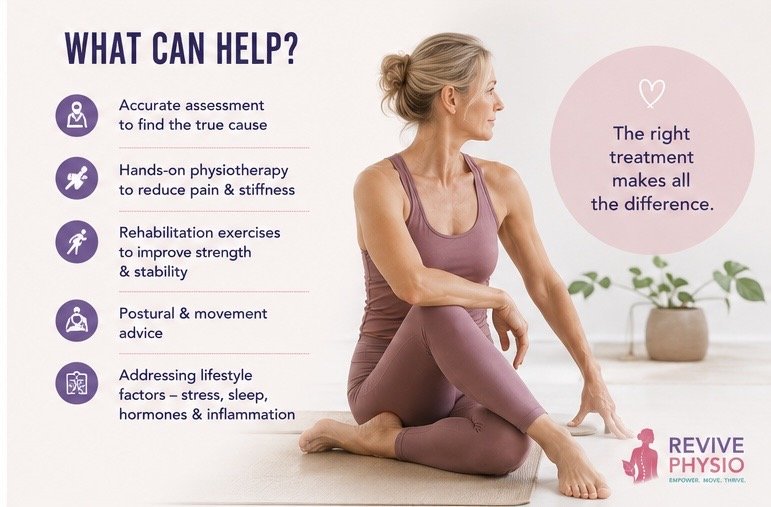
Treatment depends on the cause of symptoms but may include:
Physiotherapy
Hands-on treatment, mobilisation and movement correction.
Rehabilitation Exercise
Improving core, pelvic and hip stability.
Soft Tissue Treatment
Reducing muscle tension and compensatory tightness.
Nerve Mobility Exercises
If nerve irritation is involved.
Postural & Lifestyle Advice
Helping reduce strain on the spine and pelvis.
Menopause & Hormonal Support
Understanding the role hormones, sleep, stress and inflammation can play in recovery.
You Don’t Have To Just Live With It
Whether symptoms are coming from the spine, SIJ or surrounding muscles, the right assessment can make a huge difference.
Pain that keeps returning often has an underlying cause that hasn’t yet been fully identified.
At Revive Physio, my aim is always to understand the why behind symptoms and help people move better, feel stronger and regain confidence in their body again.
📍 Revive Physio – Mosley Common, M28
✨ Physiotherapy
✨ Menopause Support
✨ Hyaluronic Acid Joint Injections
✨ Reiki Healing