
Can physiotherapy help with sciatica ?
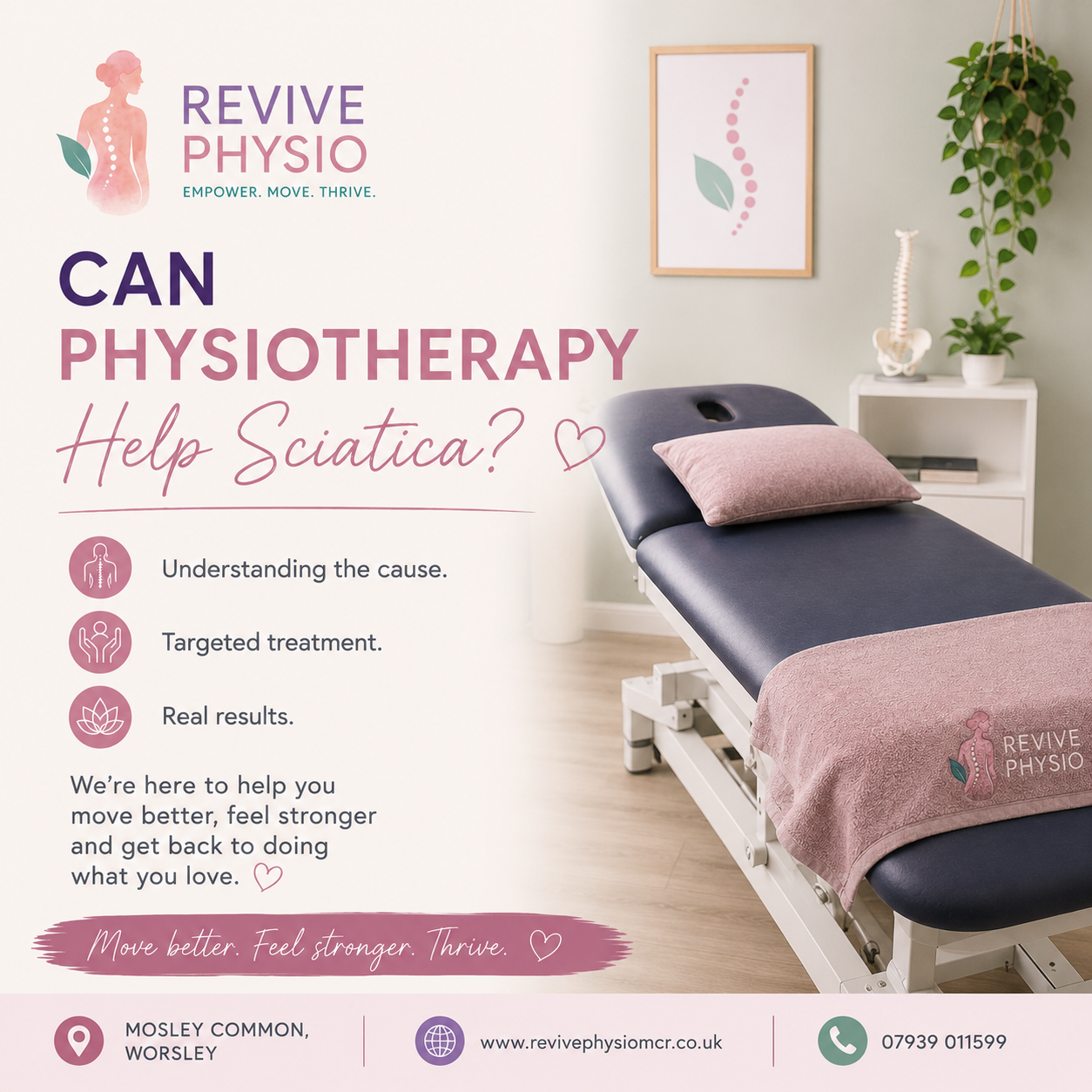
Expert Physiotherapy for Sciatica in Mosley Common, Worsley & Greater Manchester
If you're struggling with pain travelling from your lower back into your buttock or down your leg, you've probably wondered...
"Will physiotherapy help my sciatica?"
The answer is yes—in many cases, physiotherapy is one of the most effective treatments for sciatica.
At Revive Women's Physio & Wellbeing Clinic, I regularly assess and treat people with sciatica and sciatica-like symptoms. The key is identifying why the nerve is being irritated so treatment is tailored to the underlying cause—not just the symptoms.
What is sciatica?
Sciatica occurs when the sciatic nerve becomes irritated or compressed.
This can cause symptoms such as:
✔ Pain travelling into the buttock or down the leg
✔ Burning or shooting pain
✔ Pins and needles
✔ Numbness
✔ Weakness in the leg or foot
Symptoms can range from mild discomfort to pain that affects walking, sitting, driving or sleeping.
However, it's important to remember that not all leg pain is sciatica.
Several conditions can mimic sciatica, which is why an accurate assessment is so important.

How can physiotherapy help?
Physiotherapy isn't simply about treating the pain—it's about identifying why your symptoms have developed.
Following a detailed assessment, treatment may include:
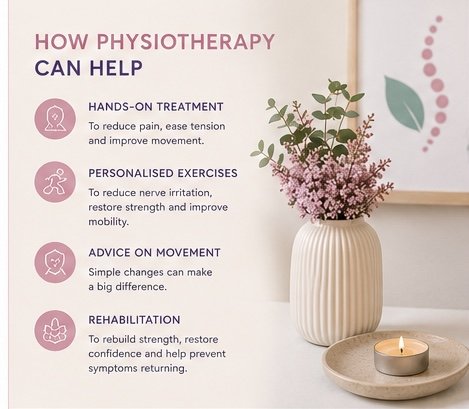
Hands-on treatment
Manual therapy may help reduce stiffness, improve movement and relieve pressure on surrounding structures where appropriate.
Personalised exercises
The right exercises can help reduce nerve irritation, improve flexibility, strengthen supporting muscles and restore movement.
No two people receive exactly the same programme because no two cases of sciatica are identical.
Advice on movement & posture
Simple changes to how you sit, stand, lift or move throughout the day can often make a significant difference.
Rehabilitation
As your symptoms improve, treatment progresses towards restoring strength, mobility and confidence so you can return to the activities you enjoy.
Acupuncture
Stimulates specific pressure points to trigger release of endorphins (for pain relief ), increase blood flow to reduce inflammation and relax the surrounding muscles to minimise irritation to the sciatic nerve.
What happens during a physiotherapy assessment?
Every assessment at Revive begins with understanding your story.
We'll discuss:
Your symptoms
When they started
What makes them better or worse
Your lifestyle and daily activities
Your goals
I'll then carry out a detailed physical assessment to identify where your symptoms are coming from.
Together we'll discuss the findings and create a treatment plan tailored specifically to you.
Do I need an MRI scan before coming to physio?
One of the most common questions I hear is:
"Should I have a scan first?"
In most cases, no.
Most people with sciatica don't need an MRI before seeing a physiotherapist.
A thorough clinical assessment usually provides the information needed to begin treatment.
If I believe further investigations are appropriate, I'll explain why and advise you accordingly.
Should I stay in bed?
No.
While short periods of rest may help during severe flare-ups, prolonged bed rest is generally not recommended.
Keeping gently active is usually one of the best things you can do.
Walking, changing position regularly and following the right exercises often help recovery.
How long does sciatica take to improve?
Recovery varies depending on the underlying cause and how long symptoms have been present.
Some people improve within a few weeks.
Others require a longer rehabilitation programme.
Early assessment often helps identify the problem sooner and can reduce the risk of symptoms becoming persistent.
When should I seek urgent medical attention?
Although most cases of sciatica are not serious, you should seek urgent medical advice if you develop:
Loss of bladder or bowel control
Numbness around the saddle area
Significant weakness in both legs
Severe symptoms following major trauma
These require urgent medical assessment.
Why choose Revive Women's Physio & Wellbeing Clinic?
At Revive, I believe in treating the person—not just the symptoms.
Every assessment is personalised, taking the time to understand what's causing your pain and how it's affecting your daily life.
Whether your goal is walking comfortably, getting back to the gym, returning to running or simply sleeping without pain, treatment is designed around you.
The Take-Home Message
Sciatica can be painful and frustrating, but it doesn't have to control your life.
The sooner you understand what's causing your symptoms, the sooner you can start the right treatment.
If you're struggling with pain in your back, buttock or leg, a physiotherapy assessment can help determine whether it is sciatica and what the most appropriate treatment is.
You don't have to simply put up with it.

Frequently Asked Questions
Can physiotherapy cure sciatica?
Physiotherapy aims to address the underlying cause of your symptoms, reduce nerve irritation, improve movement and help prevent recurrence. Many people experience significant improvement, although recovery depends on the cause of the sciatica.
Is walking good for sciatica?
For most people, yes. Gentle walking often helps keep the joints and nerves moving. However, if walking significantly increases your symptoms, it's worth having an assessment.
Is massage enough to treat sciatica?
Massage may provide temporary symptom relief for some people, but it won't address every cause of sciatica. Physiotherapy combines assessment, education, exercise and rehabilitation to target the underlying problem.
Can I exercise with sciatica?
Usually, yes—but the type of exercise matters. A physiotherapist can guide you on the most appropriate exercises for your stage of recovery.
Do I need surgery?
The vast majority of people with sciatica do not need surgery. Conservative treatment, including physiotherapy, is often successful. Surgery is only considered in specific circumstances after medical assessment.