Hip Pain Isn't Always Coming From Your Hip

Understanding the Different Causes of Hip Pain and How Physiotherapy Can Help
If you've been struggling with hip pain, it's natural to assume there's something wrong with your hip joint.
In reality, one of the biggest misconceptions I hear in clinic is that all hip pain comes from the hip itself.
As a physiotherapist with over 22 years' experience, I regularly assess patients who have been told they have "hip pain", only to discover the source is actually their tendons, muscles, pelvis or even their lower back.
Getting the right diagnosis is the first step towards effective treatment.
Where Can Hip Pain Come From?
The hip is a complex area made up of bones, muscles, tendons, ligaments, nerves and surrounding joints. Pain can originate from any of these structures or even be referred from somewhere else in the body.
Some of the most common causes include:
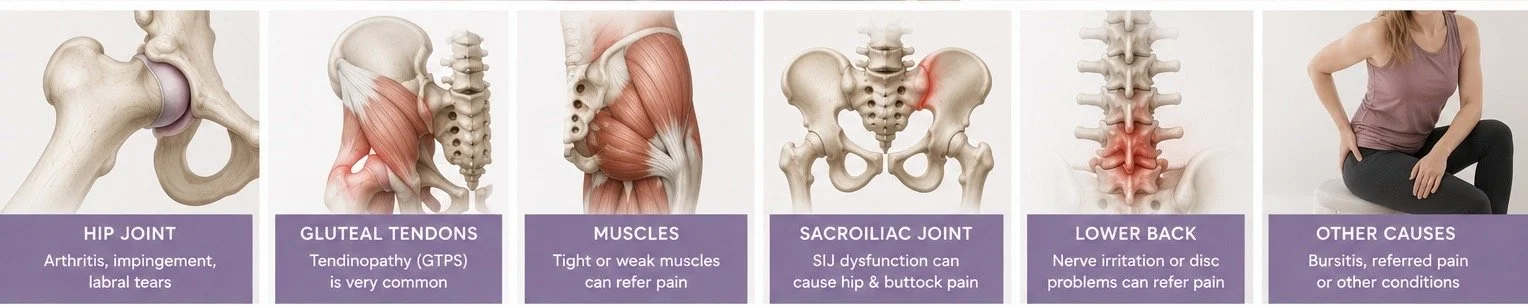
Hip Joint Problems
Pain originating from the hip joint is often felt deep in the groin but can also spread into the front of the thigh or buttock.
Common conditions include:
Hip osteoarthritis
Femoroacetabular impingement (FAI)
Labral tears
Hip joint inflammation
Typical symptoms include:
Groin pain
Stiffness
Pain putting socks or shoes on
Difficulty getting out of the car
Reduced hip movement
Gluteal Tendinopathy (Often Mistaken for Hip Bursitis)
One of the most common causes of pain on the outside of the hip—particularly in women over 40—is gluteal tendinopathy.
Many people are told they have bursitis, but current evidence shows the tendons are often the primary source of pain, with the bursa becoming irritated secondarily. This is commonly referred to as Greater Trochanteric Pain Syndrome (GTPS).
Symptoms often include:
Pain on the outside of the hip
Pain lying on that side in bed
Pain climbing stairs
Pain walking for longer distances
Tenderness over the bony side of the hip
This condition is particularly common during perimenopause and menopause, when falling oestrogen levels can affect tendon health.
Muscle Injuries and Weakness
Pain can also arise from muscles surrounding the hip, including the gluteal muscles, hip flexors, adductors and deep rotators.
Muscle-related pain may develop after:
Exercise
Increased activity
Weakness
Poor movement patterns
Long periods of sitting
Symptoms vary but often include aching, tightness and discomfort with movement.
Sacroiliac Joint (SIJ) Dysfunction
The sacroiliac joints sit between your spine and pelvis and can refer pain into the hip and buttock.
Many patients believe they have hip pain when the SIJ is actually contributing to their symptoms.
Signs may include:
Pain around one side of the lower back
Buttock pain
Pain around the side of the hip
Difficulty standing after sitting
Pain turning over in bed
Pain Referred from the Lower Back
Not all hip pain starts in the hip.
The lumbar spine can refer pain into:
The buttock
Side of the hip
Groin
Front of the thigh
If nerves become irritated, symptoms may also include:
Tingling
Numbness
Burning pain
Pain travelling further down the leg
Bursitis
Although less common than previously thought, inflammation of the trochanteric bursa can occur.
It often develops alongside gluteal tendinopathy rather than on its own.
Symptoms include:
Localised tenderness
Pain lying on the affected side
Pain walking
Pain climbing stairs
Referred Pain from Other Areas
Occasionally hip pain isn't musculoskeletal at all.
Pain can also originate from:
The pelvis
Gynaecological conditions
Hernias
The abdomen
The urinary system
This is another reason why a thorough assessment is so important.
When Should You See a Physiotherapist?
You should consider booking an assessment if:
Your pain has lasted more than two weeks.
It's affecting your sleep.
You're avoiding activities because of the pain.
Walking or exercise has become difficult.
You're relying on painkillers.
The pain keeps returning.
How Physiotherapy Can Help
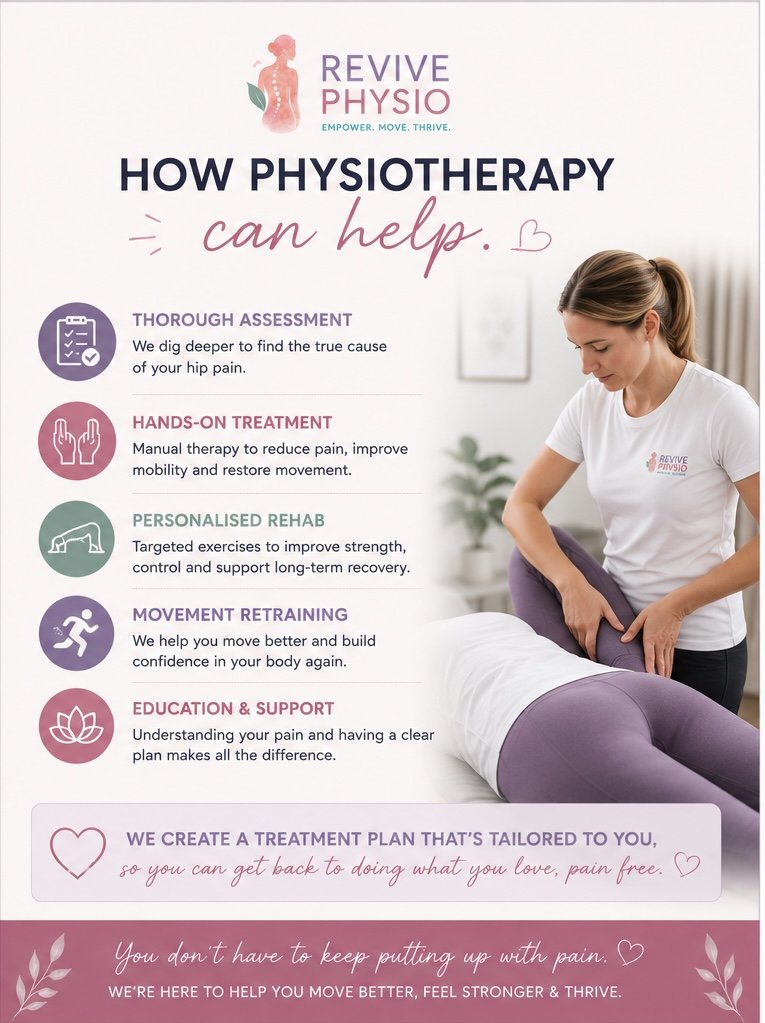
At Revive Physio, treatment starts with understanding why you're in pain—not simply treating the symptoms.
Your assessment includes:
A detailed discussion about your symptoms.
Movement assessment.
Strength testing.
Hip, pelvis and lower back examination.
Functional assessment.
Clear explanation of your diagnosis.
Treatment may include:
Hands-on manual therapy.
Individualised strengthening programme.
Tendon rehabilitation.
Joint mobilisation.
Movement retraining.
Activity modification.
Return-to-sport or exercise guidance.
If appropriate, I can also discuss additional treatment options such as hyaluronic acid injections for suitable cases of hip osteoarthritis.
Don't Guess - Get the Right Diagnosis
Two people with "hip pain" can have completely different causes and require completely different treatment.
That's why searching online for exercises isn't always the answer.
The first step is understanding exactly what's causing your symptoms.
At Revive Physio, I aim to help you understand your pain, identify the underlying cause and create a personalised treatment plan to get you moving confidently again.
💙 You don't have to keep putting up with pain.
Book Your Physiotherapy Assessment
If you're experiencing hip pain that isn't improving, I'd love to help.
📍 Revive Physio – Mosley Common, Worsley
✔️ Physiotherapy Assessments
✔️ Women's Health Physiotherapy
✔️ Menopause & Musculoskeletal Care
✔️ Sports Injuries & Rehabilitation
✔️ Manual Therapy & Exercise Rehabilitation