Disc Protrusion: Signs, Symptoms and When Physiotherapy Can Help
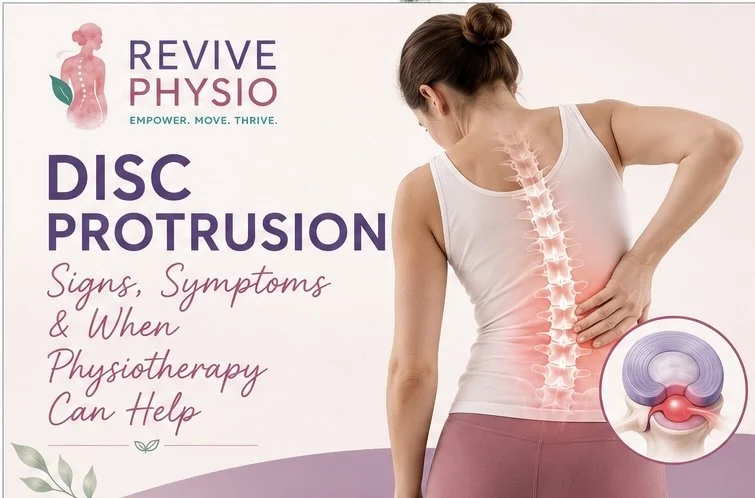
A disc protrusion, sometimes called a bulging or slipped disc, can cause lower-back pain, leg pain or sciatica when disc material irritates a nearby nerve. However, disc changes can also appear on scans in people who have no pain at all, so an MRI finding should always be considered alongside your symptoms and physical assessment.
The good news is that many people improve with conservative care, including advice, appropriate movement and a personalised rehabilitation programme. Exercise-based treatment can improve pain and function, although the right exercise type and dosage vary between individuals.
What is a lumbar disc protrusion?
Between each vertebra in your spine sits a disc that acts as a shock absorber and helps the spine move.
A disc protrusion occurs when part of the disc extends beyond its usual boundary. It may cause local back pain or irritate a nerve root, creating symptoms that travel into the buttock or leg.
The words disc protrusion, disc bulge and disc herniation are sometimes used interchangeably, although they describe slightly different appearances on a scan. What matters most clinically is whether the disc change matches your symptoms and examination findings.
Classic signs and symptoms
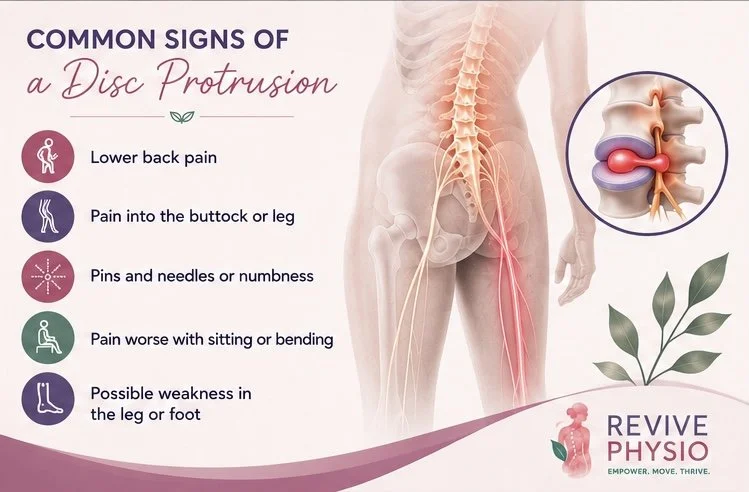
Symptoms vary, but a symptomatic lumbar disc protrusion may cause:
Lower-back pain, sometimes with the back pain worse than the leg pain
Pain travelling into the buttock, thigh, calf or foot
Sharp, burning, electric or shooting pain
Pins and needles or numbness
Weakness in the leg, ankle or foot
Pain with coughing, sneezing or straining
Difficulty sitting, bending or putting on shoes and socks
A feeling that the back has “locked” or shifted to one side
The exact symptom pattern depends on which nerve is irritated. Not everyone experiences all these symptoms, and not every episode of back and leg pain is caused by a disc.
Common aggravating factors
People with disc-related symptoms often report increased pain with:
Prolonged sitting
Driving
Bending forwards
Repeated lifting
Putting on socks or shoes
Rising from a low chair
Coughing, sneezing or straining
Sitting immediately after getting out of bed
Remaining in one position for too long
These are patterns rather than rules. Some people feel worse standing or walking, which is why assessment is important before choosing exercises.
What may ease the symptoms?
Depending on your individual presentation, symptoms may ease with:
Walking
Changing position frequently
Lying down for a brief period
Standing rather than sitting
Gentle movement
Heat for surrounding muscle tension
Movements that cause leg pain to move closer towards the back
That last response is known as centralisation. For example, pain may initially reach the calf but, after a particular movement, retreat towards the buttock or lower back. This can be a useful sign that the chosen movement direction suits you. Clinical guidance supports using repeated movements in the direction that reduces or centralises symptoms rather than prescribing the same exercise to everyone.
What is the typical 24-hour pattern?
A disc-related problem can follow a recognisable daily pattern.
In the morning
You may feel stiff, struggle to bend or find sitting uncomfortable. Activities such as dressing, washing or putting on shoes may be particularly difficult.
During the day
Symptoms may build with prolonged sitting, driving, bending or lifting. Regular movement and position changes may help.
In the evening
The back or leg may ache after the demands of the day, especially following long periods at work or driving.
At night
Some people struggle to find a comfortable sleeping position or wake when turning over. Persistent, severe night pain that does not change with position—particularly alongside fever, unexplained weight loss or feeling unwell—should be medically assessed.
A 24-hour pattern provides useful clues, but it cannot diagnose a disc protrusion by itself.
What is a lateral shift?
During an acute episode, some people appear to stand with their shoulders shifted to one side relative to their pelvis. This is sometimes known as a lateral shift or acute list.
You may notice:
Your body looks visibly crooked
You struggle to stand upright
One direction feels blocked
Trying to straighten yourself sharply increases leg pain
One hip appears pushed sideways
A lateral shift can occur as the body attempts to find a less painful position. It should be assessed rather than repeatedly forced straight at home, particularly when leg pain, numbness or weakness is present. Physiotherapy can determine whether carefully correcting the shift reduces or worsens your symptoms.
Can I try McKenzie extension in prone?
Some people with disc-related back or leg pain respond well to extension-based movements. A simple starting position may be lying on your stomach, followed—when comfortable—by resting on your elbows or performing a gentle press-up while keeping the pelvis relaxed.
A movement is more likely to suit you when:
Leg pain reduces or moves towards the back
You can stand or walk more comfortably afterwards
Movement becomes easier
Symptoms remain improved after completing it
Stop and arrange an assessment if:
Pain spreads further down the leg
Pins and needles or numbness increase
New weakness develops
The exercise causes a significant, lasting flare-up
You feel unable to straighten or your lateral shift worsens
The safest approach is to identify your individual directional preference during a physiotherapy assessment. Repeated movements should be selected according to your response—not applied as a one-size-fits-all exercise.
When should you book a physiotherapy assessment?
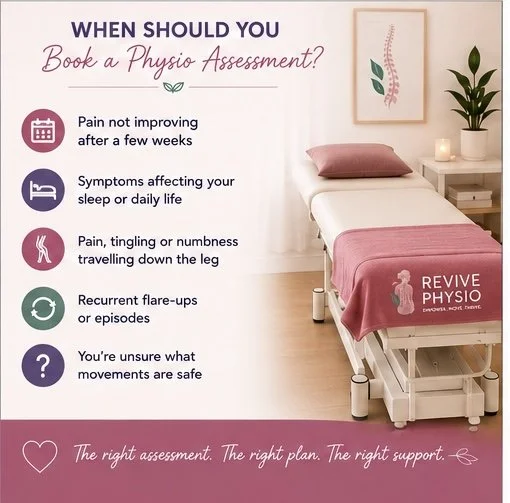
Consider arranging an assessment when:
Your symptoms are not beginning to improve
Pain has lasted more than two to three weeks
Leg pain, tingling or numbness keeps returning
Sitting, sleeping, working or driving is difficult
You are avoiding exercise or everyday activities
You have developed a visible lateral shift
You are unsure which movements are safe
You have had repeated episodes
Your symptoms are getting worse rather than better
You do not normally need an MRI before attending physiotherapy. NICE recommends that imaging is not routinely offered in a non-specialist setting unless the result is likely to change management.
How can physiotherapy help?
A physiotherapy assessment aims to determine whether your symptoms are likely to be disc-related, whether a nerve is involved and whether any warning signs require medical referral.
Your appointment may include:
A detailed assessment
This includes discussing your symptoms, their 24-hour behaviour, aggravating and easing factors, work, exercise, previous episodes and goals.
Movement, strength, sensation, reflexes and nerve sensitivity may also be assessed where appropriate.
Advice and reassurance
Understanding what is happening can reduce fear and help you return to safe movement. You will receive practical advice about sitting, sleeping, lifting, driving and pacing your activity.
Direction-specific exercises
You may be prescribed repeated movements that reduce or centralise your symptoms. This could involve extension, flexion, lateral movements or another direction depending on your examination.
Manual therapy
Mobilisation or soft-tissue techniques may be used alongside exercise when appropriate. NICE advises that manual therapy should form part of a treatment package that includes exercise rather than being used as a stand-alone solution.
Strength and rehabilitation
As symptoms settle, treatment usually progresses towards restoring mobility, trunk and hip strength, lifting tolerance and confidence with everyday or sporting activities.
Gradual return to normal activity
The long-term goal is not simply to settle pain—it is to help you return to work, exercise and the things you enjoy while reducing the likelihood of another flare-up.
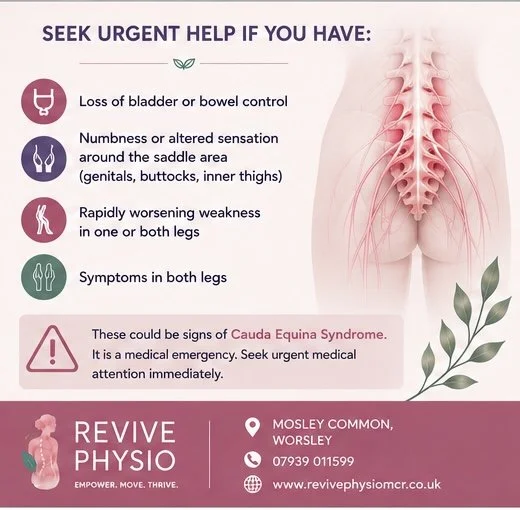
Cauda equina syndrome: symptoms that need emergency attention
Cauda equina syndrome is rare, but it is a medical emergency caused by compression of the nerves controlling the bladder, bowel, sexual function and sensation around the saddle area.
Seek urgent emergency assessment immediately if back or leg pain is accompanied by any new or worsening symptoms such as:
Difficulty starting or controlling urination
Inability to feel when your bladder is full or empty
Loss of bladder or bowel control
Numbness or altered sensation around the genitals, anus, buttocks or inner thighs
New sexual dysfunction or reduced genital sensation
Severe or rapidly worsening weakness in one or both legs
Symptoms affecting both legs
Do not wait for a routine physiotherapy appointment if these symptoms occur. Current UK pathways treat suspected cauda equina syndrome as requiring emergency assessment and MRI.
The take-home message
A disc protrusion can cause significant back and leg pain, but the scan result alone does not determine how you will feel or how well you will recover.
The most useful first step is a thorough assessment that considers:
Your symptoms
Your movement
Your neurological findings
Your aggravating and easing factors
Your 24-hour pattern
Your response to repeated movements
Whether a lateral shift is present
With the right advice and an individual treatment plan, many people can return to comfortable movement and the activities they enjoy.