Menopause and Musculoskeletal Health - The connection
If you've found yourself wondering...
"Why do all my joints suddenly ache?"
"Why have I developed frozen shoulder out of nowhere?"
"Why am I constantly getting tendon injuries?"
"Why does my back hurt more than it ever used to?"
...you're certainly not alone.
Many women in their 40s and 50s are surprised to learn that declining oestrogen levels during perimenopause and menopause can have a significant impact on the muscles, joints, tendons and ligaments throughout the body.
As both a Chartered Physiotherapist and Menopause Practitioner, I regularly see women who have been told their pain is "just ageing" when, in reality, hormones may be playing a much bigger role.
How Does Menopause Affect the Musculoskeletal System?
Oestrogen isn't just important for reproductive health.
It has receptors throughout the body, including within:
Muscles
Tendons
Ligaments
Cartilage
Bones
Intervertebral discs
Fascia
As oestrogen levels fluctuate and eventually decline, these tissues become less resilient and recover more slowly.
Many women notice that injuries take longer to heal, stiffness lasts longer in the morning, and activities they previously enjoyed suddenly become painful.
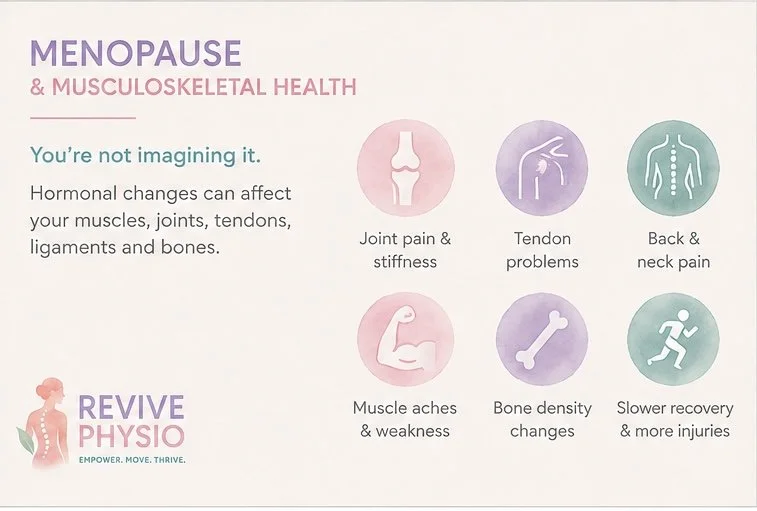
Common Musculoskeletal Symptoms During Menopause
Women frequently report:
Generalised joint pain
Morning stiffness
Neck pain
Back pain
Hip pain
Shoulder pain
Tendon pain
Plantar fasciitis
Achilles pain
Tennis or golfer's elbow
Knee pain
Reduced flexibility
Muscle weakness
Muscle aches
Increased risk of injury
Slower recovery after exercise
Some women describe it as feeling like they've "aged overnight."
Why Does This Happen?
There are several reasons.
Reduced Collagen Production
Oestrogen helps stimulate collagen production.
Collagen is one of the major building blocks of:
Tendons
Ligaments
Cartilage
Skin
Fascia
As collagen production falls, tissues become less elastic and more prone to irritation or injury.
Tendons Become Less Efficient
Research suggests tendon stiffness and strength may reduce after menopause.
This may increase the risk of:
Rotator cuff problems
Achilles tendinopathy
Tennis elbow
Gluteal tendinopathy
Hamstring injuries
Many women also notice they struggle more with running or high-impact exercise.
Muscle Loss
From around the age of 40 onwards we naturally begin losing muscle mass.
The menopause accelerates this process.
This contributes to:
Reduced strength
Reduced balance
Increased falls risk
Lower metabolism
More fatigue
The good news is that resistance training is one of the most effective ways of slowing this process.
Joint Changes
Oestrogen also has anti-inflammatory effects.
Lower hormone levels can contribute to:
Joint stiffness
Swelling
Pain
Reduced cartilage health
Many women notice symptoms first thing in the morning or after periods of inactivity.
Bone Health
Following menopause, bone density declines more rapidly.
Without adequate exercise, nutrition and where appropriate HRT, women become increasingly at risk of osteopenia and osteoporosis, increasing the risk of fragility fractures later in life.
While menopause doesn't directly cause these conditions, hormonal changes may increase susceptibility.
Conditions More Common Around Menopause
These include:
Frozen shoulder (adhesive capsulitis)
Rotator cuff tendinopathy
Tennis elbow
De Quervain's tenosynovitis
Trigger finger
Plantar fasciitis
Achilles tendinopathy
Gluteal tendinopathy
Trochanteric bursitis
Low back pain
Neck pain
Osteoarthritis symptoms becoming more noticeable
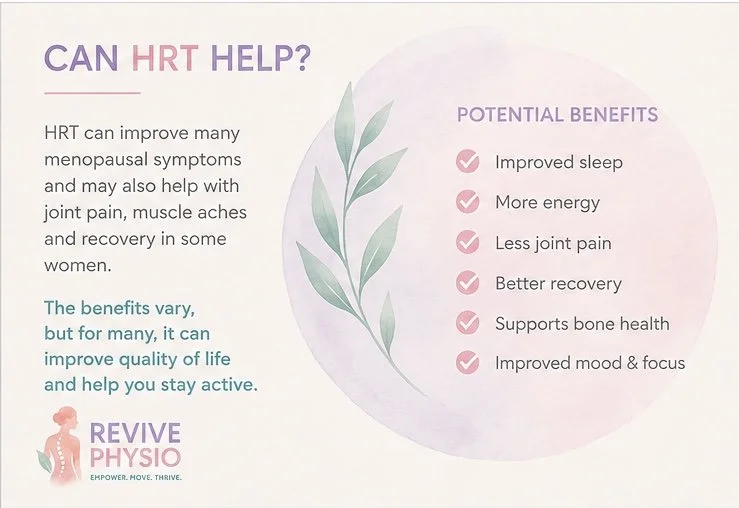
Can HRT Help Joint and Muscle Pain?
Possibly.
Hormone Replacement Therapy (HRT) is primarily prescribed to treat menopausal symptoms such as hot flushes, night sweats and low mood.
However, many women also notice improvements in:
Joint pain
Muscle aches
Recovery from exercise
Energy levels
Sleep
Overall quality of life
Better sleep alone can significantly improve pain levels and recovery.
Some studies also suggest HRT may help preserve muscle mass and reduce the accelerated loss of bone density seen after menopause.
However, HRT is not a treatment for every musculoskeletal condition, and not everyone experiences improvements in pain.
Current evidence suggests that while HRT may benefit some women, it should not be prescribed solely to treat joint pain in the absence of other menopausal symptoms.
The Benefits of HRT
For women who are suitable candidates, HRT may:
Improve hot flushes and night sweats
Improve sleep
Improve mood
Reduce brain fog
Help maintain bone density
Improve vaginal and urinary symptoms
Reduce joint aches in some women
Improve overall quality of life
Help women remain active and exercise comfortably
Are There Any Risks?
Like any medication, HRT has potential risks and benefits.
These vary depending on:
Your age
Medical history
Family history
Type of HRT
Route of administration (patch, gel, spray or tablet)
For most healthy women who start HRT before the age of 60 or within 10 years of menopause, the benefits often outweigh the risks.
However, it is not suitable for everyone.
This is why an individual assessment with a suitably trained healthcare professional is so important.
Physiotherapy During Menopause
Physiotherapy can play a huge role in helping women stay active throughout perimenopause and beyond.
Treatment may include:
A detailed musculoskeletal assessment
Individual exercise prescription
Strength training advice
Manual therapy
Joint mobilisation
Soft tissue treatment
Acupuncture (where appropriate)
Load management
Running advice
Education about the effects of menopause on the body
Importantly, we don't just treat the painful area—we look at the bigger picture, including hormonal influences, lifestyle, sleep, stress and overall health.
What Else Can Help?
Alongside physiotherapy and, where appropriate, HRT:
Strength train at least twice a week
Stay physically active
Prioritise protein intake
Ensure adequate calcium and vitamin D
Maintain a healthy body weight
Improve sleep where possible
Manage stress
Reiki healing
Gradually increase exercise rather than stopping completely
Movement is one of the best medicines for menopause.
How Revive Physio Can Help
At Revive Physio in Mosley Common, I combine over 20 years of physiotherapy experience with specialist training in menopause care.
I understand that pain during midlife isn't always "just wear and tear."
Whether you're struggling with joint pain, tendon problems, recurrent injuries or simply feel your body has changed since entering perimenopause, we'll work together to identify the cause and develop a treatment plan that's right for you.
My aim is simple: to help women move better, feel stronger and thrive through every stage of menopause.
Revive Physio can help with
Physiotherapy Assessment & Treatment
Reiki Healing
Acupuncture
Massage
1:1 Menopause support
Book an Appointment
If menopause is affecting your joints, muscles or ability to stay active, I'd love to help.
Book your physiotherapy assessment with Revive Physio today and let's get you back to doing the things you enjoy.
Frequently Asked Questions
Can menopause cause joint pain?
Yes. Falling oestrogen levels can contribute to joint pain, stiffness and reduced tissue resilience. Many women notice symptoms during perimenopause before their periods stop completely.
Does HRT help joint pain?
Some women notice significant improvements in joint pain and muscle aches after starting HRT, while others notice little change. HRT should always be considered as part of an overall menopause management plan.
Can menopause cause tendon problems?
Yes. Reduced collagen production and hormonal changes may increase the risk of tendinopathy, including tennis elbow, Achilles tendinopathy and gluteal tendinopathy.
Should I stop exercising if menopause is making me ache?
Usually not. The right type of exercise—particularly strength training—is one of the best treatments for maintaining muscle, bone and tendon health. A physiotherapist can help tailor a programme to your needs.