
if you have pain…. When Should You See a Physiotherapist?
When Should You See a Physiotherapist?
One of the most common things I hear from new patients is:
"I wish I'd come sooner."
Many people wait weeks, months—or even years—before seeking help.
Sometimes they hope the pain will settle.
Sometimes life gets in the way.
Sometimes they assume it's "just part of getting older."
While some aches and pains improve on their own, others continue to linger or keep coming back.
So, how do you know when it's time to book a physiotherapy assessment?
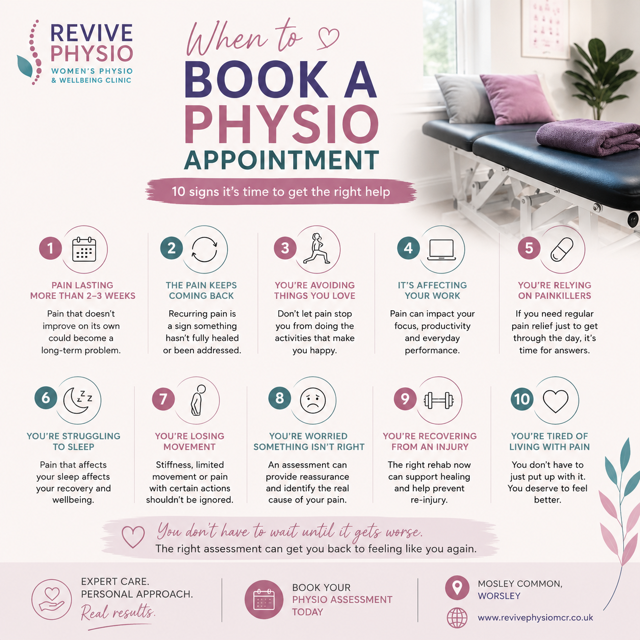
1. Your pain has lasted longer than 2–3 weeks
Many minor muscle strains begin to improve within a couple of weeks.
If your symptoms are still there after 2–3 weeks, it's worth finding out why.
Early assessment can often prevent a short-term problem becoming a long-term one.
2. The pain keeps coming back
Perhaps it settles for a while...
Then returns every few weeks.
Recurring pain usually means something hasn't fully recovered or there's an underlying issue that needs addressing.
3. You're avoiding activities you enjoy
Have you stopped...
🏃 Running?
🚶 Walking?
🏌️ Playing golf?
💪 Going to the gym?
🌿 Gardening?
Pain shouldn't stop you doing the things you love.
4. It's affecting your work
Whether you work at a desk, drive for a living or have a physically demanding job, pain can quickly begin to affect your productivity and quality of life.
If you're changing how you work because of pain, don't ignore it.
5. You're relying on painkillers
Occasionally taking pain relief is appropriate.
But if you're regularly relying on medication just to get through the day, it's worth understanding what's causing your symptoms.
6. You're struggling to sleep
Pain that regularly disturbs your sleep or leaves you waking stiff and uncomfortable deserves to be assessed.
Sleep is one of the body's most important recovery tools.
7. You're losing movement
Perhaps you can't turn your head properly.
Maybe bending over has become difficult.
Or reaching above your head causes pain.
Reduced movement is often something physiotherapy can help improve.
8. You're worried something isn't right
Sometimes the biggest benefit of an assessment is reassurance.
Understanding what's causing your pain—and equally what isn't—can reduce worry and help you move forward with confidence.
9. You're recovering from an injury
Whether you've injured yourself running, at the gym or simply doing everyday activities, physiotherapy can help guide your recovery and reduce the risk of re-injury.
10. You're simply tired of living with pain
Perhaps the biggest reason of all.
You don't have to "put up with it."
Many people assume pain is just something they have to accept.
It isn't.
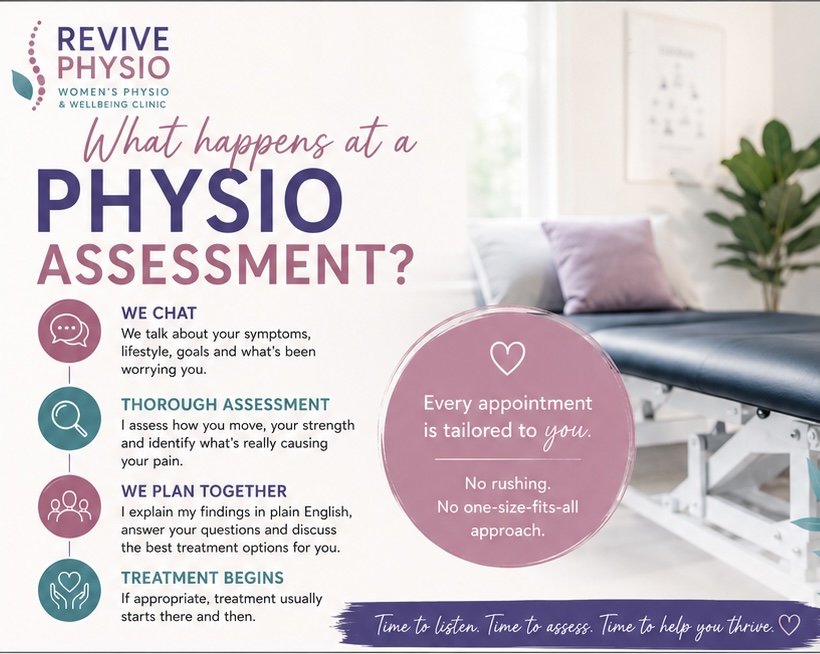
What happens during a physiotherapy assessment?
At Revive, every appointment starts with listening.
We'll discuss:
Your symptoms
Medical history
Lifestyle
Goals
What you want to get back to
We'll then carry out a detailed physical assessment to understand the underlying cause of your symptoms.
Together we'll discuss the findings and create a personalised treatment plan.
Where appropriate, treatment usually begins during your first appointment.
When should you seek urgent medical advice instead?
Although most muscle and joint pain isn't serious, you should seek urgent medical attention if you experience:
Loss of bladder or bowel control
Numbness around the saddle area
Significant weakness in your legs
Severe pain following major trauma
Fever, unexplained weight loss or feeling generally unwell alongside your pain
Sudden chest pain or shortness of breath
If you're unsure, seek medical advice promptly.
Why choose Revive Women's Physio & Wellbeing Clinic?
At Revive, I believe treatment starts with understanding.
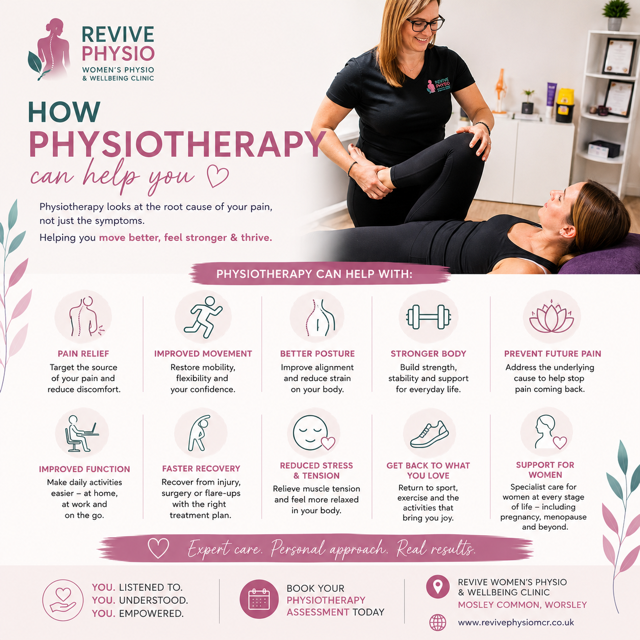
Rather than simply treating the painful area, I look at the bigger picture to identify why your symptoms have developed and create a treatment plan tailored to your goals.
Whether you're looking to get back to running, return to work comfortably or simply enjoy everyday life without pain, I'm here to help.
Frequently Asked Questions
Do I need a GP referral to see a physiotherapist?
No. You can book directly with a physiotherapist without seeing your GP first.
Will I receive treatment at my first appointment?
Yes, in most cases. After your assessment, treatment usually begins during the same appointment if appropriate.
Do I need a scan before seeing a physiotherapist?
Usually not. Most back, neck and joint problems can be assessed without an MRI or X-ray. If further investigations are needed, I'll explain why and advise you accordingly.
How many physiotherapy sessions will I need?
It depends on your condition, how long you've had it and your goals. Some people improve in just a few sessions, while others with longer-term or more complex problems may need a longer rehabilitation programme.
Is physiotherapy painful?
Treatment shouldn't be unbearable. Some techniques or exercises may cause temporary discomfort, but they should always be explained, tailored to you and kept within a manageable level.